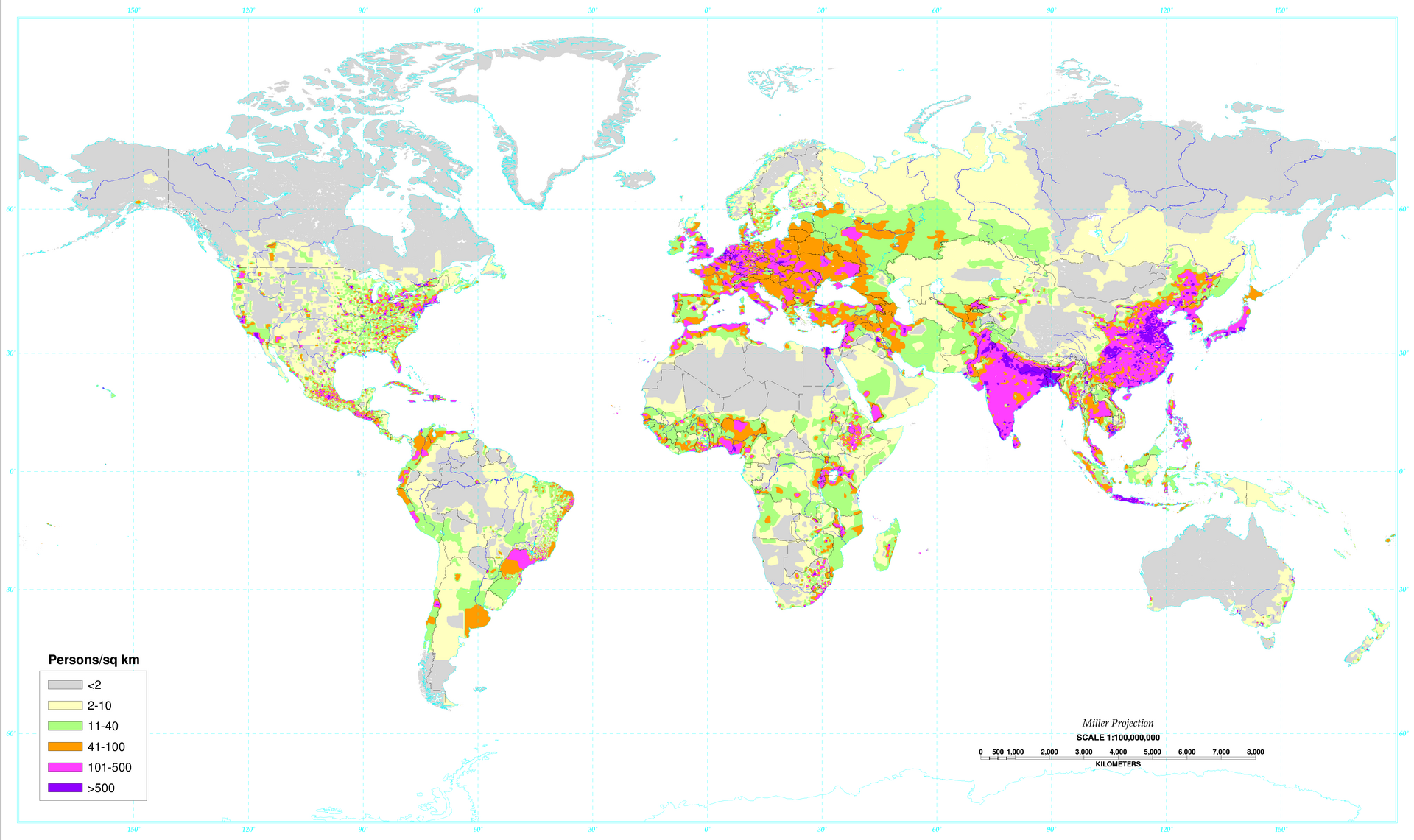
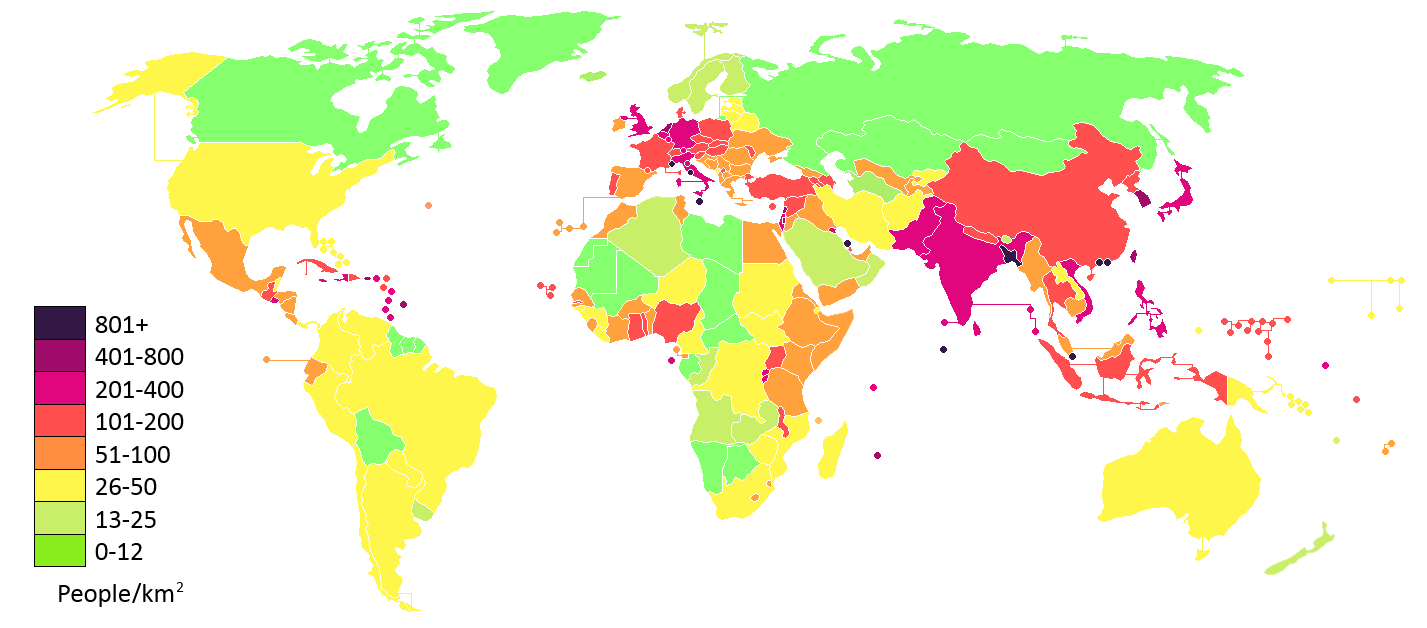
Beyond that, I always wonder about population density figures, afaik there is no standardised process for these calculations. You may think 'well it doesn't get much simpler than population within certain area over that total area', but when making comparisons, the statistics can be deceiving, especially as a proxy for 'living space'.
For example, I live in Amsterdam and we have quite a bit of water (from the Amstel river that divides the city east-west, the Ij river that divides the city north-south, or the Slooterpas lake that's more than a mile wide to the many different canals), as well as numerous sizeable public parks including just one of them, the Amsterdamse Bos, that's 3x (!) the size of Central Park... And if you're not familiar with Amsterdam, it's a tiny city with less than a million inhabitants. When you're outside you won't feel cramped, there's a lot of public areas, it's open, it's quite nice. But that doesn't mean that the density of actual residential space is like that. Especially when you consider that most of the Netherlands, including much of Amsterdam (a city mostly built in a swamp area!) has relatively low buildings and little vertical space as opposed to say Taipei.
Further, you may say the Netherlands is only nr 30, but there are only 4 countries with more than 10m people which are denser of which only 2 are developed countries. The US for context is number 177.
So the Netherlands is quite dense per total area for one. Secondly, vertical space is quite low, and thirdly many of its cities have large open areas (e.g. parks, bodies of waters, like Amsterdam) has ample open-areas where nobody actually lives. So while population density numbers are interesting to measure density, they can't simply be used a proxy for measuring density of housing space.
A better look would be at floor space per person. It's hard to find internationally comprehensive numbers for local areas, but take Germany and France. Germany has about twice the population density, but the floor space per person is pretty much exactly the same. Pop density would've been a terrible proxy for comparing floor area per person between these two countries.
Another example is Ireland and the Netherlands. The latter has 6x the population density. But floor space per person according to this source [2] is larger for Ireland. That's a striking difference that completely blows the popdensity statistic to irrelevance if a comparison between these countries was made for space in the home to live, even if the numbers are adjusted for errors.
I see pop density references pop up all the time in online discussions and it strikes me as a pretty bad statistic to pick for most arguments in such discussions. This particular discussion is about OP's tiny amount of floor space in his home, a popdensity stat includes much more and it may not be applicable when trying to make international comparisons.
[0] https://upload.wikimedia.org/wikipedia/commons/thumb/6/67/Wo...
[1] https://upload.wikimedia.org/wikipedia/commons/4/4d/World_po...