20 years on, San Francisco could have become what New York City is today. One of the top 5 cities in the world, and the undisputed hub where all of technology resides. Instead, it's on track to be just another major city, in the same league as countless others like Chicago/Seattle/Boston.
...or we could move to a sensible model, where software delivers on its promise and allows people to work anywhere. The cost of living here is the invisible hand of the market showing you that you're making a mistake by locating your company in the bay area. Yet the dominant techno-nerd narrative continues to be that the bay area has somehow made a mistake in not anticipating the bizarre fetish that global wealth has developed for local real estate since the early 1990s.
It's insane that an industry of otherwise-intelligent people insists on cramming itself onto a tiny peninsula with seismic development challenges, and I chuckle every time someone draws the comparison to New York, which has seven times the land area, a capable and efficient transit system that has been developed over more than a century...and one of the highest costs of living in the world. Development is not a panacea.
I live in SF, but I wouldn't make the choice to move here today. It simply isn't worth Manhattan prices to live in a city full of tech bros, where you can't get a good meal after 9:30. Increasingly, the choice not to locate your company in SF is a sign of competitive intelligence.
In WV, you can find food at most places until 12-1am 7 days a week. And the major local grocery is a Walmart, which is open 24 hours.
Last Easter I had no clue nothing would be open, and didn't prepare for that. So I just had some crap picked up at a gas station to hold me over until the next day. It's a really bizarre situation compared to most other metros, but even compared to a bunch of small towns.
This one took me by surprise when I visited SF for the first time five years ago. I thought it would be booming with activity just like NYC, so I thought nothing of trying to find food when I arrived at ~11pm.
NOTHING. Nothing was open.
It must be a huge bummer to live in a city with NYC prices without that (very important --- to me) NYC perk.
Companies neither have to have physical offices nor do they have to be located in the Bay Area. And unfortunately culture dictates that an office is always necessary and that you need to locate your tech company in the Bay Area for dubious reasons like fundraising (which should only take a small portion of the operation of your company anyways), hiring (good engineers might come here if they agree with the lifestyle, and the job opportunities, but that doesn't mean jobs should come here because good engineers are here), or synergy (the belief that the physical proximity to other tech firms may help your company. Only applicable to certain markets at best).
Sorry, but this is flawed logic.
Tech, more than seemingly any other industry I can think of, has a winner-takes-all model of success. Given this, starting a tech company anywhere other than where the overwhelming majority of the most capable employees live is virtually suicide. And this seems to pan out in the data as well — Twitter, Square, Uber, Google, Facebook, Reddit, AirBnB, Apple, Oracle, Box, Palantir, Pinterest, Lyft, Stripe, CloudFlare… not that these are all of tech, but finding even a fraction of these anywhere (other than perhaps New York) is a stretch.
Given that, it's patently worth it to pay the extra cost per employee, when the relative value of each employee to the company ends up being so high compared to other industries.
This is not to say you can't build a strong tech company in other parts of the US, but you're stacking the odds against you by doing so.
...and hopefully, everyone has first class redundant internet, something not guaranteed across the nation.
If people really figure out how to consistently develop any kind of software remotely, with any team size and with average programmers, a lot of programming jobs will move away from high living cost areas, as happened with manufacturing jobs.
If you're in the US, where software developer salaries are much higher than most of the rest of the world (even on developed countries average programmers don't earn 6 figures), you'll be probably be on the losing side.
This is a false alternative, since it's not something SF government can do.
Unless you're proposing eminent-domaining people out of their houses to be handed over to for-profit developers (and man, that's a mess, and it's still super-expensive), you aren't going to be replacing too many blocks of two-storey homes with high rises, and you're also quickly going to saturate the ability of local developers to build out giant skyscraper projects -- like, how much slack do you think that there possibly was in the construction industry?
And as soon as we step away from literally insane levels of accommodation to a pattern of in-fill development and recognize that, rightly or wrongly, in-fill development is not wildly popular and you can't just strong-arm an entire city into an unpopular policy, the realistic amount of new development that you could get in SF is, you know, maybe twice as much development as we actually did get.
Which might've shaved 5% off the rents or so.
You also don't need to limit yourself to the existing local developers with political connections. Construction workers from all over the world could move here, just like software people do.
This timeline is measured in decades, but imagine if San Francisco was easier to get permits to build?
Large swaths of the city are built under their _currently allowed_ zoned height (there was a map that went around, I wish I could find it). Add a few stories to some existing buildings, build on empty/underutilized lots, reduce parking requirements, legalize in-law units, add in the affordable housing bonus program...you'd be talking about tens of thousands of units.
I do agree there is a strong argument that this wouldn't be enough (Bay Area-wide coordination is necessary), but it would slow the rate of increase. For example, after an apartment building boom, Seattle rents are now decreasing: http://cityobservatory.org/in-some-cities-the-housing-constr...
You don't need eminent domain to build high rises. Developers can easily make very compelling offers to those currently in small houses to get them to move.
We all know those would be luxury units, but it would add 20K below-market, so there's that.
As always, I stand ready to let them bring a bulldozer to their favorite Mission block as long as I can bring one to Palo Alto and Atherton.
For some reason, people just see that as a cray-cray demand...
this meme has reached seattle as well.
"Boston and Cambridge, Massachusetts, come out on top — attracting more than twice as many citations per paper as the global average."
Nah. Manhattan is a really, really expensive (not as expensive as SF, though, on the average) city to live in. SF rents would have dropped, but not enough to cover the influx of people coming in. Rent prices probably would've dropped in other areas of the Bay though.
NYC also offers plenty of compelling options in other boroughs that are simultaneously cheaper and more convenient than their SF equivalents.
Hilarious. No. Absolutely not. To even compare the cities on this level is an insult to what New York is and how it came about.
San Francisco is a dinky little town compared to New York, the population is comfortably under a million people. It will take another hundred years of perfect planning and growth to catch up to where NYC is today.
Thought experiment: Let's say we do massive high density development in SF. A bunch of people move in, but now that SF is denser it's more desirable, so demand has increased as well, which drives rents right back up. Now we're stuck where we were before: high rents.
Having said that, I still support high density development because I think it leads to better living (and is better for the environment usually). I just am not optimistic that it will actually lower rents.
When you ask why Manhattan is expensive even with increased supply, you ignore demand.
The theory that increased density in itself drives up the value of housing is popular among anti-housing activists. I've never heard an economist who believes it.
If true, it would be an incredibly simple way to generate enormous amounts of money to simply building super dense neighborhoods. Since I don't see anyone getting rich off that, I have strong doubts about that model.
People don't move to where they can find expensive housing - people move to where they can find good jobs. Doubling SF housing wouldn't double the number of good jobs there.
Thought experiment: What do you think doubling the number of high paying jobs do to SF rent? Or, alternatively, halving the available housing?
Democracy in action!
Also: SF's refusal to build is having repercussions elsewhere, like here in Oregon where there is a steady stream of people who can't afford a house for their family in the bay area. In turn, they're pricing out people here, and so on.
Also, there's nothing 'extreme' about the population density of San Francisco. Density in Paris is 21,000/km^2 and in SF, 7,124/km^2
We might wonder what will happen this momentum is deflected. Technical talent will disperse, and we'll end up with a more distributed workforce? Or will it simply concentrate somewhere else?
Right now, the Bay Area is in an extremely enviable position: it has a high concentration of extremely profitable companies; it has a high concentration of highly skilled workers; it has a high concentration of wealth; and, except for housing, it's a desirable place to live.
The Bay Area's residents and local governments oshould be able to leverage these positive factors to maintain the strong economy while making the area a better place to live for skilled workers who want to set down roots and raise families. Of course, it's more likely that nothing will happen and living conditions will become less and less sustainable.
I am a fan of neither, but they are completely different cities.
Compared to actual dense cities in the world, SF is nearly empty.
A new 50-story apartment building is far more likely to survive an earthquake without damage than a 3-story apartment built in the '70s or '80s (even with retrofitting).
In SF, my 1 bedroom, 650 square foot apartment in SOMA went from $2,600 to $3,200 over 3 years.
In Austin, my salary went down $10k to $120k/yr. My 2 bedroom, 1,100 square foot apartment is $1,150/mo.
The tech scene here isn't as vibrant as SF, but there's still plenty of great meet ups.
All in all, yes there are some things I miss about SF, but the benefit of having way more cash month to month outweigh the negatives.
Edit: Clarity.
I'm tired of the costs and crowding. The cost of living is about 30% lower and housing is significantly lower.
I'm managing my career by working for a San Francisco company and working remotely. I'll commute in once a week, which is still less commuting than I was doing in the bay area. I'll have a house instead of a condo. I'll have a nicer/larger place. I'll have plenty of things to do (though things still close early). I'll be closer to my family. I'll be able to support my wife when she goes back to school.
I'm looking forward to it.
Leaving it in the bank is an excellent option. You've got two main things to save for, a down payment for a house and your wedding. Better still is a balanced and sane investment portfolio, but leaving it in the bank is better than a bad portfolio, so take some time to learn how investing works if you choose to go that route.
I also bought a few expensive toys that I really wanted (nice high-end camera, for example) and take regular vacations to nice spots.
I started giving to charity, too. I also decided to do something closer to home and helped a relative with their student debt. I started taking some of the free time I have and that nice camera to do photography for a local charity.
Saving it (in an index fund rather than a bank) is an excellent thing to do with it. Keep living like a college student (or even a fair bit better than that), and save the rest, and you'll be able to retire in your mid-to-late 30s.
Resist the inclination to expand your expenses to match your income; it doesn't actually make you any happier, long-term. (Many different studies have confirmed this: increasing your level of spending tends to give you a short-term burst of happiness followed by a return to the baseline; it doesn't permanently raise your baseline.)
You don't necessarily have to retire early. If you prefer, keep working past that point as long as you're enjoying yourself. You'll be able to have a lot more flexibility in your work, and later in your career you'll be well into the territory of "start your own charitable foundation" or "don't bother raising a series A".
[0] https://personal.vanguard.com/us/funds/snapshot?FundIntExt=I...
Thought that might be interesting, it was to me (came upon it on HN).
cha-ching
That and invest.
From Bankrate.com - Seven U.S. states currently don't have an income tax: Alaska, Florida, Nevada, South Dakota, Texas, Washington and Wyoming. And residents of New Hampshire and Tennessee are also spared from handing over an extra chunk of their paycheck on April 15, though they do pay tax on dividends and income from investments.
I am in downtown Austin. My rent is just shy of double that and I only have a 500 or so square foot apartment. I have a hard time believing you moved to something comparable to SOMA.
I'm going to guess you live either more North or South of downtown and have to commute if you work or want to get downtown. Which I think many would agree is not even close to comparable of living in SOMA. Also, if memory serves BART is far superior and actually a legitimate means of transportation. Our transportation situation here in Austin is a bit of a joke unless you live directly downtown.
I thought about moving out of SF but I don't have any social connection outside of San Francisco. Plus weather is very nice here and there are lots of diverse cultural events happening in San Francisco. Add very thick job market on top of it. I was able to interview 50 companies when I was looking for a new job.
I'm saying I, as a case study is paying this rent because of reasons and I'm well aware how much more it is compared to other cities. There are 600 apartments in this high rise and out unit is one of cheapest ones. Most of units are having residents, so there are people who pay those rents.
Markets are smart!
Crazy to think, but these other neighborhoods are nicer and cheaper to live in. Don't fall prey to paying the "tech tax" of SOMA.
It's just the way it is here. Housing is so expensive because everyone wants to be here, and for good reason. This is the most thriving technical community in the entire world. We live different lifestyles as a result. It's not better or worse, just different.
It seems like there are a fair amount of people who come for 2-3 years and then go back to wherever it is that they came from, but I think the amount of people who actually leave the bay area for tech jobs in Seattle/Portland/LA is pretty slim. I'm sure it happens, but if there's an exodus happening I for one am completely unaware of it.
Whats this different lifestyle of which you speak? Dodging panhandlers on Market Street? Stepping over human excrement? Using Uber b/c the city in which you have chosen to piss away your money doesn't provide decent mass transit for most?
People like you perpetuate some myth that you have to pay $4500 a month if you want to work in tech. Nonsense.
I feel like tech workers in San Francisco are fully bought-in to the "this is the best and only place to be if you're in tech" idea. So much so that they can't quite see that the grass is just as green on the other side, so to speak. You have to be fully bought-in to it, there's no other way you would be able to justify the cost of living there.
I'm curious about the different lifestyles- I live in Seattle and there's startups and meetups and hacker spaces all over the damn place, with decent public transportation, awesome coffee and beer and restaurants and anything else you could want. Maybe not as many conferences, but they're a quick flight away if you really want to go.
This isn't about going to a meetup or going out for craft beer, it's about access to resources behind closed (unlocked) doors.
But listen, I used to live in New York and there's a lot there too – just less, and a different vibe. The decision between living in New York or San Francisco should really come down to your particular interests.
What we do here is not go to meetups because you don't have to. Another commenter captured it better than I can. It's everywhere. It's just a huge sense of excitement. It's the jobs, the energy.
I don't live in SF, I live on the Peninsula. I don't go to meetups or bars or participate in "the scene". I just live my life, but I'm surrounded by tech and I love it. I first started working in tech in Seattle and moved to the Bay Area a dozen years ago, and I just love it. shrug
If it doesn't work for you, fine, don't live here. I'm quite happy. I find pay scales with costs. For a working-from-an-office job, I'm able to pay the bills and the mortgage and save up faster than I think I could anywhere else. Obviously you can always find an employer and then swing some deal where they let you live in Kansas and keep the same pay and hope you never lose your job, but in terms of the average in-person office jobs, I think it can't be beat.
You hear people outside major tech areas saying things like "man, I could never afford to live there." You know what you never hear people in high cost of living areas say? "Man, I can't afford to get out."
You can always afford to get out, but you might not be able to afford to get back in. I'm not on a Mr Money Moustache plan to retire at age 23, but I think the economics basically work.
If I had to start my own tech company, I would probably have the exec team here (because of VCs, really, that's the only reason, not a "tech thriving community") and build my team in EU, maybe Berlin.
We're currently hiring at my job and it's getting harder and harder to get high quality candidates.
This is a little harsh and I doubt what the OP was saying. If someone interprets it like you suggested that is their problem. I don't see the implication that you NEED to live in SV to work in tech.
I don't think anyone claims that you can't find thriving tech communities outside of SV, but the reality that OP put forth is undeniably true. SV is where the most money is. SV is where most of the talent goes. SV churns out its own home grown talent through 2 of the best schools in the world. Did the automative industry all move to NY & Austin? No. They moved to SV (not exclusively, but I'm sure you've seen the map of automative companies moving in to SV).
Hollywood isn't the only place you can make movies and SV isn't the only place you can make software or start software based companies... but how are you going to deny that they are the most thriving communities in the world respectively?
Together with SV and the rest of the Bay Area, yes. You really can't compare the sheer size (multiplied by grey matter density) with any other place in the world.
The first python meetup I went to in SF (back in 2013) had 300 spots and a waitlist that I doubt got cleared. The NYC meetups I went to managed maybe 80 RSVPs and a couple dozen who actually showed up.
Once you get to anything more specialized than a programming language meetup, it's basically non-existent anywhere else in the country, but the bay area will still manage an active user group.
I really wish this weren't the case, and I really resisted moving here. I had every expectation I'd hate it and the city has more than lived down to expectations (easily higher rent and worse crime than NYC - or least the tech enclaves of NYC where I spent my time - by healthy margins). It is absurd and frankly unjustifiable how densely tech is concentrated here. But that it is so isn't really debatable.
> This is the most thriving technical community in the entire world. We live different lifestyles as a result. It's not better or worse, just different.
I've been all over, including New York. I didn't appreciate Silicon Valley for what it is until I moved here.
Do you have to pay that kind of money to work in tech? Not at all. You don't even have to pay that kind of money to work in tech in the bay area. There are plenty of commuting options and there are plenty of tech communities all over the US.
What's different? I would counter with What's not different? I've been here a year and I have had conversations with founders of Netflix, Instagram, Uber, GreatSchools, and twenty others that you probably haven't heard of. I also met one of the guys who invented ethernet. I'm not particularly social or particularly important. In southern CA, I was isolated - I had a few friends who really understood what I did for work. Here, most people I meet do. I went to a small conference a few weeks ago and had engineers from Adobe sit with me until I had a working implementation of software that included their CreativeSDK. I have never had that kind of experience at a conference. My elementary school kids have a maker studio at their school where they have 3d printers, programmable robots, sewing machines, and all kinds of other cool things. My middle school kid has photoshop and web design classes as part of her curriculum. They have carts full of laptops, iPads, etc. that they pull into classrooms as needed, and other classrooms that are completely teched out. There are plenty of downsides that go with all the great things. I have to think three times about whether I take my family out for dinner because the cost of eating out is like the cost of housing - it just doesn't make sense to me. There are communities of people nearby who live out of motor homes parked on the street. There are dangerous areas that you have to watch out for. On a given day driving the kids through Golden Gate Park might result in running into a pack of naked bike riders. I have to warn all the out of town visitors about the tenderloin.
It's not better. It's different. Just like NY is different. You can live there for years without needing a car. You can see the best shows with the best artists. I imagine living there you meet all kinds of interesting people. But as far as tech community goes, nothing compares to Silicon Valley.
I choose to pay more in rent because it gives my family access to great schools, it means that I don't lose family time to driving time and it means I can participate in what's going on locally, which is usually pretty awesome. It's a premium, but for me and my family I just wouldn't be able to make it work adding in a big commute. For many people it doesn't make sense.
I could have a bigger house and less financial pressure living just about anywhere else. I made more money outside the bay area. But here I'm with my people and while I used to love my kids' old schools, the ones I have access to now are a world apart. Up until I moved here, I didn't even know there was a community of "my people".
In any city in the world with a functioning open market for land use, there are compelling profit opportunities in high-density high-rises, economy box living pods with beige walls, high-end glass condos with verandahs, and everything in between.
Prices do not have to do with the Bay Area's beauty. The draw is economic. And if policies do not moderate, it is a draw which can go away as quickly as it arrived.
Rents are high because demand is high and supply is low. Demand is high because there are lots of jobs there. Supply is low because the city refuses to allow high density development. It's a great deal for the people who already own homes and are planning to move out. They can sell their homes for a fortune and live like a king somewhere else.
Interesting times.
Rising demand is great. It means people want to enjoy your neighborhood. You can either meet that demand by increasing supply, or you can restrict the demand, and let certain people be outpriced by the market.
Locals aren't victims of gentrification. They're victims of zoning laws and nimbyism.
How does this work in your head? When the new homes are being built, where do the people who were living on the land they're being built on go?
Ok, let's say we double supply.
All the houses are now either twice as high, or half as big, or maybe the trees were cut down and the bushes ripped out to make room. There's twice as many people & everything therein. Is it still the same nice neighborhood?
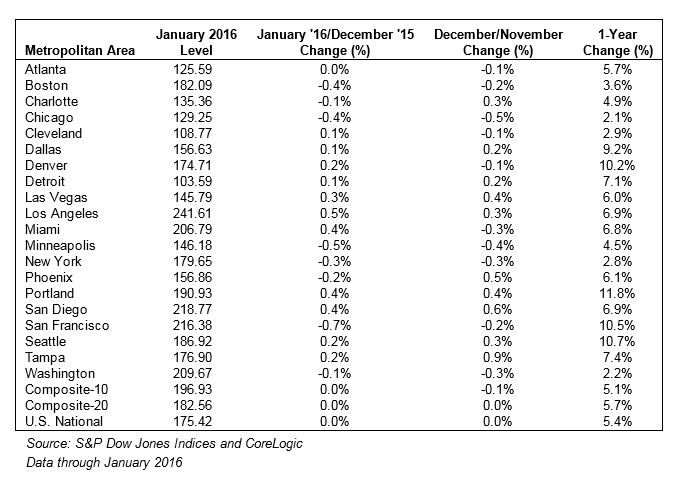
Portland now has the fastest growing real estate price increases in the country: http://content.kgw.com/photo/2016/03/29/s%20and%20p%20home%2...
This increase is not being matched by increasing salaries (they're increasing, but not at the same rate): http://koin.com/2016/03/31/report-portland-wages-not-keeping...
There are potential implications of this. Not just for people living here already, but for workers that may or may not be able to maintain mortgages at these rates if there's a contraction in the "tech" sector. I don't know how many people are weighing these decisions on a 10+ year timeline.
At the end of the day, I'm not sure how much of this is sustainable wealth. Portland got burned pretty badly in the 2000 crash, and really badly in the 2008 crash (at one point the unemployment rate was around 14%). History suggests it's a legitimate concern.
Does this industry (to the extent that you can call AirBNB, Uber, and Twitter the same industry) really act like a flock of grackles or starlings, descending on a place, eating everything, and moving on?
I'm looking to buy a home soon so the recent municipal prohibition on STR2s gives me hope that the inventory will increase and allow some downward pressure on prices.
You say that as if gentrification is a bad thing.
Spend one weekend hiking in Yosemite, another working on a digital arts project in Oakland, and you still got plenty of bandwidth to sip your fancy coffees and swing by Stanford for some lectures and run into competent friends to solve some business problems for fun and profit... life is pretty damn good for work and play.
Caveat: Of course, this is coming from a position of privilege: that I spent both undergrad and grad in the area and have built up a strong base of connections here within the profession world and academia, and that the $10k-20k net salary optimization does not meaningfully affect my quality of life.
Seattle locals complain a little about all the cranes across the skyline. I see it another way - Seattle is absolutely going to eat SF's lunch if it doesn't change.
You already have Microsoft, Boeing, etc here. Google, Facebook and Space X have now opened offices too. This city seems to be fully engaged handling that growth and how to capitalize on it. We've been receiving flyers about developing the transit system for the next 25 years. A far cry from the sassy (and painfully accurate) BART twitter account calling out the lack of investment in it.
I'm not saying it's perfect, but there's some real problems with the inelastic supply of housing in the SF/Bay Area.
One underestimated part of CA's success, though, is the fact that non-competes are illegal: http://asr.sagepub.com/content/76/5/695.short. If Washington State banned non-competes, it would have a really tremendous long-term advantage.
I rent a two bedroom house in Oakland for $2,200. My commute is not too much longer than it would be if I live in certain parts of San Francisco.
There's simply little advantage to living right in the heart of a major city.
You have to ask yourself:
"Instead of renting in a high-profile location, what else could I buy with an extra $24,000 a year?"
Yes, average rents are too high, but nobody says you have to pay the average rent.
The most insane part is the people who commute down to MTV (eg. Google) and only really get the benefit of the city on weekends anyway...
* No need to own car, or at least no need to drive everyday.
* For a spouse on a H-4 visa and who thus cannot work, living in the city makes things easier and a lot less boring.
* Mountain View / Sunnyvale / Palo Alto / ... have pretty sad downtown areas, they aren't bike/pedestrian friendly, and they make you live in purely residential areas.
So they end up spending $3~4000 on rent to live in SoMa and be close to their company shuttle lines or the Caltrain station. Some can work during the commute, some can't.
My friends in Berkeley have it better (much nicer residential areas, you can bike to your Bart station). But then of course you need a job in the city or in Oakland (and even though things have supposedly improved a lot, it still looked pretty sketchy to me).
Remember also that Mountain View despises mixed use and refused to rezone areas currently designated commercial-only in order to let Google workers live near their jobs. Of course, it also would have meant people who bought in the 70's would have some tiny amount of competition for their asset.
I pay the same amount as my cousin, who lives in Manhattan in a studio apt that's smaller than my guest bedroom/office.
At my current job in the financial district, the commute would be the same. Plus, I live in a historic neighborhood where there are houses with lawns and gardens and trees. And it reminds me of home in Texas.
NYC isn't as bad as SF, but it can be really awful if you insist on living in the most "happening" parts of town.
Depends on the city and what you're after.
Living in the centre of a city can bring lifestyle benefits, especially with fast and reliable public transport. Major cities with metro/subway networks can offer a massive playground of activities all without relying on cars. It might sound bizarre, but there's a certain freedom from moving through a city without using a car. In my experience cars rely on a fair amount of responsibility and effort, whereas public transport offers better opportunities to enjoy the journey.
In addition to that there's the social aspect. If you live close to where you work it's far easier to be social with your work colleagues after work. This can lead to a better sense if camaraderie with those you work with, especially if they live close to where you work too. Seeing as it's often the case that people work in the heart of a city rather than the suburbs, these are perks you're far more likely to get by living in the heart of a city.
There are certainly advantages to living further afield as well, but I hope you can agree the choice isn't one sided.
I lived in both good, bad and transitioning neighborhoods and I feel like people over estimate how much impact this will have on life.
Fact is, shit happens everywhere. Happens more often where there is density. You can be mugged in a good part of town (well because that's where people with money are at) and bad part of town. Before I moved back to NYC, my wife would regularly get harassed in SOMA on the street walking to her job.
This is a very personal opinion, and can vary depending on one's interests and stage of life. Young single people benefit from being "where the action is" as they are near other young people doing the same thing and can pursue various social and romantic interests. People who aren't interested in those things for whatever reason have much less to gain from living in the heart of a major city.
i don't blame them, everyone has their reasons, but i want to caution you that while it's possible to find a good rental that works out for some period of time, it's not a long term assurance and being forced to move can make it difficult to acquire a place as favorable as the one you have with the combination of commute or rent or other intangibles you've grown accustomed to in your neighborhood. Or you may find one at the price, but it may take a much longer time than you have allotted, especially in this market where qualified renters are plentiful and willing (often out of necessity) to pay high rents for substandard properties.
I also asked myself the same question you did, but the conclusion i reached eventually involved me moving out of state last year. ¯\_(ツ)_/¯
Also, this book, although it's pretty high level: http://amzn.to/1qsn2RD
I think this is one of the most important issues in this day and age. It's happening everywhere, and things need to change.
Edit: downvoters, care to actually state your opinions? I'm hardly a libertarian, and neither is Matt Yglesias, author of the aforementioned book. I don't think 'free markets' are the answer to all the world's problems. But I do think a more liberalized market would help housing a lot. These areas need more supply, and if you don't want LA style sprawl, the best way to do that is via density. And the best way to accomplish that is probably by letting the market work, within reason: I don't suppose I'd be in favor of allowing an outdoor thrash metal venue in the midst of an otherwise quiet neighborhood, but there are a lot of things you could add to make places more livable and walkable without cars.
Where I live people don't leave any room for parking on their own property and all of the streets are completely jammed with cars, every inch. You don't hardly dare move your car if you've been able to find a spot.
Is that freer?
We need to regulate good design that leads to compact and efficient communities instead.
My fear with less regulations is that while you could see taller, and denser buildings in some areas, you'd also open up the potential for an increase in sprawl, as lazy developers chasing profits would equally be allowed to build low density sprawl if there was an incentive to.
The local example of this is that in Metro Vancouver it is basically now impossible to build a typical suburban mall. No city will allow it because it's a terrible idea from an urban design and planning point of view. However, two malls have recently been built nonetheless! This happened because the developers found land near the airport and on First Nations land that was outside the jurisdiction of local government, and they could build whatever they wanted with little to no oversight.
The article names the usual suspects for engineer emigrants (Austin, Portland, strangely no mention of NYC or Raleigh RTP), but why are people moving to Phoenix? Isn't living in the less sexy areas of South Bay (Sunnyvale, Milpitas, South San Jose) pretty much on par with urban life in Phoenix?
It's all just so interesting, I think?
No way. Phoenix is a wonderful place to live! The weather is beautiful! Forget that stuff you read about the heat; you'll get used to it. It's a dry heat!
Seriously, if you live in the Bay Area or Portland or Seattle, move to Phoenix! It's great! There's plenty of room for everyone there! They even have excellent public transit with the Light Rail!
Cost of living index compared to San Francisco according to WolframAlpha:
Seattle -20%
Phoenix -42%
Austin -43%
Also funny: every time someone argues with this point, they'll put up a link to the most expensive condo in the hippest part of downtown Austin and say, "Look! Look, this apartment is $4000. Austin is expensive too!"
(Personally, I've turned down job offers for ~2x what I make now just so I don't have to endure today's rent prices, which I anticipate are only going to increase.)
If you're in SF and you want better access to talent, consider a distributed team instead of expecting everyone to move to SF.
>$569,500 in Los Angeles, Zillow data show.
If you want a decent quality of life without 1-2 hour one-way commutes and you work in tech, most likely you need to live either in Sillicon Beach (Santa Monica/Pacific Palisades to about Redondo) or Pasadena or Irvine areas. None of these are as cheap as $600k. Rents are catching up quickly as well.
If you are trading traffic for cheaper rent, Bay Area has those options too.
There are a number of cities that have significantly less of these problems. But that's primarily because they have other, different major problems that they are struggling with instead. (High violent crime, financial crisis, lack of employment or far-lower-than-average incomes, etc)
Once the startups make it, rather than develop large campuses in the bay area they can expand elsewhere and take advantage of those workforces.
"A software engineer in Austin earning $110,000 would need to make $195,000 in San Francisco to maintain the same quality of life"
Would they? They point out the median in the bay area is $118k, but there's no indication that the median in Austin is $110k; maybe they just pulled that number out of thin air?
They cite slowing tech employment growth in SF, but it seems clear that it's a result of near-0 tech unemployment.
They talk about the exodus "in the past year" as if it suddenly started happening; people have been bitching about the most recent cycle for years, but it's been going on for decades.
"They've become tech hubs in their own right in a way they weren't three to five years ago"
What?
"We bought a beautiful Craftsman home in an awesome neighborhood and that just would not have been possible in San Francisco."
I have no problem with people moving and displacing others, but you have to be clear that the reason you can afford that is bringing the fruits of a higher-cost-of-living area to a lower-cost-of-living one, not because it's inherently more affordable for people who actually (already) live there. In this case, he's .. moving his company? So I guess he's able to keep his pay the same (??).
http://get.hired.com/rs/348-IPO-044/images/Hired-State-of-Sa...
The real question is "does an engineer of X qualities" make more or less after cost of living adjustments? eg: Maybe you could live well on 110k , but would only earn 95k, suddenly SF seems better.
I learnt from others that in other parts of US, we get good schools and decent house at reasonable price in Seattle/Portland/Austin etc. But uprooting entire family looks extreme at this point and we don't have stomach to do it.
Curious, as to what others in similar situation are doing.
Who is going to be the first to move? The capital or the talent?
One has to drive the other out. VC money isn't going as far as it used to, and talent has to increasingly eat more ramen just to live and keep the lights on in their company.