Another possibility is Uber is fucked and people are kicking the can down the road based on chauvinism. Reading her nightmare reminds me of this quote from The Sopranos.
"Money flows uphill, shit flows downhill." - Tony Soprano
We all know how DiMeo crime fmaily met it's fate. While great at navigating diplomacy and making a thriving organization, Tony's downfall was not realizing eventually the shit no longer has any room to flow downwards and the leader finds themselves neck deep in it before it's too late.
In the time since, I've found that advice to be so reliably true that it's one of the core things I use when deciding employers. A kind, pragmatic, ego-free CEO is mandatory for a culture that values the same. Likewise, the personality flaws in a CEO will propagate downward through the staff because everyone looks up to the CEO to signal what does and doesn't fly.
Anecdotally, I expect that Uber will not change while Travis is employed there, and as long as he makes more money than the lawsuits cost, (most of) his investors will find that perfectly agreeable.
This advice may be reliably true but I would also argue there are major exceptions. For example, take founder & ceo of any billion dollar company and you will find that they evolved drastically (in good and bad ways) over the years. Zuckerberg has radically transformed himself from an immature frat boy to a charitable, intelligent billionaire CEO. I am sure people who have known him over some period of time would disagree with your investor's line of thinking.
Re: "founders can change" - I don't think it's the role of the staff to wait around while a guy spends years in management learning not to be a dick. If they put up with it, and it happens, fine that's great, but it doesn't impact the linkage between CEO and culture.
The creepy and megalomaniacal strains of his personality, though, still seem to be there in full force and are reflected in his company and product.
dude spent his time studying latin, programmming and taking psych courses.
evan spiegel of snapchat is more your typical transformation from immature college kid to billion dollar company CEO
Also, I got to say that if I'm in the same room with a woman who has a very visible cleavage I will look into the ceiling to avoid even the vague notion that I'm looking into their breasts.
Neither is mutually exclusive or objective. Someone can be sexist and be a pleasant person and someone can be an unpleasant person, but not sexist.
Similarly, someone can be unpleasant and racist to one person, but be pleasant and not racist to another.
There's not solid way to determine these things. If you're not in a position where you're being scrupulously watched over for signs of being an ist, then just try to be a good person instead of being not a sexist, or not a racist.
> Also, I got to say that if I'm in the same room with a woman who has a very visible cleavage I will look into the ceiling to avoid even the vague notion that I'm looking into their breasts.
That sounds more like social anxiety/ conditioning.
Usually engineers have to go through rigorous interviews; maybe it's time that was stepped up for managers with better behavioural questions.
Out of curiosity, what did you meant by male centric position?
It's a source of constant amazement to me that people who will drill incessantly on red-black trees won't put in a modicum of effort to learn even a little bit about the inherently more complicated business of managing people.
This isn't really an issue if you promote an engineer to mgmt when they have demonstrated that can manage people, rather than before and assume they can grow.
How do you test if a manager is a narcissist or a psycopath? And is it even legal to do so?
Get your engineers who want to go into management to get a MBA (regular, part time, or executive). Eng background with a MBA is IMHO one of the best combinations around.
Managing people & businesses isn't something you're born with, it's something you learn and train. Just like coding, but sometimes way harder.
Full disclaimer: I have a computer engineering undergrad and a MBA, so take my opinion with a lot of salt :)
This makes them less prepared for the stress and less in-tune with the emotions of others, i.e socially unprepared to be leaders.
HR is not there to protect you or help you. They are there to protect the company. Sometimes protecting the company happens to mean helping you, and sometimes the HR people are good people who look for solutions that makes everyone happy. But don't count on it.
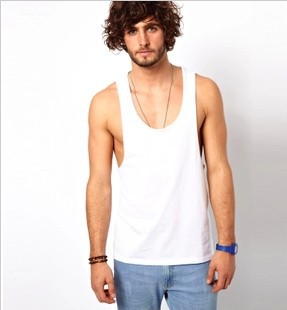
The only citation I can find relevant to the claim of sexism is that she was asked not to wear a tank-top to work. It may very well be that a tank-top is inappropriate attire at Uber's workplace. At IBM and many other companies, it certainly would be inappropriate, and it doesn't sound out of place at all for a manager to ask an employee to wear more professional clothing.
The employee writing this is openly hostile to HR about her manager and for reasons I can't understand. "All of the insolence and harassment I face has damaged my views of Uber and made it really difficult to continue working here." Because she was asked to work at her desk and not wear a tank-top?
You're correct that a good manager could make a comment about a tank top being inappropriate attire at a given office. But note when Tina said this: it was when the author was talking to another manager to leave the team. Tina isn't giving constructive advice; she's trying to stop the author from forming relationships with other managers. Note also, that Tina led the feedback with disparaging Mark, by saying that Mark was staring at the author's breasts. The implication is "Mark doesn't have your best interests in mind, he's simply a pig; I have your best interests in mind by telling you to cover up, which is advice I think you need to hear."
Respectfully, I don't think this blog post would get play if it didn't have the female-on-female sexism angle.
The title's misleading: "Sexism at Uber from female management #UberStory"
Probably entirely accurate.
Maybe 'Tina' is a bad boss, but to take one employees gripes and accept a face value that she has they behavioural awareness to know her boss is 'insecure' is a stretch too far.
Sometimes, people look at bold and arrogant people and say 'oh, they must be insecure', when maybe they're just plain old jerkoffs.
I see a story of a generally crappy boss, but that's not entirely uncommon in the world. In fact, it's common.
The issue I think would relate to how it's either systematic or not at Uber.
I would agree with you if the author of the article put forth 'insecurity' as an explanation. But she didn't; that was my interpretation of the claims presented in the story as they were written. And yes, I did take them at face value, just for the purpose of illustrating that it's plausible to wonder if there's more going on here than tank tops.
I mean, the author doesn't exhibit any behavioral awareness. The author presents one email she wrote to HR as a complaint, claims HR did nothing about it, labels her boss and HR as sexist, and says things need to change. She's more concerned with the atmosphere at Uber that allowed her complaint to be ignored than anything else.
>she was asked not to wear a tank-top to work
She was not "asked not to wear a tank top to work". Her manager directly linked her (sane) clothing choices to the implication of promiscuity and its impact on her career, with an anecdote about one of her previous coworkers social habits and underwear.
That's inexcusable.
The employee's email is not "openly hostile to HR". She is descriptive of a hostile situation, and upfront about its impact. There's perhaps some subjectivity here, but I don't think it's nearly the same thing.
Your comment seems to do some gymnastics to trivialize a story full of conduct that, if true, is unambiguously improper.
I think the case could be made that the manager was actually displaying sexism towards Mark. How? By believing/saying that his decisions would be motivated by what kind of top the author was wearing. This is clearly an old stereotype of males and pretty much definition sexism.
Her manager also comes of as an ass in this article; not sure what's true though.
If it seems too revealing to someone, that someone is probably spending all time with males or old women only.
As a man, I have never had a single manager comment on the clothes I've chosen to wear at work... Or had my attire compared to a guy playing ping-pong in a speedo.
>You also just might not be that attractive.
Pretty sure that a tank-top is.
I went to a business college, and we were taught to dress professionally, I think we spent a full day on the topic in "business communications" course. We most definitely discussed that cleavage should not be shown and dress length should be appropriate. I worked in this college as a tutor, and we also required button-up shirts, tucked in, with a belt, and dress shoes, even though we made minimum wage. "Dress for respect"
Does Uber have a dress code, besides tech-casual? From the sounds of it, GM did.
Happened to me a few times for various attires.
So far, it has an incredibly high correlation with bad management.
It sends the very clear message "You can't do your job, so I am going to watch you like a 10 year old."
Fuck that. I would rather be homeless than deal with that shit.
How do we know it's not jealousy or personal vendetta?
If that's the case, then never, ever go into management.
Mandatory dress codes. Men in suit, with tie from the time you enter the office until the time you leave. Women in suits, pants or skirts.
Or go whole hog and require everyone to wear grey coveralls when in office.
Institutions with dress codes generally have less BS distractions because the distractions simply can't exist.
Come now child, learn your history.
Please.
In a professional office, if you have a grown-ass adult who is critically distracted by the sight of bare arms, that's their problem, not anyone else's. If they can't manage the barest scraps of self-control, they need to consider a different line of work.
The Bill Belichick and Nick Saban enforce strict behavior and dress codes for their employees to simply eliminate distractions. Break the rules and they fire you. They're the most successful "mission oriented" teams of the past two decades.
Uniforms contribute to the sense of "unity in direction" that the best companies have. They should be something that you're proud to wear as a signifier of your work, see IBM in the 70s and 80s.
- Times I've ever been distracted by conversations/music/movement/laughter in my open office: 9000+
Yep. Outfits are the only cause of BS distractions that can exist in offices...
Can you explain your criteria for sexism? (I'm asking in good faith.)
The office should have just implemented a dress code for everyone.
The modern use of the word "sexism" includes gender-tailored harassment. It's a broader term nowadays than just "holding a belief that women are worse at X".
If a Male manager told her she probably isn't doing well because of how she dresses (and she dresses reasonably) that would be sexism, so it's the same thing if it's another women doing it.
On the scale of sexism this isn't as bad as the other things reported about Uber (she wasn't propositioned for example), but I believe you could argue it as sexism (IANAL, you'd need to one tell you for sure).
That has never happened.
So if a manager has a department composed of 100% of one gender they can't make sexist comments about their employees' clothes because there isn't someone of the opposite gender to see if it's 'sexist'?
It sounds a lot like things I've heard used as examples of sexism in lawsuits against companies before, so I'm willing to believe that it is sexist (sounds like it fits in my mind) and I believe it's what the writer was referring to in the title (whether others think it is sexism).
Although the story doesn't spell out the gender of everyone on the team - the statistics of 11 engineers implies she could be the only female - only controlling her work behavior (where and when she can work), but not her coworkers (that they can work from home), if all her coworkers are male, is pretty sexist. And it may be indicative a deeper - and more pervasive - problem of sexism (for example, she was regularly managed differently because she was female, which sounds like the case) that was the main problem for her.
Where does it say the manager "wasn't telling male workers to wear long sleeved shirts?" Even if so, how's that sexist? To say that something's sexist because a man gets different advice than a woman with no context is unacceptable criteria for sexism.
Re: WFH, she's a junior employee (graduated in 2015) whose boss told her to "be at [her] desk to 'ensure that [she's] collaborating with the team and getting the support [she] need[s]."
She's complaining about getting reprimanded for "working from home for one hour in the morning." That sounds like she was expected to be in the office and didn't clear ahead with her manager. Why was she WFH for just one hour? How's the reprimand sexism?
Taking her claims at face value, she's not making a strong case for sexism.
I'm saying she was told to wear a long sleeve shirt. I find it exceedingly unlikely a man was told the same thing and she didn't hear about it (especially as the male employees were joking about it with her, it seems likely they would have told her). Hence, only she was told that, which is a sex based (a protected class) restriction on clothing.
> She's complaining about getting reprimanded for "working from home for one hour in the morning."
Something everyone else on her team did that day. You are right we don't have enough context. But I'm saying it's (reasonably) possible. Suppose she was the only female on the team (likely) and there was a male coworker who was also a similarly experienced junior dev (possible). If she is told not to work from home, but he is allowed to, she is told to work at his desk, he can work anywhere, she is told to work on thanksgiving, he is not... that is straight up sexism. Even without those conditions the tone of the emails could have also implied it in each of those instances (to be clear those instances are all reported by her, but her coworkers actions and identities are not).
So yes, it could be just a bad manager. But it sounds like she told HR a lot of times she thought it was sexism with no response. Regardless of if it was or wasn't sexism, HR did nothing. That puts the blame on Uber, rather than just a shitty manager. And that means Uber can't say whether it was or wasn't sexism, because they didn't bother enough to care to investigate it. All of which speaks poorly of Uber.
Agree.
It's "just" a common case of "bad" management.
It's also possible "inappropriate" clothing depends on the person in question. E.g. if I'm overweight and wear really tight fitting clothing, that might be more distracting than someone in good condition.
It could also be jealousy, unrelated to sex.
Everyone's assumption might be right, given Uber's culture. But this story isn't really conclusive by itself. Now if there were many female engineers with a lot of diversity among them under this manager, and only female engineers were banned from some work environments, then that'd be stronger evidence of sexism.
If it had to do with her religious practices, yes. If she was singled out for no other given reason and she was the only one and the decision maker had made comments on her protected class status related to it... yes (if it walks like a duck...)
> E.g. if I'm overweight
Not a protected class without a medical note classifying it as a disability. Bad example.
The better example would be a Hijab (religiously protected class, distracting clothing), which yes, she has a right to wear as long as it doesn't directly interfere with her work (e.g. assembly line or something); just saying it is distracting does not count.
Notably, sleeveless clothing is not a fireable piece of clothing unless it is for everyone. And since it seems exceedingly unlikely that this manager is saying the same thing to her male employees (especially as the male employees are joking about it, it seems likely they would have told her), it is sexist discrimination.
> It could also be jealousy, unrelated to sex.
Except no, it was pretty clear it would have to be related to her being female if that was the case (because unless the guy was bi-sexual, it's unlikely she would be getting jealous at a male coworker doing the same thing).
> Everyone's assumption might be right, given Uber's culture. But this story isn't really conclusive by itself. Now if there were many female engineers with a lot of diversity among them under this manager, and only female engineers were banned from some work environments, then that'd be stronger evidence of sexism.
Yes, but we don't have many female engineers (~15%) to ask. And many of them report sexism quite often when leaving the field entirely. Seems a bit of a chicken and an egg if it wasn't for the fact that both the chicken and the egg are very clear about the problem when asked.
You are right. It may not be sexism. And just a shitty manager. Even so, parts of it seem like they could be sexist. She is calling it sexist. And it is representative of a shitty culture either way. And the sexism charge could have been avoided by simply having better management practices. It's almost like if you don't protect your employees bad things (like sexism, racism, etc.) can happen.
You don't know that.
In general if dress codes are sexist, they're sexist against men. Women have a much broader repertoire of appropriate clothing (skirt or pants, blouse or shirt, tie or no tie) than men (pants, shirt and tie, suit optional).
No we don't. But we do know the other people in the office made jokes about the manager telling the author to cover up. I think they might have shared a "Don't feel bad, she told me to cover up too" story if they had been told that.
> In general if dress codes are sexist, they're sexist against men.
Most offices I have worked at do not require men to wear suits and ties. Also, if you wanted to wear a skirt management wouldn't be able to get upset at you unless your contract specifically said you would follow the company dress code without a lawsuit. Also, I've seen men wear kilts to an office before, and that's also a protected class.
I don't know what you are talking about here.
I mean it seriously, if everyone wears business, then it is what it is. If you wear flip flops and metal t-shit, thensuring female street wear should be fine too.
Besides that, tech culture seems to be all proud about rejecting attire formalities and about business being stupid for insisting on them.
If she's not customer facing, who gives a shit? Some of the worst, toxic behavior in companies is committed by men in suits
I mean, I can imagine that characters like Tina existing in the world, hiring them, promoting them to management, and then learning that they have problems like this. It's hard to screen for these sorts of personalities a priori, and it can be difficult to fire them quickly also once that problems start manifesting. That could happen anywhere.
What's particularly odd about these stories coming out from Uber is that there are so many of them in a single company.
I'm not sure culture itself explains it. Even if you assume that "Uber has an evil culture", you would think that they would still be incentivized to keep turnover caused by bad management down.
No, it's not. When toxic ideas are given a place at a company, only people who are toxic will embrace the toxic ideas enough to survive as managers. The non-toxic people either knuckle under, but don't fully "live the values" of the company, which shows. Or, they leave or are "managed out" of the organization.
Toxic management seems to happen when a company's management lives in an echo chamber made up of only themselves, and more than one member of that group has a personality disorder.
I had a similar experience with, sadly, a company with whom Y-Combinator leaders are still involved. The words "If you don't want to work in the way we want to work, you should just leave right this minute in good grace or you'll lose the fight and you'll be unemployable" (said in a meeting, by a C-level leader, in answer to an innocuous and helpful question) still echo in my mind.
Not exactly. You need a few more magic ingredients -- like a heavy dose of the standard "Move fast, break things (and rules, and people)" + "Valuations über alles" SV ethos (topped off with, a well, cringingly bro-ish name like "Uber" to begin with) to get to the exquisite place where Uber has come to find itself, thus far.
Company I work for retention can be factored in but the ability to rate your boss is given each year and if that comes back negative along with poor retention than that is reason for further action.
Bad people in a company means there's a hiring problem, which ultimately is a management problem.
Losing lots of people means the pay is too low or the bullshit is too high, and both of those are management problems as well.
Also she has freedom too. A tank top is not out of the ordinary.
Easy solution. Turn 180 degrees. Ask the coworker you are now facing to change the desk with you. Problem solved.
Cool. Likewise, if you are a woman distracted by guys staring at your boobs, it's you who are to blame for lack of self discipline. Find ways around that, it's called character building you'll find it useful in life in general.
Fair's fair.
We are human because we can resist the urge. Yes, women will be attractive to men and vice versa, its biological, but a tank top and I guess nowadays yoga pants are quite normal.
Not getting promoted because you wore tank top a couple of times is like saying to a guy "you wear shorts and your calves are sexy, so we won't promote you". The fact that a female manager says that means, sexism is rooted deep in "Uber"
Sexism is rooted in Uber because two women from a company with 6700 employees wrote a post how they felt discriminated?
My niece is studying to become a CS major and she has heard this argument once.
The culture is set by the worst behavior an organization is willing to tolerate.
This only makes sense if interviewers prefer non-CS graduates.
You wear the same shirt everyday?
I left jobs for a lot less than what this person went through.
I hope she gets a better job soon and I am glad all these stories are coming out now.
This is aside from other things like not feeling like you can get another job, or having bills/bonuses that you'd have to repay, etc.
Young people who started careers at Uber may not even realize how odd this is compared to a normal or 'good' company.
Let's repeat one more time, don't do 100 hours week, you'll never get paid for it.
Or 15 if you're in one of the lazy European countries, like France.
'My manager doesn't respect me'. Well ... my bet is that 20% of the entire world feels this way.
'Banned from other offices'?
Most companies have many offices and they usually expect people to work primarily from their own workspace.
I worked in a fortune 50 with many offices and I was not allowed to work remotely or from some other building, unless meetings etc. That said, maybe the rule is applied unfairly? But it's conceivably entirely within the managers authority to do that.
As for the 'tank top' ... that one's tricky. But no female in my F50 work experience ever wore a tank top. There was no dress code, they just didn't do it. There are many places wherein it definitely would not be allowed. That's a tricky one ... I think it would have mostly to do with what was 'the norm' a the company, and what role is being played, in what context. But yeah, it's tricky.
This sorta happened to me once in high school, in 10th grade English class. Our teacher (a highly religious female), near the end of the school year, had us write down our comments and criticisms anonymously. One big complaint a bunch of people had was how she talked a lot about her religion and church experiences in class. Being a public school, even though it was close to the Bible Belt, it was inappropriate and a lot of students were uncomfortable with this, and apparently commented about it (I was one of them). So she addressed this in the next class, defending herself and also commenting that she knew who many of the commenters were by their handwriting. So much for anonymity.
I believe some people complained to the administration, because she wasn't there the next year.
It's really strange how people in a position of power will solicit "anonymous" feedback, and then when they don't like the criticism will figure out how to identify the complainers and use that against them.
Anyway, the problem I have with this "sexism" claim here is that this anecdote doesn't seem to paint Uber itself in a bad light at all, and doesn't even have any complaints about bad behavior by any men (did I miss something?). It just complains about a single female boss. She sounds like a horrible boss, to be sure, but a crappy female boss telling you to not wear a tank top isn't really what I think of when I hear about a company that has a "culture of sexism". All the complaints this woman has are about this one boss, that's it, and also probably HR's refusal to do anything about it.
Honestly, this doesn't surprise me at all about the boss, and I don't think it's indicative of a major "sexism" problem within Uber, just another data point showing how crappy their management and especially HR are, but that's not a problem unique to Uber at all. Personally, I'll bet that the female boss isn't as pretty as this woman, or somehow views her as a threat. I've heard tons of stories about women in the workplace attacking other women, and many of these I heard from my now ex-wife (who I'm on good terms with). She has a bunch of stories about being singled out for abuse not from men, but other women, probably because she was prettier than them and didn't play their stupid social games. She had coworkers literally verbally attack her (screaming at her even), and even though she didn't do anything to instigate this or escalate or even respond, she'd get called into HR and treated as though she had started the problem somehow. (Other coworkers would then testify in her defense that the other woman was nuts, and then HR would then just tell her to "try to get along" and that "Julie is a little touchy" or some BS like that, instead of actually dealing with the toxic employee.) Strangely, she has no stories of abuse from men in the civilian workplace, but she was in the Air Force for a little while and had a few problems there, including an attempted rape (by someone she thought was a friend) wherein she stabbed the guy in the abdomen with her keys, but overall got along just fine with both men and women and got a bunch of commendations. But when she moved to the civilian world, she had no end of trouble with female coworkers and useless women in HR.
Edit: I am an Indian and it is a big deal in India to wear "revealing clothes", albeit I have no idea what a tank top is neither do I care
Just FYI do you don't assume that I am a sexist and downvote me.
Oh wait...
My point is that it can certainly be sexism depending on the company in question.
If you've got Uber on your CV I would not hire you, no matter how talented you are. No talent is worth the risk of poisoning the team and potentially driving out my other talents.
Or perhaps 90% of the Uber folks just simply force to stay because they are bound by immigration, etc. I don't think "will never hire X from Y because of poisoning Z" will always stand.
I have heard that from many individual said similar comments such as "will not hire from Amazon, will not hire from FB, will not hire from MSFT", but as the company grows, you don't even got that choice. Because recruiters will find them and will get them in. Can you say that to every hire you made in a company with the size of 10000+ ?