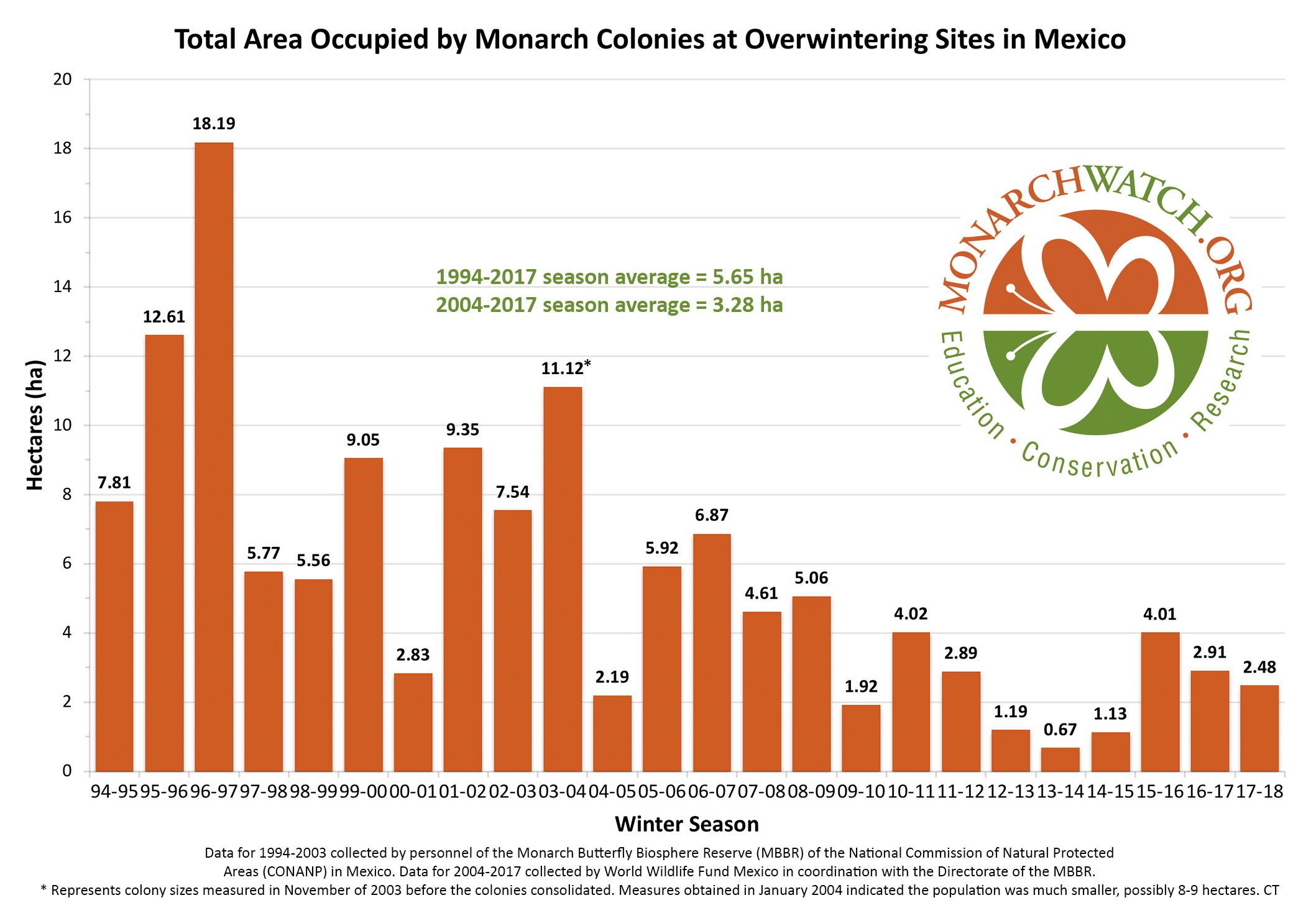
Our guides, showing WWF slides, told a more optimistic story about numbers. They had declined to very low levels around 2011, but have bounced back substantially. They said the small decline in the last 2 years might be normal variation due to weather. The graphs showed random variation in population by a factor of 2 from year-to-year going back to the 1970s, so it's probably hard to conclude anything from a single year's count.
Still, if you live along the migration corridor, please plant milkweed and don't use glyphosate weed killer.
I asked our local nature center if Monarchs only eat milkweed, why they would pupate on this plant. They identified the plant as https://en.wikipedia.org/wiki/Asclepias_incarnata , a variety of milkweed.
Guided by my grandmother, an amateur naturalist, these were my first experiences leading to a knowledge of change, lifecycle, and above all the beauty to be found in the natural world. This simple gestation process of a curious looking caterpillar is impressed on me like no other early childhood memory. A process taking weeks, it was my first consciousness of time.
Today, those meadows are acres and acres of trimmed lawn. The smooth aesthetic of green grass pocked with dandelion has won over the wildness of a milkweed dotted field. But me, I've forsworn all lawn mowing, and should I ever own a meadow, will let it go to seed.
https://www.washingtonpost.com/national/health-science/why-p...
https://geneticliteracyproject.org/2016/11/04/save-monarch-b...
The invasive Dog Strangling Vine is related to milkweed and monarchs will mistakenly lay their eggs on it, where they fail to mature. It is a very prolific invasive species, and is significantly outcompeting milkweed in many areas.
edit: here is what I would consider a better guide from the Xerces Society, with links to regional seed suppliers.
Things are getting really out of wack, and I'm not looking forward to being around for what might become the collapse of our ecosystem.
http://www.kcrg.com/content/news/Planting-a-billion-milkweed...
Almost sounds touchy-feeling, until you get to this part (of the link above)...
"... The Endangered Species Act has tremendous impact on private land ownership. And so we don't want to get at a point as a partner with DNR with our other partners out there, we don't want to get to the point where there is no choice but to do this then it becomes mandated under the endangered species act. We'd rather have voluntary participation."
tl;dr; If the DNR shows up, we'll finally have to do something about our water quality.