See this chart: https://i.imgur.com/Uo07d1d.jpg
More details here:
https://medium.com/cryptomedication/uncovering-the-real-cart...
https://medium.com/@bitfinexed/latest
https://medium.com/@mattcollburner/bitmex-insiders-caught-in...
https://www.tradingview.com/chart/?symbol=POLONIEX:USDTUSD
>they've created 2.8 BILLION USDT
Absolute numbers are meaningless and less eye catching when they're compared to the entire market. 2.8 ~~Billion~~ USDT is only 0.5%-0.8% of the market. Do you really think that a 300-500 billion dollar market is being propped up by less than pennies on the dollar?
What can be said about Tether: it's a trusted third party that's vulnerable to fractional reserve (like all other exchanges). I wouldn't recommend people use it but to point to the tether creation as proof positive of manipulation rather than discussion fractional reserve issues I think is people confusing lurid facts with silent evidence threats.
Other reading: https://medium.com/crypto-punks/tether-misconceptions-298443...
So they issue 11million unbacked USDT and use it to buy bitcoin. They sell the bitcoin for 10million USD on one of the exchanges that allows bitcoin to hard currency exchange. The 10% loss is because you have to pay a premium to exchange bitcoin to real currency. Bitfinex then pays the 10million USD to the customer in exchange for the 10million USDT which is retired.
The net results are 1million new unbacked USDT have been printed, and the illusion that USDT is backed by USD has been maintained.
Possibly the "Bitfinex issues unbacked USDT to buy bitcoin" step is being done not based purely on customer demand, but on a periodic basis when bitcoin price is falling.
Maybe Bitfinex has a hope to preserve their fraud by propping up bitcoin, or to dig out from under the fraud by building a big long bitcoin position and hoping it will rise in value.
Or maybe the timing of USDT issues with market drops is just that bitcoin price falls when there are more sellers than buyers, which is the same time there are more USDT redemptions. So to carry out the mechanics above, Bitfinex has to print tether to fund the redemptions at the time of the drops.
This is false. Market cap is a meaningless statistic when applied to cryptocurrencies. If I create a billion 'FOOCoins' and sell one to a friend for $1, FOOCoin now has a 1 billion market cap, but only a single dollar has changed hands. He sells it back to me for $2, now FOOCoin has a cap of $2 billion! With only $3 having changed hands.
This is clearly an exaggerated scenario, but it does show that the market price multiplied by the number of coins is not meaningful.
> Do you really think that a 300-500 billion dollar market is being propped up by less than pennies on the dollar?
I don't think it's a 300-500 billion dollar market.
In fact the article you linked to goes on to explain this very phenomenon! That in fact it's possible that only around $6 billion in inflow has gone into cryptocurrencies, ever. This puts tether at around 1/3 of the entire inflow. Is that still trivial?
It makes the point that it is in fact possible to influence the market with pennies on the dollar.
Remember that market cap is meaningless while no matter how USDT were created(backed or not) those represent at least some fiat inflows.
My personal opinion: Tether initially had some USD backing maybe not 100%. Now, I'd be surprised if Tether has backing in excess of 10%.
That is still enough to control Tether if you have issuing authority and can limit redemptions for fiat.
In fact Bitfinex/Tether has done exactly that. You would be hard pressed to redeem Tether for dollars.
What? Isn't the entire friggin point of Tether that it's _not_ a fractional reserve system?
From their own FAQ (emphasis mine):
> All tethers are pegged at one-to-one with matching fiat currency (e.g., 1 USD₮ = 1 USD) and are backed 100% by actual assets in our reserve account.
It doesn't mean that you have assets that all total up to be a fraction of your liabilities. You're severely misunderstanding what fractional reserve means.
So, has it _psychologically_ managed to create price stability? So long as there isn't a giant run on the currency where they actually did run out of the necessary US Dollars (as well as insufficient people stepping in willing to pay $1 for 1 USDT), does it actually matter whether or not they have fully collateralized the currency?
I find that to be sorta interesting.
Is Tether a bank? Does it invest its reserves? If you answered no to either of those questions, then you have no business comparing it to a fractional reserve banking system.
https://omniexplorer.info/address/3MbYQMMmSkC3AgWkj9FMo5LsPT...
Who bought all these USDT? Who is holding them? Why would you hold them?
And one reason they might hold them is because they can't figure out how to exchange them for USD.
I mean, I'm sure there must be some people who bought USDT when that was their intention, but there are also a bunch who bought it by accident.
Further, there is more proof that Tether has the funding to back up the USDT than proof that Tether does not have the funds:
https://blog.bitmex.com/tether/
https://blog.bitmex.com/tether-addendum-new-financial-data-r...
Reddit memes, medium posts with no research, and "correlation implies causation" assumptions does not make rumours true.
> Our reserve holdings are published daily and subject to frequent professional audits. All tethers in circulation always match our reserves.
They've been around for years and the grand total of independents audits is 0 (zero).
Sure, assumptions don't make rumors true but them flat-out lying about audits and transparency speaks louder than anything else and we're not even getting into how it took the Panama papers leak for the public to find out that several of the people in charge of Tether and the people in charge of Bitfinex being the same.
There is no way Bitfinex has $2.2 billion in bank accounts. If a bank handles U.S. dollars, they are under U.S. jurisdiction. Bitfinex cannot show who own Tether; that makes beneficial ownership tracing, rules surrounding which became stronger twelve days ago, impossible.
Had they picked any other currency, the claim could have been plausible. But $2.2 billion in anonymously digital U.S. dollars? (Physical cash, too, might have been plausible.) Not likely.
Why creating Tethers from thin air is now a cause of concern? That's a coin just like every coin out there, like Tron, Verge, EOS, they're created from nothing by a program, they have the value the market decides it has and the creator has all the right to print all the coins they want just like everybody else.
And the market has decided USDT has more value than all other coins combined as it is number two in volume just behind BTC.
People use USDT as a safe harbor when markets collapse, it has its use, a very valuable use. Of course they will print trillions if they could, everybody would print trillions of their shitty coins and cash out tanking the market if they could, that's the nature of cryptocurrencies.
I fail to see why people complain about Tether (highly valuable) and not about the rest of the scam coins that are draining the market from stupid money.
If you are claiming they are backed by USD, and you are creating them out of thin air, then that's a scam.
Other coins are only valued based on how the market values them. There is no fraud there; you are not claiming that you will redeem them for something else, they just represent themselves and are valued based on how useful people find that particular kind of cryptocurrency, plus hype.
MtGox was also a scam by the end, since they were trading on their exchange bitcoins and USD that they didn't actually have for people to cash out.
This only works as long as people selling Bitcoin have been happy to accept Tether instead of USD, which (inexplicably to me) they have been doing. If Tether is proven to be backed by nothing at all, then there could be a serious crash as people try to get real money out and dump Tether. Your bitcoin being worth 7350 USDT isn't very exciting if your USDT are worth 0 USD.
No, that just means that there's more of them.
Why isn't there a better source for this than "four people"? I didn't see anything on the DOJ site. Perhaps they are talking about this: https://www.cftc.gov/PressRoom/PressReleases/7731-18
However, that doesn't mention the DOJ so maybe not. Is it normal for the DOJ to anonymously report its activities to journalists like this?
Because they're leaking. "Four people" is how a media organization says "it's not just one whackjob making shit up".
> I didn't see anything on the DOJ site.
Why would you? They don't appear to have publicly announced anything yet.
> Is it normal for the DOJ to anonymously report its activities to journalists like this?
It's normal for people at the DOJ to do so, yes. Some leaks are done on a semi-official basis (https://boingboing.net/2017/02/22/the-leaky-leviathan.html), others are just individuals doing it on their own.
The same reason that (except for actual indictments and subsequent court filings, and the extraordinary fact of the appointment of a special prosecutor) we get most—often later confirmed as accurate—info on the Mueller probe through similar sources outside DoJ: the DoJ doesn't leak much but a criminal investigation naturally touches people outside the DoJ that are less prone to avoiding leaking. Those can be people in the agency giving a criminal referral, which this reporting suggests would likely have come from the CFTC, or they can be people connected with witnesses (including, but not limited to, those who have been given notice indicating that they are subjects or targets of the investigation.)
People seem to think that coins are 'clean' after tumbling, but I think its much more likely that you'll get back more suspicious coins: superlatively, "Here's my personal-use drug bitcoin, give me coins that were earned by assassinating someone"
The USDT situation will get interesting eventually. Somebody made a spreadsheet of non-fiat volume of cryptocurrencies.
https://docs.google.com/spreadsheets/d/1pIrTYpJZrGbeI9QTIWGw...
Basically the fate of many shitcoins are tied together. My thought is that when USDT finally gets revealed as totally fraudulent the whole crypto house of cards crashes.
EDIT:
Also, the number of people to whom btc is attractive is less important than the type of people. It may be that there is never mass adoption of Bitcoin - it is also the case that throughout history most people never had any money at all. And even though most people never had any money, sound money has been extremely valuable nonetheless because most people don't know what to do with money anyway.
Also I imagine that major exchanges could get discounts on volume USDT purchases - this would allow them to paper over their own cash shortfalls in exchange for lending legitimacy to the scheme.
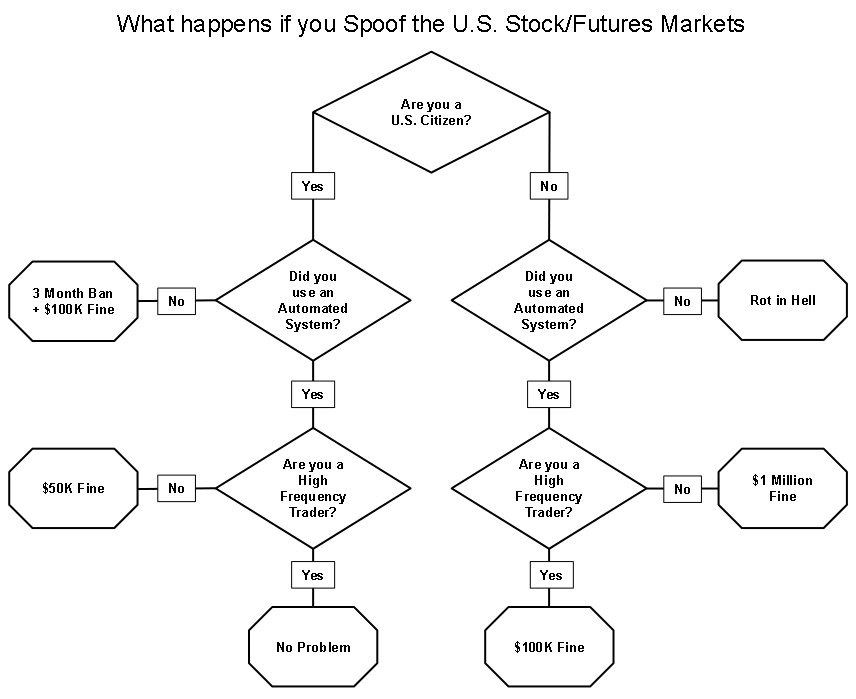
From what I understand, things like spoofing in financial markets (where you submit orders which you don't plan to have filled for the purpose that the market sees "interest" in a certain direction and in hope that moves the market), are regulated but still a grey area. The reason for this is that it's an activity that involves intent. Placing certain orders is perfectly ok if you're hoping that they get filled and you take a position, but placing the same orders could be spoofing if your goal is to cancel them once the market starts moving as a consequence.
So this is all strange to me.
Also they have been calling bitcoins death since about 2009 when it was created so I would not put too much faith in those predictions. If anything this sort of thing could help bitcoin, either price manipulation is identified, the culprits prosecuted and bitcoin goes on as it is. Or no manipulation (or not significant manipulation) is identified and bitcoin carries on as it is but with a govt. seal of approval (up to that point).
They could still be right, given time. They've been right for Bitcoin Gold, for example. They were right when MtGox crashed.
Is the problem that people may be trying to manipulate the price of decentralized commodity or that people are investing in a decentralized commodity without realizing that there may be people trying to manipulate it? I think there is a place for 'hard regulations' but I think there is also a time when the focus should be more on information than trying to enforce national rules on a global scale. Even more so when those rules are likely to fall subject to all the failings of political systems including graft, corruption, and the like.
decentralized commodity
https://news.earn.com/quantifying-decentralization-e39db233c...
It looks like this is how smaller currencies die, they are vulnerable at any time to 51% attacks thus no one wants to use them. At least in the traditional banking system if you had a lot of money you could manipulate exchange rates, but you couldn't just outright steal when you had extreme market power.
For instance imagine we had a mine that was effectively infinitely large (for the sake of the analogy). If we allowed absolutely anybody with a pickaxe to to come in and mine it, we might call it decentralized. Nobody would own the mine. That one group sent a million miners to go mine it would not suddenly make them owners, even if they happened to receive the largest benefit from the it. By contrast centralization would be when one individual or group forcefully stops, generally with government support, any other individual from mining in "their" mine. In this case they would indeed own the mine. In the case of Bitcoin there is absolutely and literally nothing stopping from somebody from starting up a mass mining farm becoming the new plurality beneficiary.
You're absolutely right by the way, libor rates have been rigged for decades and governments simply "fine" companies doing it. A simple google search will bring up sources for this claim.