What is there to be _done_? Pandora's box is open, so to speak. If Facebook disappeared overnight, are we really going to assume the problems they're in are going to go away?
Everyone is potentially connected to everyone, everywhere, on the entire planet. There has never been a technology so powerful as the centralized internet.
Furthermore, outside of media companies and the HN bubble, people _do not care_. Your average person doesn't care about decentralization, preventing social media addiction, gamification, or polarization of online communities.
To the contrary the market shows that companies like FB are massively successful.
So what are we to do? The world has been changed, drastically. Were we ready for it? And if we somehow were rid of Favebook, are we ready for what follows?
My parents, who are deeply not the HN crowd, are starting to care, and this is not my doing. They didn't two years ago, but they're starting to have the same sense of something being wrong that started to show up here 6-ish years ago. They're behind, but they're on the same arc.
I posted a few of my recently successful talking points to get people's attention on these issues here: https://news.ycombinator.com/item?id=19010553
and am always looking to hear from others how they explain important issues they actually understand and listen to.
for example, some older people don't care if fbk steal the photos from their phone (they don't have many, and none that are 'naughty') - however when bringing up that these apps can steal the pics from their daughter's phones without explicit knowledge, and send them to how many non-perv people to manually inspect? And forward them to how many agencies etc.. they start to have ears perk up.
also the psych tricks to random hit notifications and such - these things show a company that is trying to game and use the users, not a company that is just trying to make it easy to send holiday pics to the family.
A $0.01 tax per ad impression.
Such a thing would not destroy the advertising industry, but it would do wonders for making it much less worthwhile to deploy massive surveillance technology to make .03 cents more per user per day, and leave only very high-value advertising behind. It would probably anti-decimate it or more, though (leave only 10% behind instead of destroying 10%).
$0.10 per impression if you're feeling feisty.
Also, when one thinks about high-value advertising, it doesn't always correlate with high-value to society, but rather things that are expensive. That of course would incentivize advertisers to make sure their ad spends are effective which would in turn create more incentive for more ad tracking.
Yes. Yes I am. I did say it would probably cut 90% of the industry.
"That of course would incentivize advertisers to make sure their ad spends are effective which would in turn create more incentive for more ad tracking."
They may sit there and wish for more tracking, sure. They're pretty addicted to that as the only model in the world for making money.
But if you may something much more expensive, and therefore much less profitable, you are saying that you'll get even more of it. That's not how raising prices works.
They're not tracking every last cough we make because they have to to make any money. They track everything because it enables them to make .03% more off of us, and that .03% is profitable. (Number made up, but the evidence strongly suggests we're long past the point of diminishing returns on more tracking, yet they do it anyhow.) Take away the profitability, and they'll stop doing it.
They'll have to. Most of them will be bankrupt and won't be tracking anybody anymore.
Besides, exactly what "more" tracking are we concerned they're going to deploy in a world where they have 90% less money and probably even less profit? They already read all our email, track everywhere we go, track everything we see on the internet, listen to a good chunk of what we say, and use our social connections in every conceivable way to monetize us. What's left?
:thinkingface:
[1] https://www.privateinternetaccess.com/blog/2016/12/comcast-s...
Then it's not enough.
Personally I have my scissors ready.
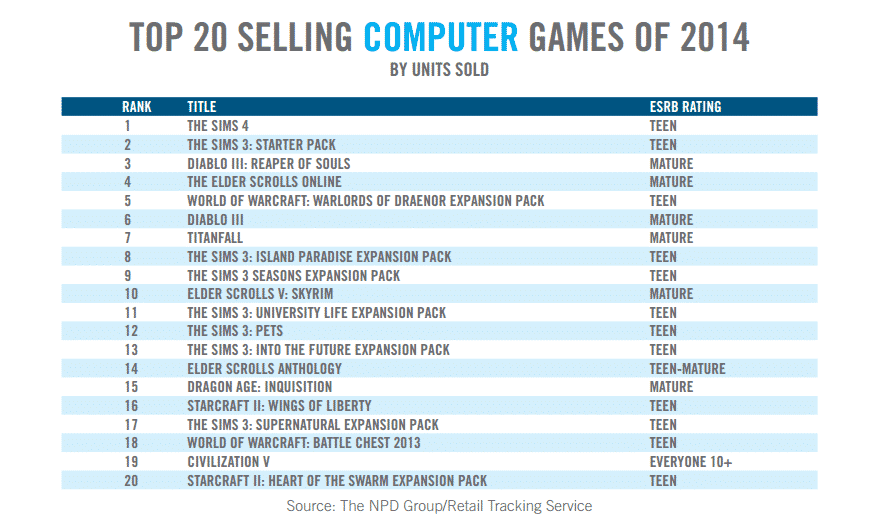
An online social networking platform could even take a total different format than one that invites users to upload all their real personal life information and photos; there could be a platform as one where the users are playing ficitonalized characters in a make-believe world, and there isn't the same severe data-mining and harvesting of users' minds and lives, let alone with clear algorithmic and editorial favoring of political-themed content; I'm thinking first of something like the The Sims from 2000 to 2015[0], but there is a now a certain game that has become the de-facto social network of pre-teens to early teens, and that is Fortnite Battle Royale - see these 2 articles from December 2018[1]-[5]. Yes, there are other risks and dangers with such a platform (where gamification is taken to a much further extent: you're playing much more of a character in a game than you are with the "character" you "play"--in the sense of "portray" and "direct" on Facebook)[6], but it's not, in my view, nearly as immoral and irresponsible as what Facebook does.
[0] Sims popularity, as recently as 2014, when the latest version of it was still the #1 computer game:
https://simscommunity.info/wp-content/uploads/2015/05/Screen...
[1] Charged: Fortnite isn't a game, it's a place - As social media becomes ever more toxic, Fortnite has become the new social network and a place to hang out where you go to talk to friends
https://char.gd/blog/2018/fortnite-is-the-new-hangout-spot
[2] WSJ: How Fortnite Triggered an Unwinnable War Between Parents and Their Boys
http://www.wsj.com/articles/how-fortnite-triggered-an-unwinn...
[3] See the selected tweets here, including: "Fortnite is the tween generation's Facebook (at least for boys). Spent a few hours last weekend with a friend's 12 YO, Fortnite is the platform for his entire social/academic life. FYI i was labeled an 'old noobie'."
https://www.techmeme.com/181222/p8#a181222p8
[4] The astonishing usership stats (scroll down to the list):
http://www.businessofapps.com/data/fortnite-statistics/
[5] Many more stats:
https://en.wikipedia.org/wiki/Fortnite_Battle_Royale#Player_...
[6] Impact:
Who are the boomers writing this shit that don't know groups of friends socialize online without social networks? Both before and during the era of social networks? Games as the rallying point isn't novel. Has this guy never heard of ventrilo, mumble, discord?
The worst part is, people who never used the internet to talk to people before the iphone will believe this dreck.
No, our brains evolved for millions of years to operate in groups of less than 100. Social media is basically high fructose corn syrup for our dopamine system. Within a span of roughly 20 years the way we live our lives and communicate with other humans changed massively
All the MSM hate for Facebook though is simply because they are butthurt that they've lost their spot in society in terms of controlling influence and information
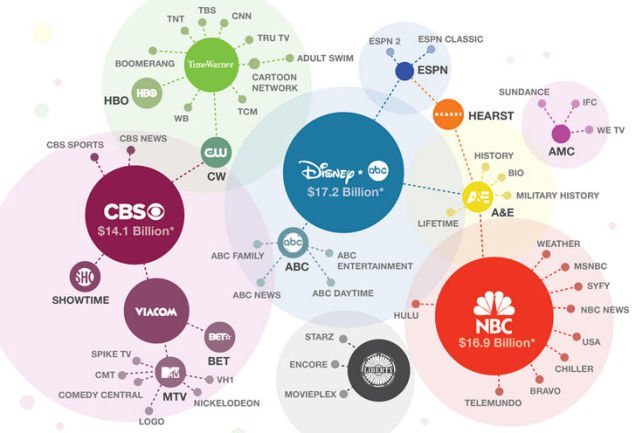
Pretty much all the media we see is controlled by a handful of corporations with varying degrees of connection
https://assets.rbl.ms/18622935/980x.jpg
It's worse now than the image above because AT&T is purchasing Time Warner
With relation to Facebook it's pretty obvious that everybody in the traditional media industry would like to see them lose influence because it costs them money. Instead of watching the news or buying newspaper subscriptions people get the info from Facebook. There really doesn't need to be coordination because it's in their self-interest to pile on Facebook.
Go back 20 years before social media and if the news and the newspapers didn't cover it, it basically didn't happen. The MSM has lost a massive amount of influence due to social media because they can't completely control what information is spread around.
Most people would not take this; but rich people would. The top 1%? Top 5%? This would cripple the monopoly model and open the market.
As you say, most people wouldn't pay to avoid the tracking, the people who would pay could just as easily do without Facebook or Twitter. The question becomes: Would you pay to not be manipulated?
https://en.wikipedia.org/wiki/Monopoly
https://academic.oup.com/aje/article/185/3/203/2915143 "Association of Facebook Use With Compromised Well-Being: A Longitudinal Study"
This is a conspiracy theory, and really diminishes the level of the conversation here.
Money is pooled into massive organizations called 'PACs' that are used to fund campaigns that get folks into government, then offer them sweet high paying jobs afterwards as long as they do their bidding while they work there. It's not corruption, that's lobbying.
It gets tiresome calling things what they are when there are dozens of definitions that the corrupt use to alter the nature of what they do with language. Corruption and propaganda are rampant, but once they can all be called 'marketing', or whatever the people with the power to influence via the media want to call them, that's the language that we use, and truly harmful things become easy to defend.
Russia spent $100k on FB in total, and they ran ads on controversial issues from both sides, not just Trump (and also organized "resist" protests after Trump won). For comparison, Trump's campaign alone spent $100 _million_. I don't know off the top of my head how much the Clinton campaign spent, but it did have 2x the money advantage, so it probably spent twice as much. If we assume the total FB spend of $300M for both campaigns, Russian money represented 0.033% of ad spend, and they likely used far less sophisticated targeting than the campaigns, and riled up both sides.
Tell me again how this could have altered the outcome.
Their goal seemed to be to sow discord, not to elect a particular candidate. I believe that's still their goal, and you, HN poster, is a great help to that end. They could not imagine a better outcome than Trump (or Clinton) getting mired in controversy and partisan gridlock, and unable to do anything about anything.
If you're going to talk about foreign influence, there are countries that are much more influential in US politics than Russia. No US president can even win a primary without pledging allegiance to Israel, for example. Clinton Global Initiative accepted millions from all over the world (donations dropped massively once Hillary lost, suggesting influence peddling). When it comes to hacking, China hacks the US far more than Russia ever will.
I don't quite get this raging hard-on for Russia that the mainstream media has manufactured. If it's outrage you want, there are far better targets.
I'm not sure what source you're quoting, or what the original text was that you're attempting to simplify.
EDIT: missed the quote when reading the message above somehow - sorry.
In the context of an argument about why Facebook is a more dangerous monopoly than Ma Bell, this implies that Facebook did collude with Russia.
How many people are using the fbk that do not have the same familiarity with tech and apps? Same eye sight, finger dexterity?
Did you miss the recent stories about the thousands of people bilked out of thousands of dollars via sneaky game app purchases? Certainly some of that hurt some people's IRAs.
Funny you mention divorce. This is an anecdotal 1 data point out of millions.. but in the past year I watched a friend go through the struggles of considering separation and divorce for about 6 months. As I often rail against the use of fbk, she confided in me that the ad tech did indeed influence her on this decision.
For some time when she used the fbk system she saw ads saying she could sell her wedding ring for cash quick and easy.
This coming at a time of emotional distress, when searching for options for places to go, with the need of funding to do these things...
I'm glad you do not find yourself in a position to care to about these issues. I myself worry more about the influence of the less tech savvy, whether they can vote or not, have IRAs or marriages or not, these things affect people around us, and not always in a "lets connect the world to make it better and have a kumbaya party with fresh goat and laser beams" kind of ways.
With respect to the sneaky game purchases are you referring to the stories of facebook letting children make purchases and not reimbursing the parents? Because the ability to control children is much different than the ability to control adults.
The wedding ring for cash is definitely creepy and I can see how that would add additional distress to your friend. But I guess my point is: how much did that ad contribute to your friend deciding to get a divorce? Had she not see that ad and probably other similar ads would she have not gotten a divorce? I think at least attempting to quantify these questions is important when trying to understand the level of control of these companies. We have to go beyond "This company showed a creepy ad(s)" to "This company showed a creepy ad(s) and this is the extent it influenced my final decision."
Because you dont want to think that, or because you've studied this and know it is the case?
With companies like FB being directly involved in the study of emotional manipulation of their users by altering their news and friends feed, I really think you are off base on the potential power they could have over a large number of individuals. Maybe you are somehow immune to their propaganda, but that is not a risk I want to take at society scale.
I can specifically point to times where these companies have and have not influenced my decisions. For example my wife and I decided we could afford a 3k vacation this budget was informed by looking at our incomes, expenses, savings and job security. But social media definitely influenced where we chose to go and what we did once we got there. I'm much more concerned with the first decision (I can afford to blow 3k) than the second (where we ended up going).
The huge influx of money into research (here AI, but could be anything in the future) combined with the disfunctions of academia is very troubling.
-- Upton Sinclair (https://en.wikipedia.org/wiki/Upton_Sinclair)
It's hard to measure what impact a couple of classes could have and it would certainly vary from person to person, but it would at least set the stage for conversation and be an acknowledgement to the importance of ethics in engineering.
- I believe Facebook's products are good for the world. They have had an extremely positive impact on my family in particular.
- It is the one place where AI can have a really positive impact on the world.
- It's is the most talented set of people I have ever worked with. Not just the AI team but every single person I meet there.
- I believe in Zuck. Despite all the bashing, he is one of the most thoughtful and visionary leader I have worked for.
This said I don't agree with everything that the company has done. But Facebook is a place were you are free to disagree openly and so far my team and I have always been able to do what we considered the right thing to do.
[Edit: agreeing with the comments that I should have written "is one place" instead of "is the one place"]
I see that as trading off some positive impact at a personal level for a much larger negative social impact. Many people do this quite often in various situations for different reasons. Not holding this against you at this point.
> - It is the one place where AI can have a really positive impact on the world.
You'd need to substantiate how Facebook is "the one place" for making this claim, and also explain how all the evil things the company has done all these years, including news of tracking teens recently, gets somehow compensated for or adjusted against the positive impact you claim it can have. Without looking at all the negative things the company has done, this is just daydreaming, IMNSHO.
> - I believe in Zuck. Despite all the bashing, he is one of the most thoughtful and visionary leader I have worked for.
Thoughtful and visionary don't necessarily imply that it's good for everyone else. He doesn't seem visionary in what he says or writes. He may have a vision for himself, that's for sure. He's shrewd, cunning, obstinate and all that, but "thoughtful and visionary" on a broader level is really a huge stretch of imagination. Also consider the reason why the WhatsApp founders left the company.
> But Facebook is a place were you are free to disagree openly
It doesn't look like many employees disagree openly in the company, or don't follow up with disagreements when the CEO and COO shoot things down. The employees at Google, another company which thrives on profiling and tracking people, have shown a lot more disagreement in public in the recent times (though only for a few things). I haven't seen something as vehement or as many from Facebook employees (I have to research if something like that has even happened). So there's something else going on in the company (maybe Facebook employees who realize the negative impact of the company and how disagreements aren't encouraged just quit silently?). From the outside it doesn't look like a company that accepts or even allows disagreements. It looks like one person at the top vetoes everything that doesn't match his strategy. Again, consider the reason why the WhatsApp founders left the company.
> It is the one place where AI can have a really positive impact on the world.
Can you develop on this please?
Why do you think a social network (however efficient it may be with e.g. targeted ads) will have a bigger impact on its members versus e.g. AI in healthcare? or finance? or education? which will have a truly global impact.
The possible effect of AI in other fields I think is overstated, or worries me because it might take jobs. I'm skeptical about AI in education and don't really see how it could fit. I think the negatives in education come from a broken system and not necessarily a lack of "an efficient way to extract information from data".
Dropping more automation in finance will just help extract value more efficiently, not necessarily create it, which if anything I think is a negative impact on the world.
Content moderation sounds like a big positive though. It is necessary, but not really a job many people have or many people "should" have-- there's a lot of violent, gory, traumatic things those people have to sift through.
I do think healthcare can be augmented by AI and doctors working together in a way that doesn't cut jobs and increases the effectivity of treatment. Wether that will happen or this will be an excuse to cut staff is a worry, though the implications if effectivity of diagnosis and/or treatment increases are not to be understated-- quite literally life-changing.
... for the uninitiated
If you bring that money in, congratulations, you get tenure; now you get a chance to work on whatever interests you for the rest of your life. But if you fall short of that goal, you're denied tenue; GTFO. You might think being a really good teacher will save you; it won't. You might think that volunteering for some annoying university committee will save you; it won't. You may think writing some really impactful papers (that nevertheless fail to bring in research grant money) will save you; it won't, unless you're really, really, really close to your monetary goal.
So how do you get across the hump? In your first year or two, you think that ethical projects can totally work for you. You bring in a $10K grant here, a $25K grant there. Then you realize you're far short of your goal. So you do what most successful professors do. You start taking DARPA money, DOD money, DOJ money, Amazon or Google or Facebook money. You start building (or facilitating the building of) technology that kills people, that selects people to kill, that monitors populations for trouble-makers or for people susceptible to advertising campaigns. Of course, those aren't the words used in your grant proposals, instead you keep it really abstract. But deep down, you know what your research is going toward.
It's easier because.. FB has access to millions of people that universities do not? Because fbook can manipulate the minds, emotions and money and politics of highly targeted groups without anyone knowing and the universities could never do that, or would never do that?
Is it because fbook has less ethics / laws / rules in place? Because universities need to answer to the community they are in and have the fear of pitchforks and loss of funding / donors / non-monopoly and need to think of their future and reputation and fbook does not?
What other reasons could there be?
This is something that indeed, unfortunately, we probably should have had regulators talking about long ago.
> It's easier because.. FB has access to millions of people that universities do not? Because fbook can manipulate the minds, emotions and money and politics of highly targeted groups without anyone knowing and the universities could never do that, or would never do that?
> Is it because fbook has less ethics / laws / rules in place? Because universities need to answer to the community they are in and have the fear of pitchforks and loss of funding / donors / non-monopoly and need to think of their future and reputation and fbook does not?
> What other reasons could there be?
Money. Lots and lots of money, a scarce resource at most universities.
Even if he refuse to work with fb, pretty sure a lot of other people will be happy to replace.
They're the epitomy of the liberal elite, privacy is totally orthogonal as an issue.
You can say right now that "not everyone cares about privacy" and it seems reasonable, but in a decade or two it will sound like saying "not everyone cares about environmentalism" does now, it's ignorance that will slowly bear fruit.
Is privacy only the concern of social justice warriors? Have you met rural American preppers?
I think this applies to some level to entry positions. I know plenty of people coming out of school who need the money, especially considering how aggressive the economic system in the US is to young people (student debt, impossible housing, tough job market to beginners, the responsibility of saving for an uncertain future due to the lack of safety nets, etc). It is also the case there's many people who could replace you: entry-level projects will be done, regardless of wether you do them or not.
Nonetheless, there's a point at which you're set. You could take another job without worries, and in fact you're in demand. Moreover, you're effective at what you do, and have started contributing with decision-making or really bringing efficiency into projects. At this point, other people will be happy to replace sure, but they won't be the same. There's more responsibility on you.
And lastly, you reach the point at which some of these top researchers are. They're beyond fine both economically and career wise-- they don't "need this job". They're also crucial. In their projects it's either them or no one. They are very responsible for their work.
Good for them. When I see a dog turd on the sidewalk, I don't step into it because otherwise, other people might. I make sure to not step into it for purely personal reasons -- it's me and my shoes that matter, not the dog turd regardless of its ambitions, nor people who might not pay attention to where they're walking.
Inspired by your comment, I'll make my point more graphically: Nazi camps were also suitable for medical and spychological testing. Nazi and even interned doctors did all sorts of experiments on prisoners. And if they refused to do so, pretty sure other people would have been happy to replace. Not everyone shared the same concerns regarding human life.
And if they didn’t do it, someone else would have lined up to take advantage of the opportunities.
Edit: If it isn’t clear, I am being sarcastic.
Yes, thats probably what Nazi thought too. Above the cost of human life.
I think it will. It took a couple decades of dramatic change to get us here (in the 70s and 80s), and the pendulum is now swinging back (and probably has been for the last decade).
Does the writer really think a more charismatic founder would have changed the outcome for the better, or that more charisma would have led Zuckerberg to make different choices?
Let's not forget that history is scarred from the manipulations of charismatic leaders.
This sounds rather like the old nerd/geek/greasy-grime bashing trope trotted out again.
Raise the alarm about what he's doing to privacy, not his social shortcomings.
My own Facebook stream is travel photos, people saying gushy things about their spouse, plus a few people still obsessed with Trump. Harmless stuff.
Our lives must be pretty cushy when this is one of the biggest dangers that we face.
Edit: While you where talking mostly about content of fb, i see these issues as being the biggest problem for me personally. I was on the internet in the late 90s and we learned early on never trust anything written on the web, and i apply the same to FB/Twitter/HN/Reddit etc.