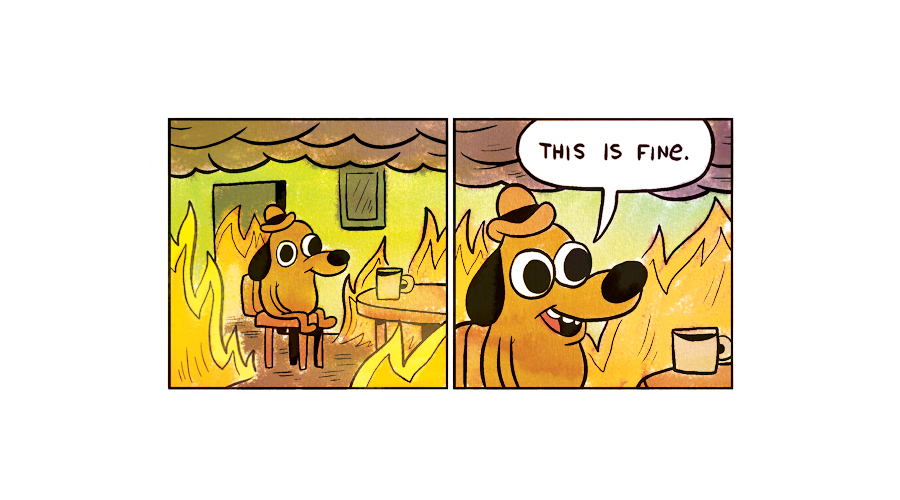
"Nope, the company is pretty much fucked. I'm out of here as soon as I negotiate a large enough golden parachute."
Is this VC/Industry pressure that needs to be dialed back?
As long as they're still growing they can blame any losses on the costs of expansion. The hard part is becoming profitable once that growth period is over.
My feeling is that Uber, Lyft and WeWork will really struggle to turn big profits, there's just not enough differentiator to allow them to charge higher prices than other market participants.
with Uber/Lyft the endgame appears to have been self-driving vehicles, but it seems those are a long way off mass market adoption, so it's not likely they can sustain themselves while waiting for that to occur.
I'm not sure what WeWork thought the long term deal was...
Think of Facebook, their incremental infrastructure costs for delivering messaging and feed services to an additional user are negligible (significantly less than a dollar per quarter) compared to the revenue they're making per user (dozens of dollars per quarter). In that cost model, grow at all costs then monetize makes sense.
For Uber, Lyft, and WeWork, there are no economies of scale (ignoring the fixed R&D costs). Twice the amount of rides given will have twice the driver costs, and the drivers will always petition to get a bigger slice of the pie.
But it isn't the crown jewels of the company: their data, their scheduling algorithms, anything like that, its little side projects. (Some companies do open-source the crown jewels and make their money on support contracts, but that's a totally different business model; outside of Red Hat I'm not sure how sustainable such businesses are.)
I expect the stock prices of the other fauxnicorns to collapse now that investors see that they got taken for a ride.
Is the board composition the reason you think VCs still have a sway on them ?
They could double their fares, and fire 90% of their engineers, and for a quarter or two, they'd make insane profits before the public flocked to other platforms and a lack of product innovation killed them.
Think AOL. They still have a lot of dialup customers, and still make profit from them.
And in many places, Uber is a monopoly - it would take months for other apps to launch and scale.
Does such an app already exist? If so, why isn't it more popular? If not, why not?
Of course, there is all of the regulatory capture and monopoly tactics which are also inconsistent with free markets, although perhaps not inconsistent with Objectivism (depending on your view).
A true free market version of uber would be interesting.
If you need to pump billions of dollars into the market every few months, it's definitely not free.
You don't need computers to do this stuff. The problems and solutions that the Soviet Union faced in central planning are not dissimilar to what Uber faces in its corner of the universe. Fundamentally, Uber sells a product that is too expensive for the market to adopt in critical mass. So they implement price controls, first by flooding external capital, and then by squeezing the suppliers.
Right now the app follows KISS (keep it simple stupid) and "don't make me think" principles.
A free market price negotiation would introduce a lot more complexity.
One way I could see this working is if driver's set their own rate (per minute or per mile) and riders can accept or reject that rate.
Drivers could set their preferred areas and rates beforehand, creating an inventory of drivers.
For riders asking for a ride to a destination, they'd get a slider that has a preset 'Uber suggested fare,' based on their driver inventory. One could slide it up or down and see the wait time for a pick up and car quality change.
1) Market makers matching drivers and riders with an open API 2) Multiple apps for drivers and riders which handle maps and payments
There has to be an opportunity for something that is distributed and open because I don't really see why this even needs Uber at all, taking insane cuts that should belong to drivers or be savings for customers.
Throw in surge pricing which adds ~$15 for even close (<10 minute deliveries), and you quickly see it falling apart.
So yeah, he's supposed to say that. It's as if he didn't say anything.
1: https://www.cnbc.com/2019/07/29/uber-cuts-about-400-jobs-fro...
Marketing, regulatory compliance, accounting, product development, operations, support, legal, price subsidies, offices, HR.
Those entire departments (and surely more I have forgotten) have staff, expenses, operational costs.
They run in 60 countries. 60!
The Uber investors and drivers? Not so much.
It would probably require Uber going through a bankruptcy and reforming as a company with a dramatically different structure. Uber going through a bankruptcy process is not a far fetched idea considering their financials.
I'm not sure being more friendly to drivers would get them anywhere.
As much as I believe self-driving cars will be a thing, that kind of technology takes years to develop and is hard to predict when it will be ready.
Making a big bet that self-driving cars will work by a specific date is gambling.
Seems like they underestimated and going to crash (or they pivot and change the model to actually include human drivers as part of the business).
There are benefits to Ubers, but 90% of people I know only use them because they are cheaper than a taxi.