When I bounced around cities later in life, I was surprised at how many of my peers said the same thing as a conversation piece.
Maybe they used the same governmental bidding process. "Needed: a building. One food preparation and eating area. Hallways suitable for lining up and proceeding in rows with many small rooms. One yard with sporting facilities."
The whole thing is an abomination. It serves no useful purpose to society to subject most criminals to prison: it doesn't serve as a deterrent (based on talking to ~50 prisoners about this), it only radicalizes them further against "the system", making it easier for them to break further laws.
Why don't we have more outrage against this outdated institution created out of 1600 era values?
The amount of human suffering it creates... It's astounding. Most prisoners would probably rather a super old school punishment like chopping off their arm over the prison sentence they get. And it would be more effective.
I'm not sure what else you can do :( it's a really big systemic issue. I think we just need more awareness, first?
Social life in prison involves having "friends" who can any day decide to try and rob or fight you (both happened to me with my closest "friend"). Nobody has real friends. It's dog eat dog, you lose the ability to trust, and don't have any trusting social connections. That's extremely painful. When you talk to people on the outside, every prisoner just tries to deceive them into thinking things are just dandy: I'm not sure why that happens, but it means those connections aren't real either. It's all so much worse psychologically than is conveyed in popular media. We don't know how to quantify psychological suffering though; as a society we rather put people through huge amounts of that than some visible physical suffering (which, again, is probably strongly preferable to the criminal).
Unfortunately most of the people suffering in the prison system are poor, so we don't hear what they have to say. If you're rich, you can afford your own lawyer and get a much better plea deal, and get out quickly. It's also very racist: you will really understand Black Lives Matter when you meet a black father who was sentenced to 30 years in prison for a nonviolent drug offense, and realize there are 100,000s - millions of people in the exact same situation: it's destroying entire communities. I've seen the way black people who a judge has never seen before are villified from their appearance: go to a courtroom near you if you don't believe me, it's shocking. I'm talking about in San Francisco, not even a rural area.
Anyways, thank you for your empathy. I wish more people understood that criminals will commit less crime if they're forgiven and accepted by society, instead of villified. And it's also the decent thing to do. Prisons are bad cultures because the small number of actual bad actors push everything to this shitty equilibrium: most prisoners individually have a lot of shame about their crimes, and as strong a moral code as the average person. Some definitely do not: and it's hard for the justice system to make the distinction.
All things which are hard to believe until you have some real world experience with these things...
Smells like success...
- An estimated 68% of released prisoners were arrested within 3 years, 79% within 6 years, and 83% within 9 years.
- Almost half (47%) of prisoners who did not have an arrest within 3 years of release were arrested during years 4 through 9.
- More than three-quarters (77%) of released drug ofenders were arrested for a non-drug crime within 9 years.
- Forty-four percent of released prisoners were arrested during the frst year following release, while 24% were arrested during year-9.
- Eighty-two percent of prisoners arrested during the 9-year period were arrested within the frst 3 years.
Source: https://www.bjs.gov/content/pub/pdf/18upr9yfup0514.pdf
A friend was in a therapy theater program that operated at San Quentin. They helped the prisoners write and act in theater pieces. At the end of the program, one of the prisoners, a lifer, told her that it had given his life meaning for the first time since sentencing. He'd been in for something like 15 years. I can't imagine how it would feel to find out you made such a difference for someone.
The US prison system is a terrible thing. That our society derives jokes about the atrocities within really shows the depravity of its citizenry.
1. Talking to prisoners doesn't mean it's not a deterrent for the rest of the population. This is a massive selection bias, it's like saying diet and exercise doesn't work because morbidly obese people say it doesn't work for them.
2. People sometimes lie (often first to themselves), especially about their motivations. This is like an angry teenager yelling that all their rebellion is because of their parents' rules, it's often a self-serving rationalisation.
3. There's no doubt that the US prison system is a bit weird if you compare it to the rest of the world.
So when I talk about deterrence I'm mostly talking about reoffenders. I.e, the prisoners I talked to coming back. I think they're more likely to commit crimes after prison, not less!!
Do you think people would lie, in a heavily monitored prison, about wanting to never come back to prison because they'll "die in glory" in a gun fight against the cops next time so they can't be arrested? Or about becoming a drug kingpin? Sounds like you think I'm saying these people were claiming nice things about themselves, but really they're mostly claiming quite bad things if it makes me think they're going to be back and were strongly negatively influenced by peers in prison.
On the topic of regular people who prison serves as a deterrent for, I'd look at other countries where crime rates are lower without the same hideous institution. Clearly it's not just horrible prisons which prevent noncriminals from committing crime, since so many countries don't have that? I guess that's up for debate.
I think it’s best for a society to implement policies to reduce crime not to scare people into complying with the law. The alternative is quite negative. Also, let’s remind ourselves that people are imprisoned in the US for stupid things like smoking pot, not paying tickets, scared into guilty pleas. Some of those people harden and become career criminals in prison and in the end it results in more crime.
The only useful thing about it IMO is preventing truly dangerous/sick people from interacting with the rest of society. Most prisoners are not that
I think you are under-estimating the extent that many urban schools are preparing students for prison though, and have some structural features in common, even though of course schools aren't nearly as bad as prisons. Contemporary urban schools are often really terrible places, stockhousing and controlling children, preparing them to be stockhoused and controlled.
(And that's without touching the problem of actively violent, disruptive students, who would probably need to be expelled far sooner than they are to protect a non-controlling environment.)
Federal prisons are well known to be cake walks. State prisons are the worst but again differ widely - even within the same state. Typically those with different types of crimes and sentences and ages get put in different prisons, so as you can imagine a nonviolent offender under 35 with a 10 year or less sentence gets sent to a much better prison then a serial killer who's 51 with a life sentence.
So take that dude's experience with a grain of salt. The state wants you to believe prison is hell, but as with most things it depends. The positive experiences I had in prison changed my life. If I had a choice between my prison experience and my experience as a master's student all over again I'd choose prison every time a million times over.
You answered your own question.
The purpose of prison is not reform. It's not even punishment or deterrence. The purpose of prison in the US is:
1) First and foremost it is a profit center. Caging human beings is a multi billion dollar industry in the US.
2) A storage facility for political dissidents and out groups. We just make up laws to target certain groups we don't like, and use that as pretext to lock them away (you know, that pesky first amendment always getting in the way).
3) To reify the carve out in the 13th Amendment which states:
"Neither slavery nor involuntary servitude, except as a punishment for crime whereof the party shall have been duly convicted, shall exist within the United States, or any place subject to their jurisdiction."
Gotta keep slavery alive and well in the USA.
Americans with nice lives, particularly the types to frequent HN, are insulated from the effects of our criminal justice system. Concern for schooling takes precedence.
It's called selective application of the Law, and the US has 3 possibly 4 tiered systems depending on Class strata from what I can tell.
The first level applies to the affluent and politically connected classes that get to legalize their crimes and somehow still get rewarded for their behavior with continued contracts with Government.
FAANG workers have to recognize they are part of the problem: they work for employers who actively abuse privacy laws, labour laws, tax laws, and God only knows what other clandestine operations they have with military and intelligence agencies and yet its some sort of talking point that those people are proud to remind you of any chance they have that they belong to this class (of only vicariously) as though it had any merit or prestige. Until that sentiment changes, I doubt any well constructed from of oratory on HN is going to do much if anything to that end, its definitely a cultural and social issue and class and your affiliation to it seems to be a much bigger component than anything like skin colour or living in the right neighborhood, zip codes.
If the environment is so violent, why wouldn’t you want solitary confinement? (Is there a downside?)
Excessive and prolonged solitary confinement will pretty much result in the death of the individual. The psychological damage inflected upon the victim will be so great that they will return another person (and not in the reformed sense).
Humans are social animals, to deprive us of company for a prolonged periods is as dangerous to our health as depriving us of food. We need love to survive just as we need warmth.
Prison was HELL.
Now why don't people apply this to everything else? You think HN knows what it's like to be a plumber('s apprentice), janitor, drive a floor buffer for min-wage, etc?
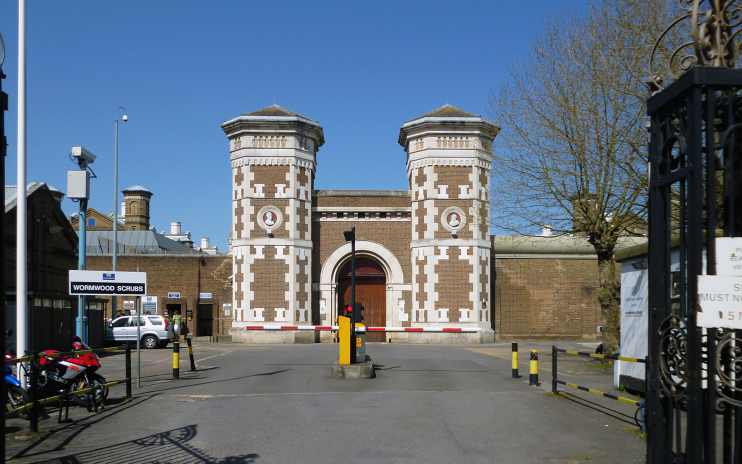
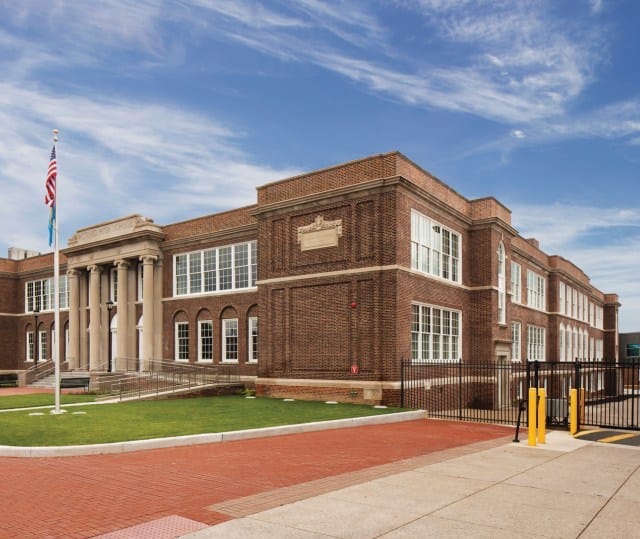
Which looks really nice for a prison. I suspect it is an administrative building, or just the entrance. Not the place where inmates actually live.
School buildings move their entire populations through the entrance in the space of 10 minutes. Prisons are more-or-less entirely designed to prevent exactly that from happening.
At least it had three different exits.
For example:
* https://hidden-london.com/wp-content/uploads/2018/04/geograp... vs https://upload.wikimedia.org/wikipedia/commons/4/47/James_Ho...
* https://i2-prod.mirror.co.uk/incoming/article1185483.ece/ALT... vs https://upload.wikimedia.org/wikipedia/commons/3/33/Cefn_Sae...
* https://ukhumanrightsblog.com/wp-content/uploads/2020/07/HM_... vs https://upload.wikimedia.org/wikipedia/commons/thumb/c/c5/We...
It doesn't age particularly well, though
Point being that you can cherry pick any answer
That's subjective, but I can't say I like any of them
[1] https://en.m.wikipedia.org/wiki/Consortium_of_Local_Authorit...
Is it surprising that the cellular prison, with its regular chronologies, forced labour, its authorities of surveillance and registration, its experts in normality, who continue and multiply the functions of the judge, should have become the modern instrument of penality? Is it surprising that prisons resemble factories, schools, barracks, hospitals, which all resemble prisons?
A lot of palaces, museums, galleries, opera houses, universities and houses of government share the same basic layout. You’d be hard pressed to say what the function of the Palace of Westminster was if you didn’t know. It certainly looks a lot like some schools and universities.
He traces the design we all see in the downtowns to the works of early german communists and their desire for good looking spaces and architecture that could cheaply be made for the masses in the coming revolution of the working classes. When capitalists heard about it they stopped listening after 'cheap' was uttered. "Oh, this is the 'modern' look and it's the new thing and it's cheap? Do 'em all like that then."
My recollection of Wolfe's short piece is a bit dated, but that's the theme as I remember. It's a short and fun little satirical look at how the 80's downtowns got to be looking as such.
https://en.wikipedia.org/wiki/From_Bauhaus_to_Our_House
As an aside, I wonder how Minecraft is going to change the look of architects and cities in the future. I'm dead certain that the architects of the 2070s will have gotten their love of design in Minecraft.
I've spent extensive time in all of these except prisons, and I can tell you the difference is stark. What explains that? Is it all just down to expensive trim and interior decor? I'm sure that plays a part, but that was never my main impression. Instead, it comes down to the layout and light and feel: it's clear when a building, however regular and rectangular, is designed to support and empower the occupants and when it's designed to control and direct.
  - regular chronologies
  - forced labour
- authorities of surveillance and registrationI imagine that you mean that tall buildings maximize ground area, and that most property is rectangular.
The way to maximize volume to surface area is to build spheres, or cubes if you're forced to remain rectilinear, but tall buildings optimize for ground area.
efficiency doesn't stop with a building's dimensions. efficiency demands social control. it doesn't care whether that happens through self-control and self-discipline or through domination.
I suppose maybe there is some truth to it. But he's highly disingenuous with his implications. It's like a Twitter hot-take that's expanded into a book. Hard libertarians might argue that taxation is in some way equivalent to slavery, which is also technically true but a very biased presentation of the facts. Schools and hospitals are similar to prisons in the same way taxation is similar to slavery (you can find similarities, but ignoring the differences is just asinine).
Every right requires responsibilities. If students have a right to learn, then schools have a responsibility to teach them. If young adults have a right to be educated in a broad range of topics (many of which did not interest them as children) then children have a responsibility to learn. Control is all about forcing people to take responsibility, because otherwise rights will be unfulfilled.
The question isn't whether control exists (it can and should) but whether the intent and implementation is just and efficient. A communist dictator can claim the right to a huge portion of the country's wealth while its population starves, this would be unjust.
There are valid questions to ask about control. Is it better to control inputs or outputs? Is it better to have a rule of laws and systems, or a rule of individuals with authority - discretion means giving more power to individuals. Are the trade-offs our society makes currently fair and worthwhile? If a punishment keeps the majority of the population responsible (thus giving creating rights) but hurts the occasional person who is somehow resistant to control is it a bad thing? But simply assuming that control is bad is silly.
More or less the entire French Intellectual establishment argued at that time for "the decriminalization of all consensual relations between adults and minors below the age of fifteen".
While I agree that seems extremely stupid, it is based on a morally tenable argument that people under that age could give consent. That may be incorrect but if accepted as a premise would justify their position.
So if Foucault believed this and his moral arguments derived from that, it would seem unwise to dismiss all his moral authority just because you believe he was wrong on this point.
I personally think he is totally wrong and that even people at the age of eighteen struggle to know their own minds clearly with regard to consent. However I do not as a result think Foucault is impossible to take a moral lead from.
Not all criticism is moral criticism.
Its still wrong, but anachronistically wrong a bit like how many elements the founding fathers put in which are good government but did so under the unforgivable sin of slavery. If that's too 'ancient history' for you, let's consider Brendan Eich's contribution to Firefox but also understand he is a homophobe. We can still use and appreciate Firefox's technical advancements without worrying about Eich's homophobia.
Age of consent skeptics are as old as time anyway. It rages on today in the modern libertarian party and incel culture. Anti-authoritarian and reactionary movements often become victimizers of children and women and racial/religious minorities because these groups are often protected by authority. When you remove authority, suddenly they are powerless and easy prey to whatever replaces that authority. The most obvious example are soldiers raping women in towns they take over.
It's something I absolutely despise about our contemporary culture.
I live in Latin America now and envy the kids for getting 45 minutes free at lunch time to hang out outside, socialize, buy from the street vendors that will gather at that time, maybe run a quick errand.
My parents point out that they had a high school experience in the US more like the Latin American one. Something is changing about the US, and it's rotten.
There's a book that presents a good overview of some of these changes: "The Coddling of the American Mind: How Good Intentions and Bad Ideas Are Setting Up a Generation for Failure" (by Greg Lukianoff and Jonathan Haidt).
In elementary and middle school, we weren't technically supposed to leave the schoolyard but the monitoring was lax enough that older kids frequently got away with it.
Though I don't think a parking lot traffic jam is a sufficient reason either. There are already repercussions for arriving to school late which is what prevents the morning traffic jam from being a problem. Someone shouldn't be allowed to leave at all just because they would be late if they don't come back in time to park. I don't even understand how that could sound convincing to you.
That's just the type of thinking that gives us zero tolerance policies.
So, there's some logic there. They are nominally responsible for you during school hours.
For instance, there was one person, 2 decades ago, flying out of france, who hid a bomb in his shoes so today we are all still taking off our shoes, all of us, each time, on every flight. Splendid.
It's a completely reactionary narrative driven policy that really illustrates the probabilistic illiteracy, cost/benefit illiteracy, lack of critical thinking ... it's like we've taken the structure of folksy tales like "one child did that and they poked their eye out" and are all like "ok, let's make official policy around this"
This is how all the fun park equipment has been dismantled and replaced with things no child past the age of 4 or so would ever find appealing because the existence of a non-zero risk, regardless of how small that is, are all treated equivalently with their volumes cranked to 11.
By that logic, we should never let students leave at all, because certainly some have been killed in car wrecks on the way home.
There is NO logic in preventing people doing that which they will do later anyway.
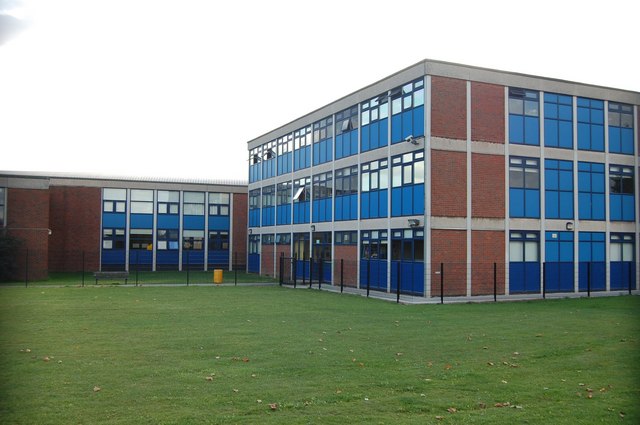
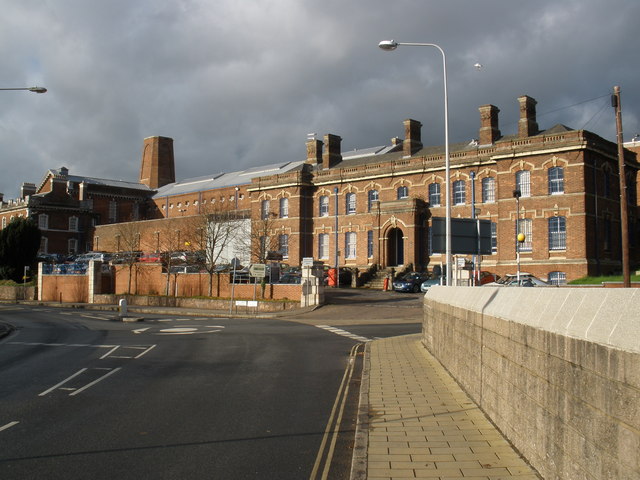
In his book "Discipline and Punish", Foucault argues that in the establishment of the modern prison, the mission of imprisonment shifted from punishing those who were imprisoned to reforming and disciplining them to become better citizens. The same organizing principles of command and control developed for "modern" prisons were applied to the "modern" school as well. I thought the game eerily demonstrated how similar prisons and schools look to one another. Both kinds of buildings are designed to limit access to the building and also egress.
The reason schools operate that way is simple: sheer inertia combined with just being impervious to reform.
You don't know much about prisons seems to me. As in, once one know just a little how it functions, the above sounds either extraordinary stupid.
There is a simple fact that schools can be glorified daycare so that workers can offload the burden of childcare. For this purpose, a prison makes sense. Despite not being the most humane considering the kids didn’t do any crime worthy of rehabilitation.
A bit like https://upload.wikimedia.org/wikipedia/commons/d/d3/Kilmainh...
Now then...
There's a lot of people crapping on schools and teachers in this thread, and as a former teacher and spouse of a teacher I'd like to point out a few things:
Schools and teachers provide a vital service. Not only do they educate our children, they babysit our children, and the pandemic has shown us how vital that aspect of the service is. I've anecdotally seen many parents on social media complain about having to look after their own children during the day.
Schools need arbitrary and often draconian seeming rules, such as refusing toilet breaks, not allowing food or drinks in a classroom, or enforcing strict dress protocols. If you truly knew how manipulative a group of children can be, when ganged together you'd understand this. Toilet breaks are often abused, with children skipping class to, for instance, vape in the toilets. I've had classes where I've spent my break cleaning up chewing gum, spilled drinks and crumbs from students sneaking snacks. When kids aren't in uniform, or under a strict dress code they'll push the limits of what is acceptable and additionally bully the poorer children that can't afford the latest fashions.
If we want schools to ease up on such restrictions then you need to invest in more teachers and other staff. I've had science classes with 35 students all with Bunsen burners merrily flaming, flammable and corrosive chemicals in beakers at their desks, and syringes or pipettes (also read as water pistols). Or my engineering class with 20 soldering irons all on, pillar drills being operated, while a couple of kids are etching circuit boards. Try running that type of class without strict rules and you're liable to see injury, loss of employment, a lawsuit and possibly prison.
If I'd had smaller class sizes, or more staff in the classroom, I could have relaxed my rules. I'd know the kids better, have built up a more trusting relationship been able to monitor who was doing what with greater efficiency.
These are kids we're talking about and they're developing, experimenting, learning, and struggling to navigate a complex social dynamic in a very unnatural environment. Without rules in place, they'll screw up. For God's sake, how many of you "adults" have had to sign a code-of-conduct agreement before being allowed admittance to a tech conference or hackathon? Even grownups can't be trusted.
I think realizing that daycare with some level of adult supervision and guidance is the primary purpose of much of K-12 could allow us to design better schools that are more like kindergartens, recreation centers, laboratory facilities, art and performance studios, and libraries, and less like factories and prisons.
Though thinking about the factory bit, I do think that craft and maker facilities, as well as gardens and outdoor building areas, are nice to have in schools, making students the creators and crafters rather than the products.
Doesn't justify denying basic biological rights.
I am not sure how preventing them from vaping there and then would solve the root cause of the problem; they'll just vape later or learn to hide it better (and focus their resources on breaking the rules and getting away with it, as opposed to learning) and now they have an extra reason to be against you. Also, how is this problem dealt with during recess? Unless there’s someone monitoring them inside the bathroom or searching them to make sure they don’t bring any vaping products I don’t see how you can prevent someone from vaping inside a bathroom stall.
> where I've spent my break cleaning up chewing gum, spilled drinks and crumbs from students sneaking snacks
Why can't whoever made the mess be forced to clean it? That way the system would self-regulate. Those who enjoy their snacks cleanly can keep doing so, those who make a mess have to clean it up and have an incentive to not make a mess in the future if they want their snacks.
> how many of you "adults" have had to sign a code-of-conduct agreement before being allowed admittance to a tech conference or hackathon?
"Codes of conduct" are virtue signalling to appeal to some vocal minorities but I have yet to see evidence of it actually solving the real problem. Someone who wants to behave appropriately doesn't need one, and someone who wants to be a dick already intends to break the (unspoken) rules regardless of a CoC being in place.
> Public school teachers are in much the same position as prison wardens. Wardens' main concern is to keep the prisoners on the premises. They also need to keep them fed, and as far as possible prevent them from killing one another. Beyond that, they want to have as little to do with the prisoners as possible, so they leave them to create whatever social organization they want. From what I've read, the society that the prisoners create is warped, savage, and pervasive, and it is no fun to be at the bottom of it.
> In outline, it was the same at the schools I went to. The most important thing was to stay on the premises. While there, the authorities fed you, prevented overt violence, and made some effort to teach you something. But beyond that they didn't want to have too much to do with the kids. Like prison wardens, the teachers mostly left us to ourselves. And, like prisoners, the culture we created was barbaric.
I went to a public school that was most definitely not like this. My teachers were really invested in the students and often perform significant emotional labor for children who don't otherwise have supportive adult relationships. I went to many schools (moved a lot) and they all largely had teachers who were passionate about the well being of the children under their care. I had a very poor home life and having teachers who identified I was going into a suicidal spiral was very useful when I was a teenager.
We of course, are endlessly subjected to an artistic representation of it in Holywood films.
A school building could provide maximum natural light to the occupants. For example, it could have shape and orientation so most of its windows get sunlight throughout the year. Interior spaces can have skylights and be used for short-duration activities like restrooms, locker rooms, and equipment storage.
1. School is not mandatory; education is mandatory. Ask any home schooler. A rare few private schools offer quite different experiences than the typical public school (e.g., the University of Chicago Laboratory Schools). This applies also to "closed confinement" and "control". Of course, opting out requires enlightened parenting and lots of resources.
2. You are constantly told what to do, but outside of some broad physical requirements there's really no forcing you to do what you're told. Choose some good coding/math/philosophy puzzles during the evening and work on them instead of paying attention in class. No one can control what you do in your head. You can similarly opt of almost all graded work; especially if you stick to AP courses then the grades you are assigned by the instructor you don't much matter anyways.
3. You are not given a choice in what your lectures cover, but you can choose what to learn and eschew any required "creativity"/"responsibility".
In other words, you can always choose not to play the game and still turn out just fine. Having a friend group that reinforces this option is helpful; I was part of one and today we're all very highly paid and well-educated professionals because -- not in spite of -- our complete disengagement from the high school game (including the academic component).
To any highschoolers reading this: if you find yourself intellectually dead and generally creeped out by high school culture, consider ignoring your coursework to study for a GED and then simply attending a nearby high school instead of college.
However, at least finish your freshman year somewhat engaged. Many aspects of American culture are easier to understand if you know how the vast majority of its citizens are socialized. E.g., many modern political rallies are intentionally choreographed to match the structure and emotional melody of a high school pep rally. Attending a few yourself as an open-minded and non-judgemental exercise in field anthropology will be helpful.
Home schooling is not a suitable alternative IMO. Social contact with your peers is important too; having to forfeit that just to not be in a prison-like system seems like a bad deal.
> Choose some good coding/math/philosophy puzzles during the evening and work on them instead of paying attention in class
So in addition to wasting 8 hours per day in class you need to do extra work in the evening?
I think in both cases we need to fix the system instead of putting the burden onto students to put up with it or work around it with the solutions that you describe.
Boring? Yes. Cold and functional? Sure. Just not brutalist.
Brutalist architecture is often considered soulless, but soullessness (in and of itself) !== brutalism.
[0] https://res.cloudinary.com/schoolprison/10_wwfagw.jpg (which was a school)
As other people have commented, space for windows is crucial. (And, at least 2 of the pictures had identifying words in different languages) I scored 10 out of 10 and the game bounced me out.
It's just a bunch of buildings. The onea I saw could be labeled just about anything (hospital, office, court, etc).
In prison you can pretty much poop or get a drink of water whenever you want. In school you need special permission, and hope the teacher wasn't in a bad mood or that 3 other kids hadn't needed to pee in the last half hour, meeting some mental quota the teacher has for the appropriate # of people that should have to use the toilet during a given period of time.
Seriously, it seemed like a revolutionary concept when I hit college and realized "Hold on, I can just get up & go?." Or that (absent computer labs) I could bring a cup of coffee or bottle of soda with me to class, and that common etiquette even allowed for a bit of food if it wasn't noisy to eat or have a powerful smell.
I never got to experience that again at school after I left the second grade.
I of course chose disobeying, but I'm pretty sure that the teacher would be far less strict in the future if I went the other route.
Just turn on your voice recorder and go.
In the US, most prisons have an open, bare toilet in the cell shared by a few cell mates. Even if one can technically use it whenever, according to what @throwaway998662 says, in practice this means you can only crap during the 1-2 hours a day when your cell mate(s) are gone.
Yeah, you could get a capricious teacher that says "no" when you ask, but that doesn't seem like much in comparison to the degradation and potential for violence of using the toilet in prison...
I was a good kid!
If I had of robbed or killed someone and been to Juvenile Hall, my pants would probably have been dry.
The world chews up and spits out good kids. I vowed early on that I wouldn't let anyone shit on me again and it really shaped my early life, not necessarily for the better. I overshot assertive by a decent margin.
Fortunately, I eventually settled into a healthy middle ground. I do wonder if there is a method of preparing "good kids" for the world of shit they are about to encounter in a manner that is a net benefit to them (ie. Not scarred or jaded by it). Not that I'm ever having kids.
There was one time a kid got denied wrongfully because the teacher thought he was part of a group that was causing trouble right before that. He had a half-empty Gatorade bottle in his backpack from lunch... he was sitting in the back of class and chugged it while the teacher wasn't looking. He then refilled it with a different yellow liquid, if you know what I mean. I'm a bit surprised the teacher didn't catch him and that nobody freaked out and snitched.
I substitute taught for a few years after college, and you can't leave the classroom at all except during your prep period. It was really bad some days.
As a contrast, at my school the policy was far more reasonable: you still needed permission to leave, but if you didn't abuse the privilege—using it every day, or disappearing for half the lesson—the teacher wouldn't give you any grief.
Uhm. Where in the world do you live?! :O
This story aired in TV and probably it's no longer the case. Also it likely bends the truth a bit, but nevertheless this is so unsettling and absurd that I wanted to share it.
1) Adult bladders are larger, we're more experienced in judging the severity of our needs so we're unlikely to hold it to the point of physical injury. In kids, especially when they've been trained to artificially "hold it in" by schools, they become less sensitized to their needs and can develop problems ranging from UTI's to incontinence.
2) Teachers went to the bathroom all of the time when I was in school, they'd pull the school nurse, or a secretary, or teacher's assistant from somewhere to watch the class for a few minutes.
3) Taxi drivers can stop in between trips.
4a) Bus drivers on long-hauls can stop at rest stops, and do so regularly both for themselves & their passengers.
4b) Apart from city buses, many buses (like Greyhounds) have a bathroom on board so a rest stop isn't even required, just a pull off to the side of the road & take their keys with them to the back of the bus
4c) Buses that run frequent stop local routes, There's generally a place to go at each end of the route, but there is actually employer abuse in this area with schedules so tight and penalties for running behind schedule meaning the have a place to go is only one of the concerns. Wearing adult diapers isn't uncommon, and transit unions routinely fight for bathroom rights. But this awful situation for a certain group of workers is not at all a justification for inflicting similar constraints on other people, much less children with developing bodies.
Well it’s not like you have to be there at all, so no ones going to care why you get up and leave.
In grade school, every time someone asks permission to use the bathroom they stop the flow of the lesson and valuable time is lost. In college the idea is that most of the students are responsible enough to handle the bathroom and food.
And how much valuable time is lost here, weighed against the extreme distraction a student has if they can't go? Besides, once the student has raised their hand and been called on, the flow is already disrupted. Answering "yes" or "no" is irrelevant at that point.
Do you have a proposal that both meets biological needs and doesn't run the minor risk of disruption? Disruptions occur constantly anyway every time a student asks a questions when they don't understand, even when most others do.
I simply fail to see how "stop the flow of the lesson" is either very relevant to unpreventable biological needs, or an unsolvable problem in its own right.
It was actually harder in high school because other than lunch, you had minimal passing time between classes (just a few minutes) so if you stopped to go to the bathroom there was a good chance you'd be late to your next class. And of course no recess. Lunch and P.E. were the two chances you had per day to use the bathroom without having to ask.
This is a fairly reductive statement. Dealing with children is incredibly taxing and difficult. Teachers are [in my country] underpaid and under-appreciated and I believe this kind of rhetoric doesn’t do them justice. People began to appreciate teachers during the pandemic’s home schooling period, but that seems [anecdotally] to have dropped off since children have returned to regular schooling.
> when I hit college and realized "Hold on, I can just get up & go?."
Because you were [likely] an adult now who needs to be able to regulate their own behaviours. No surprise here.
My comment was also not a reductive statement when I've been told "no" when I ask to go to the bathroom, or told "3 people have already gone to the bathroom, you'll have to wait until next period."
Both of these specific situations, and variations, happened to me. I watched a classmate pee their pants once when they were denied access to the bathroom.
Want to talk about job stress? Think about the stress an 8 year old goes through when every time they feel their bladder getting full they start worrying about whether they'll be allowed to pee, or have to wait until the next class or recess/lunch, learning nothing in the meantime and hoping they're not the next kid that has to have their parents bring a change of clothes.
I don't know what country you're in. I'm in the US, and quality of pay varies greatly from state to state. Workload (class size) often varies with the socioeconomic status of the people in that school district. What doesn't vary in any conversation I've had with people on this topic is that my experiences are very much not unique.
People began to appreciate them for the daycare aspect and not really teaching. The statement might be reductive, but it's also the experience that many kids have with teachers and school.
No surprise it's difficult if you already sour the relationship by treating them poorly and give the kids a reason to hate you from day one. Maybe things will be better if you don't start by making up petty rules that don't help anyone?
---
In middle school I remember we had a maths teacher who was very good, in the sense that she let us do pretty much whatever we wanted as long as we weren't disrupting anyone else. This ended up working out well for both sides; those who wanted to learn and engage with the coursework could do so, and those who gave up on it and weren't interested could relax and entertain themselves to make time fly instead of being bored and dreading the class.
In comparison, we had a very severe history teacher, who'd give you spiteful extra assignments (which would escalate further if you didn't do them) if you were lacking in one way or another. Did it help? I don't think so; I remember more about dreading the class and making up excuses/strategies to get away from the class or the assignments than the content of the coursework itself, and I can say for sure that the class was universally hated and dreaded.
You could make the same game out of "school or doctor's office" or "prison and bank" and it wouldn't be any more obvious if the photos were shot this way.
My idea was to make it much more like how paid for classes and work are.
Instead of grades, there should be classes happening of various levels at all times. And student should be able to apply for promotions at any point, where if they pass the test, they can get promoted to the next level. Grades should be secret from one another like salaries often are, so students shouldn't feel like they compete with others, but only with themselves. And they should focus on working towards their promotions, with a 1:1 with the teacher where the teacher can tell them what they should focus on next and all to work towards their promotion.
That way everyone can go at their own pace, which can even be a pace that varies from time to time. Students don't feel a competitive pressure. You don't really have "class mates" in the sense that there's much more churn at all time of who is currently in any given lesson. And you get more personalized feedback on how to reach the next level.
Also, schools shouldn't be rated with how well their student performs, but instead by the diff of how much better the students became year over year. Like imagine a fitness studio bragging how their program makes you super fit, but they only accept people who are already super fit to join, doesn't make any sense.
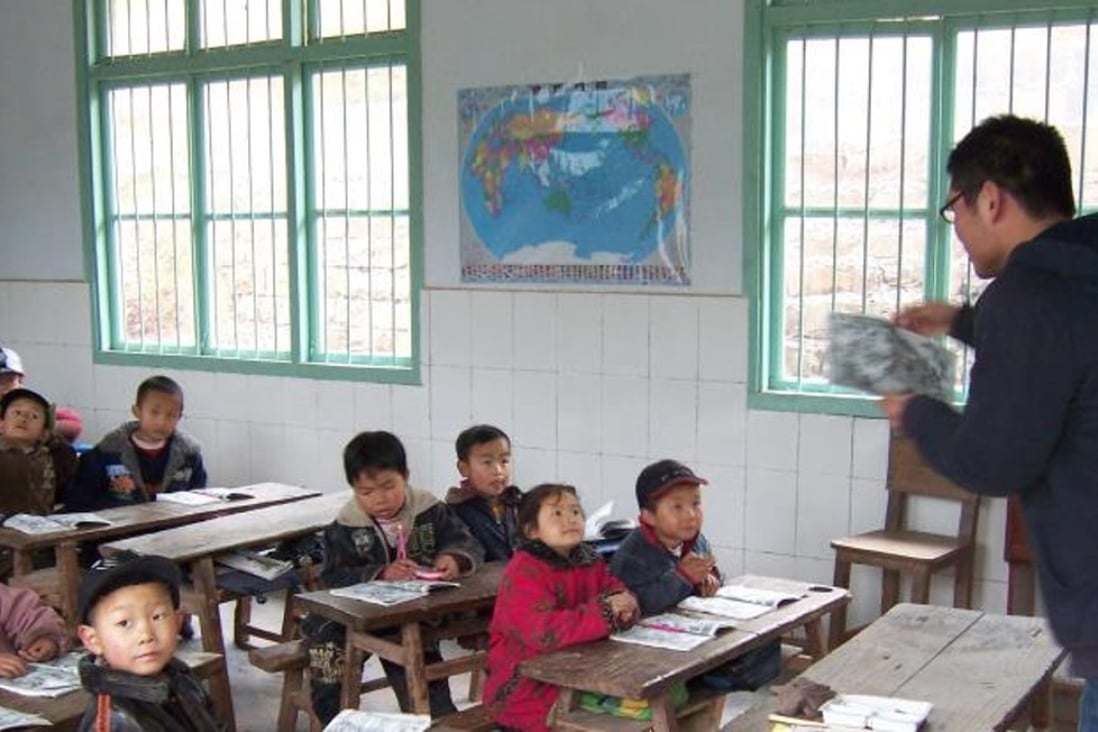
https://img.i-scmp.com/cdn-cgi/image/fit=contain,width=1098,...
Both university level and lower education levels in the US will probably have large security camera systems. I know some smaller schools can't quite afford it but the medium and large state schools can.
- Windows: Few or many? Are they only on the top floor? Are they small? (Prisons don't have lots of windows.)
- Bars on windows? (Dead giveaway for a prison.)
- Lots of security cameras? (Not the best indicator, but it weights in favor of prison.)
- Fences around parking lots? (Criminals might want to break into cars.)
- Is the name on the building large, inviting, and stylish? (School.)
I think the message being sent is more interesting than the "game".
If you are more curious, I would also suggest his book titled “Free to Learn”
[1] https://www.psychologytoday.com/us/blog/freedom-learn/200909...
And then you graduated, started catching the train to your new job, discovered that many people do not reciprocate this standard, and there's split drink, empty bottles, and undesirable aromatics on every train.
Schools really should be given a makeover. They do look too much like prison. But what, round corners? I dunno. I guess they’d look too much like giant iPhones.
Unrelated but in case the simulation changes theme to “post-apocalypse”, what’s better to use as HQ: the school or the prison?
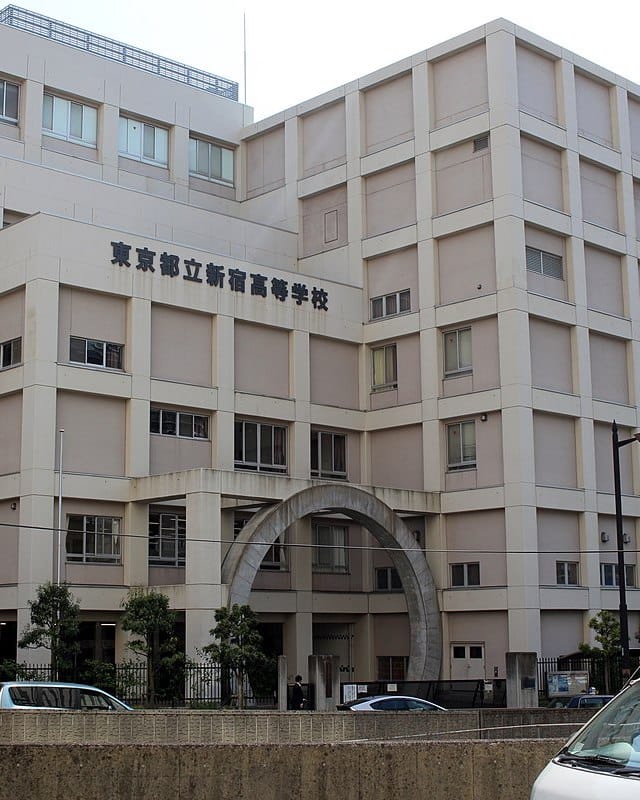
You can read “学校” on this building, making it a bit easier than it should be. :)
i would rather the state appoint an architect group to design like 5 model schools that are modular. and then any time a city needs to build one you just get to play some lego on the modular design. this would make school construction faster and cheaper and maintenance easier
Land isn't uniform, lots have shapes, roads already exist, utilities have to be connected, local construction requirements vary, existing structures have to be accounted for. You're likely not going to save money by forcing everyone to use the same 5 designs because that will just shift inefficiencies elsewhere -- where they're even more expensive. Unnecessarily moving earth or buying more property to fit the 5 mandatory designs is going to be way more expensive than simply building the structure to fit existing limitations.
The specific point of the parent comment is that they do want a cookie cutter school. Saying "no one wants that" isn't really a substantial counter argument.
I suppose the problem with them all being so similar would be if you spent every day visiting a different one, you would tire of them all being them same. But no one does that - you spend many years in a single one, without much awareness of others. In the end it's important that it's effective to spend long periods in, and its uniqueness is basically irrelevant to the people that actually use it.
If it has a ton of windows, it aint a school
Can I flag the whole thread as off-topic? Geez, HN.
I sometimes wonder if it’s down to a fundamentally different experience at schools in the US that I’m not aware of?
I feel like I went in one end of the school system, and then came out twelve years later able to read, write, play musical instruments, understand the natural world, think critically, use a computer, and generally having a wide variety of other skills. Teaching quality was mostly fine, with staff who seemed to be pretty engaged. I spent plenty of time outside school with both parents, and I came out with a bunch of skills and knowledge that neither of them would have been able to teach me. My experience was far from perfect, but it was a million miles away from being “a prison”.
The “school is a waste of time” argument seems to be popular in these circles. Is it down to cultural differences? Or maybe it’s just the iceberg tip of a deeper and more earnestly held view about a fundamental restructuring of society and childhood?
For what it is worth, pandemic made me appreciate teachers more. Pandemic made my kids appreciate school more (and they explicitly stated multiple points where school is better then what went on at home).
Money is just a currency. What they really love (and need), is all the goods and services that can be purchased by money, which include the things that keep their children and themselves alive.
But naked capitalism tells women to "lean in and earn $1 for every 70 cents" instead of telling men to "lean out and earn 70c for every $1" ...and spend more time with your children, family, contributing to open source software, learning science, an instrument, hobbies, sports and exercise and doing other things not valued by the market.
UBI is far superior to both a jobs guarantee, minimum wage laws and unions in rebalancing the power dynamic between the employees and employers.
Instead, today, we are brainwashed that your worth as an individual comes from working for a corporation, and the schools train the kids to sit down and shut up for 10 hours day to do just that. Look at Finland. Or http://magarshak.com/blog/?p=158