I will note that Purism do not say what their production capacity is, and that it would probably be a different task entirely to manufacture a significant percentage of iPhones in the US. I’m not surprised that manufacturing thousands of extremely expensive phones in the US is possible. I would be a lot more surprised if they had managed to manufacture millions of reasonably priced phones in the US. The big question is whether the federal government will embrace the industrial policy required to rebuild our manufacturing capacity in high-tech.
This reminds me of pushback in the early days of Tesla. Sure they can build 1,000, but can they build 10,000. Now we’re at “sure they can build 500,000, but can they build 5M.”
I think the answers “yes”, if the demand is there. And I agree with you that industrial policy could help jumpstart that demand.
It's not a question of demand. A negligible number of customers care where their product is manufactured. They care only about price, which is why manufacturing moved overseas in the first place.
What is needed to manufacture phones in the West is protectionism and mercantilism. Our governments would have to subsidize domestically manufactured products, require the use of domestic products for various industries, and tariff those manufactured in countries with lower labor standards and incompatible civil rights.
Unfortunately such policies lead to higher costs for consumers and lower economic growth. It's politically unpopular for the same reason action on climate change is unpopular: it makes everything more expensive. It's no wonder that virtually all western politicians support neoliberal globalism. Goods are cheap, even if it means some of us lost our jobs in the process.
Worse, these policies also tend to lead to war. One of the big reasons we've had relative peace between world powers for the last 75 years is that our economies have become closely intertwined, so no politician or corporation can stomach the economic costs of war. If global trade starts to break down we'll head directly into World War 3.
Personally I think we should embrace protectionism anyway despite the cost and risk. I'd go so far as ripping up NAFTA. American labor standards are so shit that Canadian companies can barely compete, and it's holding us back from progressive policies like a 4-day work week. Ontario can't even mandate paid sick days! I'd rather we have a well-paid labor force than cheap groceries and electronics. Unfortunately no politician agrees with me.
10,000 cars is real manufacturing volume. 10,000 electronic something hasn't even reached volume discount status.
There is a reason we call 100,000 units "The Valley of Death" in the electronics industry. Your volume is large enough to hit all the problems but not large enough to get the discounts.
The fact that they succeeded doesn't mean there wasn't a significant chance of failure at each order of magnitude.
In the past 10 years, it became cheaper to buy the same products from China than the US, which is in part due to US shipping companies (DHL, UPS, FedEx) dramatically scaling down their overseas shipping business.
I could get a 5KG box of electronics in a week for $50 ten years ago. Nowadays, there's only USPS, it takes two weeks and still costs more. Kinda sad.
The advantage of having semiconductor/electronics manufacturing in the US would be cheap land/labor, quantity of labor, gov incentives, regulation waivers, particularly in the American Southwest: https://www.wsj.com/articles/the-southwest-is-americas-new-f...
> Political tensions with China are one factor.
Specifically - I think that, at the end of the day, the economic flow is the only thing that matters and all the other considerations are sort of moot. What the US offers to the world is a gigantic consumer market, and it's quite difficult to actually control a consumer market since any applications of force or restriction of goods flow ends up deteriorating the market faster than it yields control. If the US embargoed Chinese imports tomorrow the Chinese government would receive a lot of domestic pressure to take action but, logically, there isn't an action it can take overtly to actually reopen the US market - instead we'd see this war play out in propaganda within the US trying to force politicians to reverse the decision by causing mass discontent. And, honestly, it's likely that companies affected by any such embargo would just act independently of the Chinese government to those ends - so, essentially, the only real forces Chinese businesses would have to oppose an economic breakdown are their personally contained forces. I think, essentially, that the Chinese government would be impotent to deal with such a situation buuuut... that's just like my opinion man.
Eh, maybe - often that "something else" is capital sitting on its hands or investing in things that serve to protect its own interests.
I personally think the latter is preferable. Not sure why anyone buys US made equipment post Snowden/Assange.
Worth noting that TSMC started building the 5nm fab this week in Arizona and said last month they would build a 3nm or 2nm fab at the site as well, and were in the research phase for a potential third fab that would focus on older/cheaper nodes.
Intel is also building a fab in Arizona and in March announced a further $20 billion investment in 2 more fabs at its Arizona site.
I'm not sure if they've started building or even committed yet, but it seems likely that Samsung will build a 5nm fab in Texas as well, in addition to its existing fab there.
So there's quite a bit of progress happening on US-based fabs already.
I'm pretty naive on the subject, but in this case why would cost of local labor affect which product is manufactured at any given plant?
Lets say employees A and B are payed $50 and $20 respectively for each product they manufacture. If employee A manufactures product X, which is sold for $100, and employee B manufactures product Y, which is sold for $50, the company makes a net profit of $80 ($150 revenue - $70 manufacturing costs). If employee A makes product Y instead and employee B makes product X, the net profit is still $80. Is there something I'm failing to take into account here?
Problems with scaling production also are more complex than just labor cost, especially when starting up.
(Edit: I'm leaving this paragraph here as it attracted comments that would no longer make sense if I edited/removed, but it was a result of a flawed premise [bad math in my head]) That seems a significant premium over the actual cost differential, but they self-admit "this is for customers who have hard requirements on sourcing" rather than "this is what it costs to make something in the US".
Genuinely hope they can find success in that niche. Even if their products never compete with the iPhone in ubiquity, having a domestic company with full stack hardware manufacturing experience is a tremendous asset both to the country and to other companies who aspire to bring their own manufacturing stateside.
You would normally expect to see the magic words "Berry Compliant" if the target market includes that. Not super-clear how mobile phones would fall into that particular regulatory tranche.
EDIT: no, my bad, that only applies to (broadly defined) fabric products.
there are already a series of south korean manufactured, Samsung DoD approved android devices for that market. And similar from General Dynamics, as I recall.
https://www.samsung.com/us/business/solutions/industries/gov...
"this is what it costs to ALSO make something in the US"
you aren't just paying to the difference in labor, you are paying for the difference in requirement, documentation, redundancy, small market segment, etc.
It's like bolts for aircraft. I can buy the bolt for a couple cents at my local Ace. But to buy the certified one costs 10x+ because of the work involved in getting it certified.
For prototype quantities (<100), I have consistently seen a multiplier of 8 or so, for the exact same spec (and verified within-spec after receiving the parts).
I don't know anything about PCBs or components, so I can't really comment there - maybe the multiplier is worse in that case.
One additional thing to consider is there are often grants or tax breaks for US or in-state manufacturing that can be VERY appealing depending on where you are and what you need done.
The $800 price point is already inflated so that it can be made in the US.
Given the ultra-integrated supply chain over in China for high-tech parts & the comparatively low economies of scale here, this is almost a worst-case scenario - and the multiplier is 2.5? Surely that isn’t worth all of the deleterious consequences outsourcing has wrought.
Everything I said about the US applies in some form to every other country to some extent.
In writing this, I just realized that I can't do math. I was thinking it was a 5x multiplier rather than a 2.5x multiplier, which seems pretty reasonable.
If I had been told that I was going to get a developer device, that would have been one thing, but I (and many others) were sold the LibreM as a consumer device, and it's just not.
Along with that, there are reports of how working within the company was, such as this one:
https://jaylittle.com/post/view/2019/10/the-sad-saga-of-puri...
... which paints an extremely negative picture of the internal working of the company.
Between feeling ripped off for my purchase and hearing how terrible working with them was, I'd have a hard time buying any new products from Purism.
It's huge and because of that, it's not in the same category as a normal phone. If it had been sold as that, that would be one thing, but it wasn't.
I bought an MNT Reform laptop knowing it won't look like a normal laptop- that's fine. But if they had shown something that looked like a Dell XPS 13 and then shipped something that looks like the MNT Reform does, I'd be just as upset.
> usable kill switches
Physical kill switches, not usable. I believe the Pinephone also has software kill switches which function much the same way.
> running fully free software
Yes, no binary blobs is good, but that doesn't change the issue of the form factor making it unusable.
I would be curious if librem will ever release data regarding failure rates of their American made phones versus non-American made ones. But considering how they’re branding this and the kind of person who will spend the premium to buy it, I doubt they will ever say anything.
Also after the Snowden revelations, I laugh at the idea that American made products are somehow more “secure”. Sure we (as in US intelligence community) think China puts back doors in things but from the Snowden revelations we KNOW that American companies like Cisco puts backdoor into things.
The Chinese ones were better machined, had no issues, and were 1/3 the price. I weep for American manufacturing.
As with everything else, think through the threat model.
Be that may, but as a US person I’d rather have US intelligence snooping on me than a foreign hostile entity. There are no ifs and buts about it. For folks in other countries, I leave it to them if they are more comfortable with a democracy, with relatively good relations with most countries in the world, snooping on them or a communist regime, which has issues with each and every one of its neighbors.
It’s the US the rest of us fear, with good reason.
Your state is only interested in you. If they snoop on you they're after you personally.
> The Librem 5 USA will have a user-replaceable assembled in USA modem. The Gemalto modem chip itself is supplied from Germany, and we will be manufacturing our premium Gemalto M.2 modems in our USA facility.
For example, from Librem's spec sheet at the bottom of that page lists 2 components from STMicroelectronics:
Accelerometer (LSM9DS1) Country of Origin is listed as Malta https://www.st.com/en/mems-and-sensors/lsm9ds1.html#sample-b...
GPS (TESEO LIV3) Country of Origin is listed as South Korea https://www.st.com/en/positioning/teseo-liv3f.html#sample-bu...
Considering how fuzzy their language has been on the subject + the fact that they never cleared it despite many people asking for clarification + their track record on "embellishing" reality, we can rather safely assume that what they call 'Electronics' is in fact a dumb PCB, and that most of the components are the same as on the regular version.
In fact, I am even highly suspicious when this post talks about "in-house", "our facility". They have basically never manufactured anything so far, they are not a hardware maker (not even designers, this is outsourced too), there is no sign that they have qualified personal for such operation, the facility they have been talking so far was in fact a warehouse with a bit of final assembly and a bit of warranty service (just last month they said they had no personal there qualified to even simply check or fix the laptops motherboard they get from China), and they have zero cash. This is not consistent with suddenly buying PCB making and assembly line tooling and operating it for a single small series of product. The only possibility is if they got some government contract or something like that.
With this company, you should never forget that the boss is a bullshit artist, and that you should take anything he says with a large grain of salt. It doesn't mean that their projects are complete vaporware, or that they never deliver, but there is great difference between what they claim, what they promise, what they drive people to believe on one side, and what they actually do and achieve on the other side. He says what people want to hear, and it doesn't matter much whether it reflects reality or not. For example, in late 2019 he said that they would produce 50,000 Librem 5 before the end of Q1 2020. Well, as of the end of Q2 2021, they will have produced less than 2,000 unit (IIRC). And of course just a few months before, they completely faked the release in September 2019.
There are many people in the US who would pay more for a phone made in the US. It isn't just military/govt. Although, they are not the majority.
I got into electronics in the mid/late 90s when there was still a lot of development and production in my area. I watched it largely move out of country and quite a few mid/high paying jobs largely disappear.
It still costs quite a bit more to have boards made in the US (unless you get your own equipment) but with the tariffs, shipping and possibility of further issues between our governments it starts to become fairly close to being worth the effort, at least for some things. It would just take one or two lot rejections or a batch lost in shipping to make it not worthwhile for a mid sized producer. Large companies can absorb and plan in advance...small companies the loss may not be sizable...but the mid size company very well may have most of their eggs in the same basket so to speak.
I have had fairly good results with our Chinese manufacturer over the last 8 years or so but doing our own in house QA/Test is absolutely required. There has been very few batches where we could have got away with not doing so.
In our case we are doing small batch production in house while doing larger batches from China but since we have the machines in house and we can order parts from anywhere there is very little reason to not do our own in house production entirely. This allows for much tighter control over the process as well as defect mitigation on the fly during production. The next few years are going to be very interesting for manufacturing worldwide. I expect it won't just be the US who is looking to bring at least a portion back to their country...or to countries which are cheaper/easier to work with.
$2000 isn’t a bad price in the grand scheme of things. But I will be waiting until the software / UI is snappier.
Scroll a little bit down and you'll see the country of origin for the parts. Most are of US origin.
Holy moly. I'm glad that I don't have to deal with that.
What is going on with that instrument maker?
Sarcasm aside, I appreciated the humor they put into that paragraph.
It's easy to see why phones are not entirely sourced from the US when it makes the iPhone look like impossibly good value for your money.
By the way, there is also China-made version for $800.
It is the kind of specs you typically find on $30 phones.
https://www.amazon.com/Simple-Mobile-Prepaid-Smartphone-Lock...
I had no idea! Worth the price of admission. Whole article fascinated me tbh
https://puri.sm/wp-content/uploads/2021/05/purism-librem-5-u... [.jpeg]
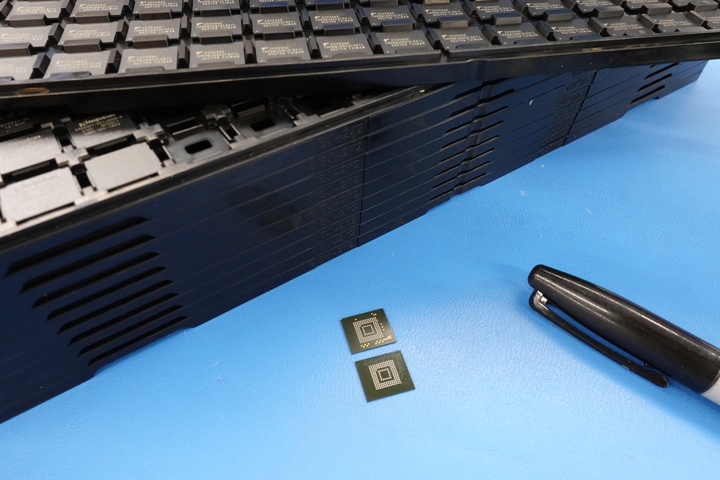
"Fun side story, one brand of 32GB eMMC has test pins on the underside that confuses the optical scanner for SMT parts placement, while another brand does not have the test pins. Since there is no easy way to mask the optical scanner of those test pins, a black permanent marker is a quick fix to blot them out so as not to confuse the scanner."
However, if you are interested where the Librem 5 parts are made, see: https://source.puri.sm/Librem5/community-wiki/-/wikis/Freque...
https://www.bbc.co.uk/news/business-27643474
I don't know what went wrong there, or what lessons could have been learned.
source: https://tedium.co/2015/07/16/sega-master-system-brazil/
- ability to extract all memory component to reflash them
- pinctrl connectors for i2c/spi
- reboot of grey bus
- sdr components
Please make something incomparable!
"convergent"?
And while basically noone uses pinephone/librem 5, there are plenty of people running desktop linux (myself included), but I don’t sleep well knowing how unsecure the whole thing is, and seemingly it is not a priority to anyone. Is my paranoia based on facts?
Some nitpicks (not directed at you at all):
> When we develop security solutions, we develop them without looking down on the user or thinking of them as som[e]body that we have to protect almost like a parent-child relationship. We try to build a solution that gives them control over their own security.
That's many words for saying we don't have any sort of security measures.
> Because all the code in the root file system of the Librem 5 is free/open source, all of it can be reviewed to verify that it doesn't contain backdoors and doesn't do anything that the user doesn't want it to do
At most it answers privacy but not security. Also, non-existent security can so easily add a "backdoor", especially on top of an all-memory-unsafe environment where memory bugs are everywhere.
But I will give them that they do list basically all my gripes with it:
> It lacks a secure boot process to verify that none of the boot files have been changed. > It lacks a hardware-backed key store. > The apps are not run in a secure sandbox. > PureOS doesn't have shim kernel drivers that do most of their execution in userspace libraries like Android and iOS. > PureOS doesn't have low-level protections such as Control Flow Integrity and ShadowCallStack in Android and Pointer Authentication Codes in iOS. > Most of the operating system and applications are written in memory unsafe languages like C and C++. > The Librem 5 lacks a permission system where each app is required to ask the user for permission to access parts of the phone like Android has.
And unfortunately the answer to these is that there are some distant plans for some of these. Hopefully both desktop and mobile Linux will improve heavily in this area in the coming years.
I think the project is awesome, and I'd be very inclined to purchase one, but I can't justify $2,000 for a comparatively subpar device.
The value here isn't in raw specs, it's in privacy and respect for the user, which is a total blow out in favor of the librem.