What a wonderful time we live in!
My parents live in the (Eastern-European) countryside and because of the environment (basically all sorts of animals living around the house) they started having lice since 2-3 years, I think. You eventually get used to them, one of the keys is to tuck (I think that's the word) your sleeping pants well into your socks, so that the damn beasts won't make their way up on your skin from bellow. Sleeping with the bedside lamp turned on seems to also have helped, but not sure if that was my placebo or not.
If you mean lice, do you mean head lice, body lice, or pubic lice?
They are really amazing little creatures.
(*) for a modern understanding as to what constitutes homelessnessThis seems to just be an attempt to keep critics at bay.
Of course this is the very definition of a 1st world problem but I think it holds some water in modern western society.
https://www.inc.com/jessica-stillman/for-95-percent-of-human...
Maybe they only hunted for 3 hours on average in the good time. ... But they had other more existential threats. There is a reason they all switched to agricultural societies.
Seeing your babies die of starvation will do that.
Secondly, ancient humans did everything themselves. Their clothes, food, bedding, house, roof, EVERYTHING. There was no global supply chain, there was no clothing industry, there was just you, your farm, and your two hands.
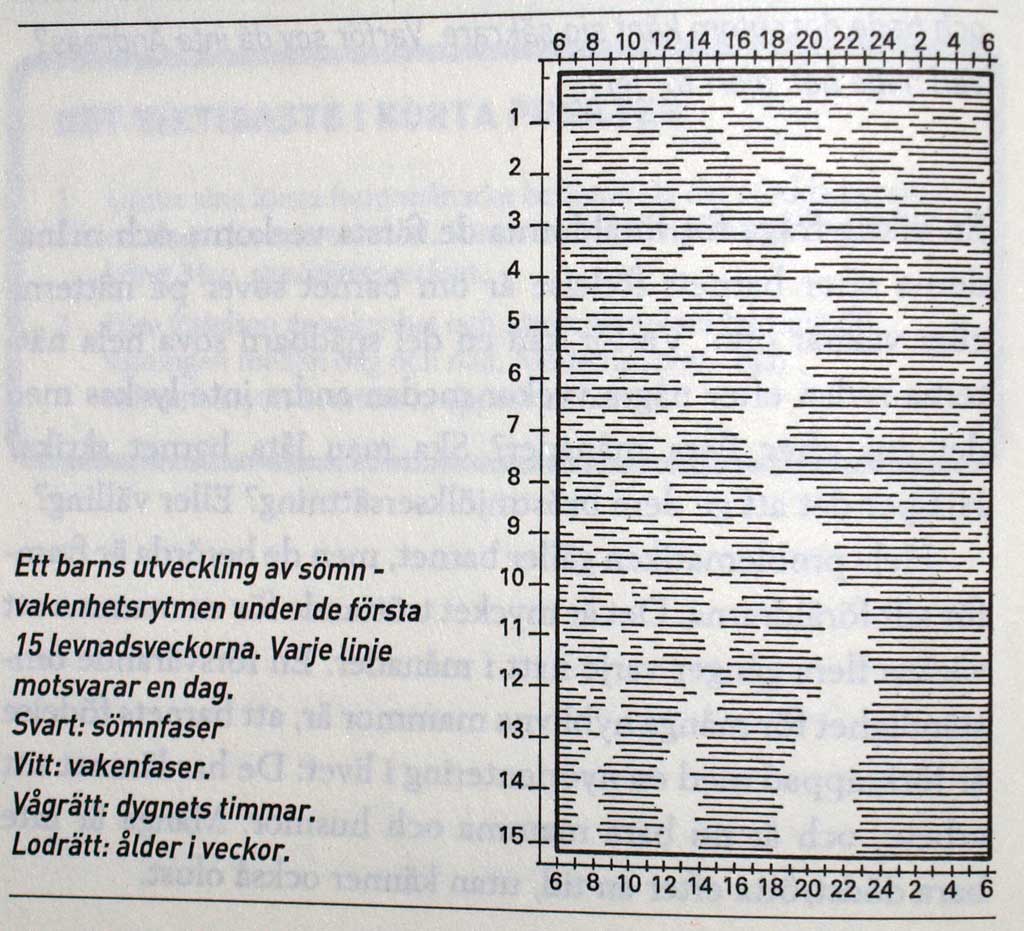
http://www.eiman.tv/misc/somnrytm.jpg
Since the text is in Swedish, here's roughly what it says: Every row is a day, black is sleep, white is awake.
They're sleeping _way_ too much for 15 weeks. two 3-4 hour naps?? 8 hours overnight is definitely possible but rare
I've heard of sleep patterns like that but always thought it's just marketing.
Waking up to feed the baby is a very WEIRD way of looking at the world.
In talking with friends, it would seem like our experience was extra crappy and yours is uncharacteristically mild. So the reality may be that many have to wake up at least once in the night to feed, so 2nd sleep kinda makes sense to me here. Not that I'm saying it's where the phrase comes from.
I've often thought that much of the difference between poor/adequate/great parents is the personality of the kid(s). Have a really easy one and then you think you're some of rockstar parent. Then number two comes along and shatters your delusions.
Turns out if you stop feeding them or going to them in the middle of the night, they adapt and sleep through in less than a week.
My wife is a complete zombie, I don't think she had more than continious 3 hours of sleep for at least 6 months now. I would cut my own arm off to make this situation improve at this point.
Daughter slept they the night from day one.
Son was up hungry every night at 2am.
Given that, power point of this thread, people pretty much went to bed at sunset, at European latitude that would mean a long night much of the year with kids wanting food and adults being sufficiently rested late at night. Once satiated amid a quiet daze of food/sex/meditation, they’d likely doze back off until daybreak. Two sleeps seems quite sensible without electricity’s prolonged days.
When we had infants I'd go back to sleep pretty well instantly (co-sleeping, with baby on a side-cot at bed level; baby breastfed, not by me) but in general one would wake to the little snuffles that precede the crying (I guess that helps to calm them before they get in a tizzy [in a state, brought on by their own actions, crying in this case]).
I sleep through thunderstorms without stirring.
I'm a few years out from dealing with crying babies and still if there's crying in the background, that sounds like one of my kids, I'll pop-up like a meerkat. The sound even gets though (non noise-cancelling) headphones when I'm gaming, though I won't know what I've heard until I take them off.
Just like parents today, people would power through that, and not make that a habitual sleeping pattern.
I am not saying this makes the hypothesis of the origin being in parenthood true, just that it does not make it false either :)
> Dozing while nursing .... and enjoying/enduring some thinking time.
Nah, it is just brain fog from slee deprivation. It is not free thinking time, it is "Jeeez I want to sleep" time.
But the toll is high, not sleeping properly ruins your life. And most of the time it's definitely not insights, but the opposite. For me, it's not something to seek out.
The comment about contemplative dozing comes from my wife. I’ll pass on your feedback.
I myself have weird sleep cycles. I prefer to stay up into the night and wake up around 12:00, but I vary my sleeping hours by up to 4 hours or so. I go to sleep when I feel like it, and don't feel much discomfort by falling asleep at different times. It leads to weird situations - especially in winter - where I might not see the sun more than a couple hours in 3 days despite being up and around a lot. I don't experience a lot of 'two sleeps', but they do occasionally happen.
It happens rarely. But enough times that one might notice it. If you experiment with lucid dreaming, you realize that the time you usually wake up is in between your REM cycles at the 4 hour mark. If you take a 15 minute break from sleep in your bed at this time, then fall asleep while trying to keep your mind awake (by, say, counting backwards, or just "willing it"), you can fall directly into a lucid dream. If you try this at the beginning of your sleep, you just fall into a long sleep paralysis and hypnagogia session. Your next REM cycle is too far away.
So, yes, it's real. But I think it's more likely that it was experienced much like nowadays, as a rare occurrence rather than a standard.
What theory? The article doesn't really claim that this kind of sleep is better or more natural, just that it was incredibly common. Is the idea that it was common now thought to be false?
Ekirch hypothesis: Early humans had two distinct phases of sleep with an important gap between. Lack of in-depth discussion or even a name for that gap in any language is actually evidence of it being so common it wasn't worth commenting on. It disappeared - again without comment - because of widely available artificial light, although it actually makes less sense to dedicate midnight hours to stuff like household chores and reading in the middle of the night without easy light sources, especially in northern European summer when it's about the only time there isn't daylight.
Null hypothesis: early humans slept much like today's humans, sometimes waking or being woken in the night, occasionally even intentionally but generally not making a big deal of it and trying to sleep through. People sometimes described periods of broken sleep as "first sleep", "second sleep" and even "third sleep" but commentary on the practise of biphasic sleep and importance of midnight waking is harder to find because most people didn't do it that way. A lot of references to "first sleep" can be found if you search digitized records with that string and its foreign language equivalents, but so can references to obviously non-systematic things like "first injury" or "first marriage". You can't generalise human behaviour in the absence of electricity from one tribe that does have a midnight break when numerous others studied don't.
That's a terrible null hypothesis, as there is no reproducible, controllable test for it, other than a time machine.
A better one might be "people exposed to pre-industrial revolution photoperiods (<12h per day) will settle into a biphasic sleep pattern".
This was empirically tested with a small N (https://onlinelibrary.wiley.com/doi/10.1111/j.1365-2869.1992...). At least it's testable.
This hypothesis would also have to explain why we don't say things like "first sleep" anymore, even though we do say things like "first injury" or "first marriage".
One example that comes to mind, from Henry V:
    But, like a lackey, from the rise to set
    Sweats in the eye of Phoebus and all night
    Sleeps in Elysium
I haven't done an exhaustive survey, but I don't believe Shakespeare characters ever wake in the middle of the night unless there is something to disturb them. They may drink late, or chimneys may come crashing down around them, but nobody ever says "Hey, see you in a few hours when we're both awake".
This is obviously far from conclusive. But the man writes about sleep often enough that I'd have expected at least some hint of it.
This article is about the 17th century (with some references going back further). Does Ekirch write also about early homo sapiens? Earlier ancestors? I am not nitpicking, just wondering if that term is used intentionally.
From the article:
> The period of wakefulness that followed was known as "the watch"
Other terms for that time of night:
The witching hour (which almost sounds like a corruption of "the watch") - https://en.wikipedia.org/wiki/Witching_hour
Wee small hours - https://en.wiktionary.org/wiki/wee_small_hours
It does:
"the benefits of dividing up sleep"
"single periods of slumber might not be 'natural'."
THIS article soft-peddles such claims biphasic sleep is better and more natural ONLY because those theories have been largely discredited since it was first put forward. Try an older article:
"Ekirch believes many sleeping problems may have roots in the human body's natural preference for segmented sleep"
"a consolidated eight-hour sleep may be unnatural"
https://www.bbc.com/news/magazine-16964783
> Is the idea that it was common now thought to be false?
Yes, that part is likely false, too:
https://www.theatlantic.com/science/archive/2015/10/the-many...
For a start, the article suggests that it wasn't just common but actually the dominant pattern of sleep, but the evidence seems a bit thin on that. Moreover, it says that "Ekirch began to suspect that the method had been ... an ancient default that we inherited from our prehistoric ancestors". But I seem to remember an anthropologist on a TV programme (many years ago so I forget which one sadly) saying this isn't obvserved in isolated tribal cultures today, so we can reasonable expect that our pre-agriculture anscestors wouldn't have slept this way.
Edit: A reply to a sibling comment found a good citation: https://www.theatlantic.com/science/archive/2015/10/the-many... Interestingly, like the BBC article it mentions Ekirch as the proponent of the two sleeps theory. So I wonder if the whole idea is the pet theory of this one person.
It doesn't have to be connected, maybe my health would deteriorate independently of sleep or alone factors, but doctors say that it puts you into the risk group at the very least. I'd say be careful, but 5-10 years ago I'd also waved it away as irrelevant :)
I usually use the day hours as "open office time" for support requests and meetings, and the later time as "proper work time". This helps me avoid context switches.
Yep. Exactly the same here. I tend to wake up 7-9 hours after I go to sleep (usually between 00-04:00) no matter when that happens. With very rare occurences of two part sleep. No side effects by 45, but I do exercise.
Come to think of it, I may get two part sleep more often than I think, because I do wake up during the sleep period. But most of the time I ignore it and fall asleep again in a couple minutes.
[Edit] - Ok, I read the review and I can see why you added YMMV.
"two sleeps" was pure fact for a very long time.
Humans used to sleep in two shifts - https://news.ycombinator.com/item?id=27334769 - May 2021 (60 comments)
The History of Sleep - https://news.ycombinator.com/item?id=9501610 - May 2015 (11 comments)
We used to sleep twice each night - https://news.ycombinator.com/item?id=5542453 - April 2013 (107 comments)
Rethinking Sleep - https://news.ycombinator.com/item?id=4558569 - Sept 2012 (60 comments)
The myth of the eight-hour sleep - https://news.ycombinator.com/item?id=3620742 - Feb 2012 (161 comments)
Can anybody find others?
During polyphasic experiments in my youth, my biggest obstacle was always securing reliable conditions to allow the daytime naps.
“When Bandogs Howle and Spirits Walk” in Smithsonian Magazine - from January 2001!
https://www.smithsonianmag.com/science-nature/when-bandogs-h...
Of course actual blood alcohol takes longer to go down than that but no matter how much I had, I'd invariably feel significantly more sober after the initial sleep than if I just stayed awake and stopped drinking.
Given that alcoholic drinks (especially various concoctions we'd hardly recognize as "beer" today) were fairly widespread especially when pure water was not always potable, I wouldn't be surprised if this didn't at least factor in for some of the reports. Then again this doesn't explain the observation of polyphasic sleep developing under experimental conditions.
Technically, they were all drinking alcohol because water was unsafe. However, beer at least had half the alcohol content that it has today and the wine was strongly watered. For women and children they even added water to the beer.
Googled it once. The information should still be available.
almost no one here is willing to admit, in the heat of a discussion, that they don't know everything about the topic at hand, and it is maddening.
https://www.theatlantic.com/science/archive/2015/10/the-many...
(Courtesy of quietbritishjim: https://news.ycombinator.com/item?id=16037465)
> Ekirch combed through centuries of Western literature and documents to show that Europeans used to sleep in two segments, separated by an hour or two of wakefulness. Siegel doesn’t dispute Ekirch’s analysis; he just thinks that the old two-block pattern was preceded by an even older single-block one.
The difference is between almost 16h of night time (depending on your definition, of course, since some light will be there even if Sun is not out) in late December and 8h of night time in late June at 45 degrees of latitude.
I wouldn't be surprised if sleeping twice during the night was more frequent during winter time in Europe.
Still, ever since fire was introduced into houses, there was an artificial light source as well.
The author is a historian but either wasn't aware of the practice or didn't feel it worth including. The richness with which she describes other aspects of C16 life is so great though that I find it hard to believe she would not have known if it were a well understood practice. Perhaps sleep is an example of a custom that it is hard to think about doing differently from the way we do and was just missed. But it seems strange that such a big aspect of life isn’t widely understood by historians.
The range of our diet had also globalized. Potatoes are now a staple worldwide, and tomatoes flavor dishes around the world from where they were developed. Spices aren't very exotic, even if some of us like our food plain.
And salt! Salt had gone from a spice and vital preservative with a value comparable to hard currency to something we throw on roads in the winter.
Wait what? Citation needed please, I googled this and couldn't find anything. Our teeth were definitely bad 100 years ago, since we have images and video from that far back. The bad teeth are something that really struck me in "They Shall Not Grow Old": https://youtu.be/IrabKK9Bhds?t=57
Edit: Okay I see a Scientific American article about this here: https://www.scientificamerican.com/article/why-we-have-so-ma... so that means in 100 years we went from perfect teeth to terrible? Dang
What makes you think that? That's not what evidence has ever suggested. https://www.usatoday.com/story/news/nation/2014/01/06/tooth-...
Personally I wonder if this would affect speech as well, so perhaps out ancestors sounded different too?
https://www.smithsonianmag.com/science-nature/ability-pronou...
Dont we see two sleeps in the older generations, known colloquially as the afternoon nap?
Japense kids with depression, were found to be driven to school where as those that walked to school for just 10-15mins iirc didnt get depressed according to one study. Blue light stimulates or helps increase the serotonin in the brain which creates wakefulness.
Its like blue light from computer monitors can keep people awake for longer at night which is why M$ introduce the blue light monitor which is a rip off of the original AFAIK of https://justgetflux.com/
Interrupted sleep in the middle of the night for a bit is something I always thought was a normal occurrence as you got older, based on my family.
I'm still working through the book, but the tl;dr is that it mostly just comes down to nutritional deficiency. People in the past ate pretty much strictly nutrient-dense foods, people today eat a lot of junk food, empty carbs, and generally foods that just aren't nutrient dense compared to what our ancestors ate (mostly vegetables and meats).
With respect to the question about underdeveloped jaws, that development takes place primarily during your childhood, so if you didn't have optimal nutrition at that stage you won't be able to fix that retroactively.
I’ll do some work and be back asleep by 2 or 3.
My kids will be up at 6:30 and it’s all good with me.
When my kids get older, my sleep patterns will change again I’m sure, as they did when we entered into parenthood.
Fighting for sleep feels like an argument with reality, my kids are young and up periodically throughout the night.
c’est la vie
> From as early as 21:00 to 23:00, those fortunate enough to afford them would begin flopping onto mattresses...A couple of hours later, people would begin rousing from this initial slumber. The night-time wakefulness usually lasted from around 11:00 to about 01:00
In my experience the easiest way to transition from sleeping 8 is to wake up early on a weekend day and do a bunch of tiring activity, then take the longest nap possible in the afternoon in a blacked out room. That evening, go to bed as early as you can fall asleep and get up after 4 hours. Then enjoy the watch for a few hours before going back to sleep.
I find i'm also less dependent on alarms sleeping that way.
It's never about reducing sleep, is about making sure you rest properly. It takes what it takes, if you fight your body, it will fight you back (and make your life a horror for a while).
https://en.wikipedia.org/wiki/Fixed_prayer_times#Christianit...
This entire concept was just forgotten for centuries, and even now we can just sort of guess that it happened but are unsure why. How many other parts of daily life were just never written down? All our historical sources are so absurdly biased towards a wealthy few that our conceptions of historical life are inherently flawed.
What actually happens when two phalanxes meet was (intermittently) a really major determinant of world events for a long time. It was top of mind for Alexander, Cesar, and other generals and kings until the renaissance. Generals who wrote about pikes and shields and war stuff. Still, we don't know.
Two phalanxes meeting face-to-face with neither side drastically outnumbering the other was likely the worst case scenario because it meant a war of attrition rather than a quick and decisive victory.
Whether it's cultural or biological remains to be seen, but it definitely seem to be common enough that it didn't merit explaining, except as a casual reference.
edit: Also, I feel like ass ALL THE TIME so the BBC can shove it
https://www.cambridge.org/core/books/evenings-empire/9CB4189...
How we turned night into day. And basically a story how technology really went hand in hand with a social revolution.
the article mentioned that a contemporary reproduction of the pattern used blinders to cut off the natural light - something I guess most people did not have in the Middle-Ages. It also mentions that they were waking up at dawn (which is early in the summer).
I'm sure a LOT of people do it, and if you turn off your alarm clock and having to get up at x time, and going to sleep at y time, to be 'refreshed' etc, you'd notice the benefit yourself.
Just sleep when you're tired, eat when you're hungry. Trying to have rigid rules around all this does more to damage peoples health than anything else.
Never heard of the medieval studies before this.