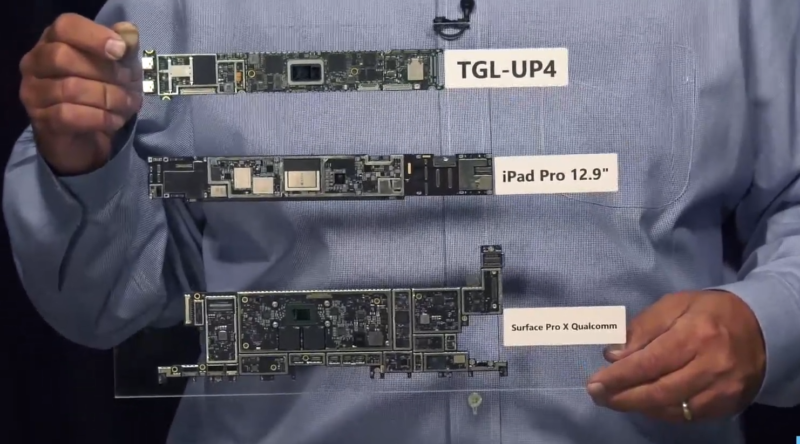
> Consumer PCs don't match this bandwidth because DDR DIMMs generally aren't as fast as LPDDR.
What about LPDDR (low-power DDR) allows it to be faster? And, by faster, do you mean lower latency? higher clock rates -> higher throughput? This is unintuitive to me.
My impression is that lower power means that you can't sustain higher clocks as readily (in fact, when overclocking RAM, it's common to increase voltage in the interest of stability).
I can't find anything about CAS latencies for LPDDR DIMMs.
edit: to clarify: when overclocking RAM, your two options are either increase voltage or increase timings, as if you want to sustain higher speeds, you need to either charge your capacitors faster, or wait more cycles for them to be charged.