-Update available, wanna install?
  Sure
  -OK don't mind me I'm gonna need a while
  OK
  -HA HA I LIED I"M READY TO TERMINATE EVERYTHING BYEEEE
  WTF
  5 reboots with just an Apple icon and a progress bar
  The progress bar also moves backwards sometimes
  I guess it's a metaphor for life, which is how long this seems to be taking
  -OK hello I am back but I need 10 minutes of alone time
  -Here is some unfamiliar wallpaper but you can log in I guess
  -Oh it's you again, do you want to share analytics with us
  -OK here is your familiar desktop, I am not telling you what has changed
  Um preferences
  -Oh hai I'm called Settings now and I reorganized everything
  Yikes but OK this is sorta well laid out I guess
  -Hello I am Stage Manager, I put a desktop on your desktop so you can work while you work
  Sorta neat, can I configure some things differently though
  -No
  [hours later]
  -Ha ha just kidding of course there's a feature tour do you want to see it now
  Hmm OK
  -Have you ever wished I was a phone? (8 slides)
  Really? Let's have a talk about Preferences
  -They are Settings
  OK, let's have a talk about Settings
-NoOh good. I find it by typing "settings" 100% of the time because I can never remember what it's called ("System Preferences", evidently) but that works less-well than it might since that's not the name—it doesn't fully match until I've typed the whole word.
Windows, on the other hand, generally does incremental upgrades.
I used to game weekly with my friends, and because of the above problem, I would have to turn on my computer the night before and start the update so I would be able to reliably play a game the following day - otherwise, there was an extremely good chance that they would start gaming at 8pm and I wouldn't be able to join until roughly 10pm due to the Windows updates.
At the time, this was Windows 10. I eventually just switch to an old Xbox (ironically, still Microsoft), which was far more reliable (although XBox updates take forever too), because we could cross-play Apex Legends. But that is an 8 year old XBox One and it finally has crapped out on me.
I'm currently finishing up getting parts for a new PC build, which will have Windows 11, and I really dread it. I wish Apex was for Linux because I just want to have a Linux-based gaming environment.
--
Anyway - all this to say... macOS major updates might be slow, but they happen so infrequently, that it's not nearly a big deal. Minor security patches are almost never that slow for me, especially compared to Windows.
[0] https://eclecticlight.co/2022/03/19/explainer-macos-updaters...
My MBP took 10 mins to update earlier. That's fine.
So that’s why parallels kept throwing up the password screen while updating the last beta. I guess the VM can’t autologin and I was about to give up thinking it was permanently stuck in reboot
All I want is to hit Command-F to quickly search the filenames in the current folder (not start a sluggish scan of my entire hard disk). There used to be workarounds for this, but then they removed "Find by Name..." from Finder just to make our lives harder. Does anyone know a workable alternative?
When performing a search:
Search the current folder
defaults write com.apple.finder FXDefaultSearchScope -string "SCcf"Use Alfred; I've been using it for years (10 maybe?) -- solves this problem and is extremely useful in general
¯\_(ツ)_/¯
Tip: Use the Help menu to search menu items. I just pressed ⌘? and typed "Find" and Find by Name… popped up.
Thank you for showing me that menu command! That'll be a lifesaver going forward. Usability achieved despite Apple design, not because of it.
Damn, been using macOS for 9 years now and just found out about this :o Thanks!
I wrote my own solution using fd + sqlite + fzf but it's nowhere as fast as Everything, and it also requires me to focus the Terminal to use it.
Don't know if it works on Ventura, not upgrading until I know.
How did one dev managed to achieve what, apparently, no corporate entity ever has?
But then again, they will almost certainly screw it up, given that Windows Search still can't search my start menu reliably without pauses. And their history with acquisitions and integrating tech isn't very good.
How it catches all file writes to update that index near instantaneously, I have no idea.
The search interface in finder has a builder for predicates (start a search then hit the plus on the right side of the search bar). There you can start to see some of the friendly prefixes for filesystem items such as extension:, kind:, date:, tag:.
You can also see the mass of file specific metadata - like width, audio bit rate, city, genre.
I have not, however, found a handy way to translate between English description, friendly prefix, and the internal query names like kMDItemContentType.
Fun aside - some of these used to work in the Mac app store - for instance, you could search for listed applications which could open exotic document types.
The "uselessness" IMHO is mostly in that it exposes the most simplistic interface possible, and people just don't know where to go from there (other than terminal users going `man mdfind` I suppose). That gap is only widened by how different it is from other filesystem-based mechanisms for power users, which have more established commonalities like regex and filesystem globbing.
But I still use both, because Raycast doesn't support "folder search". I use folders in general because they don't change, and I usually know what I'm looking for. It (should be)/is also faster than searching all files.
When I'm looking for a file or it's contents, I'll fall back to spotlight
• Finder -> Preferences -> Advanced -> “When performing a search: Use the Previous Search Scope”
• On any Finder window, CMD-F -> Search: This Mac / [ FolderName ]
• On the loupe: “Filename” instead of “Everything”
Enjoy
I moved back to Windows a couple of years back. Spotlight is the second thing I miss most from macOS, with the first being Preview.
(https://news.ycombinator.com/item?id=33321000)
There seems to be two kind of searching people do. Some people want a search tool that searches in documents. Some people want a search tool that searches filenames.
Everything search is exclusively the second. I think I can count on one hand the number of times I've wanted to search inside documents in the last 10+ years (and for those cases, grep has worked fine, even on windows!).
For some reason, searching inside documents seems to be the default for both windows and os x search, and it's super annoying.
A Spotlight search never starts a scan of your disk. The disk is always fully indexed and returns results out of the index very fast. The only exception is typically when the system is updated (or some other big event) and it reindexes everything.
That being said, as others have pointed out, there is a setting to make a Finder window search apply only to the directory in the current window.
The only way to fix it is to do some command line mumbo jumbo like rebuilding the Spotlight index and deleting index folders.
But maybe that more nostalgia than actual memories ;)
I use it all the time to run binaries. For instance, "cmd-space mail". I wouldn't know the names of the files I want to search anyway.
Terminal and /usr/bin/find
https://github.com/sharkdp/fd#installation
assuming you are "in the current folder" in the terminal...
find . -type f -name “somestring”
but yeah that seems like more typing than one might want compared to a simple text entry field in the GUI.
(But your "find" will search in and below the current directory for files that exactly match "somestring".)
It turns out the `scp` has been updated to use sftp protocol since OpenSSH 8.9 and Synology seems to use a different port for sftp, causing some hard to understand errors.
https://lwn.net/Articles/835962/ for context.
This applies to Ventura, Windows 11, Android 12, and iOS 16. I tried updating to some of these, only to regret it later and downgrade.
Also, scp was in fact broken, and they fixed it by changing it to use the SFTP protocol under the hood.
I have a MBA M2 going USB-C -> HDMI on a 4k Dell monitor. You can open and close the laptop and it switches the external from secondary to primary and back almost instantaneously.
I'd describe this as a major improvement over every prior MacOS.
Did this _not_ work on the same M2 laptop while on Monterey?
(I've had this on Monterey from the beginning on M1 MacBook Pro)
But the toggle between the modes had been this slow experience that seemed similar in delay to switching resolutions.
Now it is this blip—-this is your main display, and you can toggle it if you rapidly open and close it, which I can’t really recommend except to cement in your mind that this is the new normal.
It seems wholly different.
Have no idea about ventura, will not update before first patch, I guess.
There's no built-in way to do it.
Stage manager seems like a half measure to introduce better window management in macOS and it doesn’t help that it doesn’t support a keyboard only workflow, from what I can tell from the demos.
Coming from i3wm, I found Yabai to be an excellent keyboard-first window manager. I do wish something like Yabai was built into macOS.
But after adding support for it in my rcmd app (https://lowtechguys.com/rcmd), and tuning yabai's grid a bit, I found it quite useful for my workflow.
Here's a video on how I use Stage Manager with the keyboard shortcuts in rcmd, if you'd like to see if the same workflow would be useful for you: https://youtu.be/dlwjSf7aIy8
I'm also giving out some promo codes for rcmd to give people a chance to try this functionality and see if they like it:
*previous codes redeemed*
    RHKWKLML7YHA
    9HL7XALHANL6
    XP7N6N7PFJRP
    AWA37JJLA9LJ
    3FR6JR4LPPAF
    93TFMMX6KM6M
    7K4YLM6H3P6E
    36MWRHWF7TM7
    RTM9HEEAHTA7
AEMNXEX6WFPKps: I used the YP33H9AP9NFH code, so try the other ones.
If they focus on stability, everyone says, "Not enough new features to be worth the upgrade".
I guess no one can be happy. Or they expect a ton of new instantly stable features...
Which is sorely needed.
Because honestly I’m afraid of paying $12 to $24 per device per employee and per month for an SSO+MDM solution that would make me depend on a dodgy Windows-style UI (Jamf) or worse, all my employees’ ability to login would depend on Okta.
However, since you aren't really missing anything in terms of new features, it also doesn't hurt to wait for a couple point releases to let other people find remaining bugs first.
Safari, Mail, Messages, Photos, I don't use any of it. So couldn't care less about that. This is not an OS update but a list of app updates. Other than that it's mostly window dressing. Some tweaks to settings and a new stage manager thing to replace the launcher thing that I also don't use.
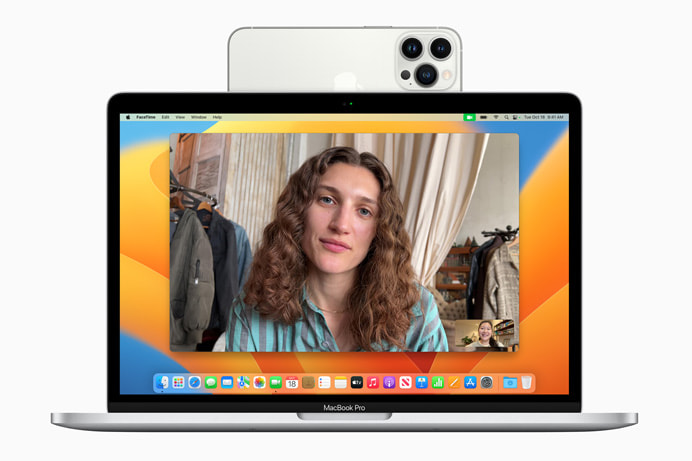
What intrigues me is the ios webcam support and the fact that they use mac book pros without a notch in the mockups of that. Yay to no notch. But does that mean they are removing the web cam in future macs? Kind of relevant because I have an Android phone and no interest in switching to IOS. And I do use the webcam. If not, what's the point of this? Maybe they should just put better cameras in their screens and laptops? Also, what holds up the phone here? This looks very gimmicky to me. Anyway, absolutely nobody I know uses Facetime (I live in Europe, just not a thing here; same with iMessage) and I bet it doesn't work outside of that. I use macs at work, so things like Zoom, MS Live, Meets, Webex, etc. are where I use a webcam.
So, short, stage manager thingy, spotlight tweaks, some deckchair rearranging in the settings and metal 3.
(Reduced motion iirc, I don’t have my Mac with me now)
This keeps the workspace nice and clean
For switching apps, either cmd-tab or cmd-` or with Alfred App
Indeed, for moving windows to left/right/etc, you may need an app like Rectangle
You _could_ add custom shortcuts in Settings - Keyboard for menu items like Zoom or "Move Window to Left Side of Screen" but it's a bit limited.
What is missing? I guess some people like live preview in cmd-tab, but I've been ok without it.
For those on Windows, there is an equivalent app called bug.n that mimics dwm.
  Cmd-Tab -> switch apps, in most recently used order, keep Cmd held down and repeatedly tap Tab to cycle though the switcher bar
  Cmd-` -> switch windows of current app
  Cmd-H -> hide current app
  Cmd-Opt-H -> hide other apps
If you want more options, try Alt-Tab app: https://alt-tab-macos.netlify.app/
https://www.kolide.com/blog/the-security-and-it-admin-s-guid...
They’ve been listing it as a Ventura upgrade, and all the marketing (more or less) points to this as a Ventura-and-later feature, but it’s on Big Sur and Monterey too.
Supposedly if you install the original SSD it will update some firmware somewhere and you'll be able to use the 3rd party SSD after that. But, like I said, mine's broken. You can supposedly also buy a used genuine SSD off eBay, but that seems a slightly expensive way to do a free OS upgrade.
Interesting story, Apple will not sell you a replacement or upgrade SSD for your 2013 Mac Pro - not for any price. They're only available for warranty replacements, and these computers haven't been under warranty for a long time.
Another thing I assume is still not fixed: The ability to permanently disable VRR for monitors that don't behave well with Apple's VRR implementation. That one's been annoying me with Monterey on my work laptop. Every time the computer sleeps, it turns VRR back on, and my screen blinks and flickers away until I manually turn it off again.
Also you can still update that Mac Pro of yours to Monterey if you use the Open Core bootloader. It just requires going off the beaten path.
I mean, Apple was making new versions of macOS that supported the 2013 Mac Pro until literally today. If that's their playbook, they're not doing great.
This is bullshit. Think about all the PR they have about eco-friendliness, yet they do this
Now there's a nothing burger sentence to start us off.
This stuff was noticed months ago: https://news.ycombinator.com/item?id=31669950
Some bugs probably will be fixed in the upcoming patches. Some will not.
It's all a matter of perspective. :) I love the ability to use my phone as a webcam.
- Settings app has a lot of weird bugs and performance issues. After a restart I have to wait a few minutes before the Settings app actually functions. Overall the Settings app has felt like a step back in terms of UX and performance
- Lots of weird issues with Docker (might be on Docker's side though)
- My screen goes black after disconnecting my external monitor and requires a restart to fix the issue
- Strange networking issues
I'm flabbergasted that Apple's latest UI struggles to beat web apps not just on design (RIP Aqua), but also performance.
Also, it seems to think - for a few moments after every restart - that my Wifi connection is to a hidden network, when it actually isn't. Welp.
Thanks for the heads up on this
None of the changes are life changing but oh well, isn't often a desktop OS really surprises me with something new these days. Hopefully it is as stable as Monterey was for me which didn't have a single crash in the whole year.
Stage Manager is interesting but a very minimal effort by Apple. They really need to work on better overall window management in macOS. Snapping and tighter keyboard management for moving and resizing windows is badly needed. Either that or they need to relax their accessibility restrictions for apps so that we can get some good third-party options without needing to disable SIP.
Overall it seems to be mostly quality of life improvements, a few related to their primary services (such as Photo Library sharing) which will obviously be handy for up-selling iCloud/Apple One paid upgrades.
I am interested to see the new virtualisation framework stuff. Wondering if things like Distrobox (podman) can make use of it.
It would be nice to have this feature natively though.
I recommend the excellent EclecticLight blog (by H. Oakley). He doesn't try to do a comprehensive overview (you have Ars for that), but has done many technical deep-dives covering changes that haven't been talked about anywhere else, and I can't praise him enough for that.
Michael Tsai also has a great blog (mjtsai.com/blog/) that functions as a news agregator for Apple stories and commentary, and though his blog's not dedicated to only macOS, you'll find regular stories on technical details there.
(I miss John Siracusa's reviews for ArsTechnica)
(Concerns about potential VirtualBox issues held me back though I suppose I can/should at least upgrade to Monterey now.)
Apple Color Emoji
Version 18.0d4e1
Glyph count 3 574
I thought it was only able to run ARM VMs which can _utilize_ rosetta to run x86 code?
https://developer.apple.com/documentation/virtualization/run...
In short, this upgrade is simply an hour or so of annoyance, but Apple is Apple. You take the good with the bad. I have a dream - which will never happen - of a "MinMac" setting on install where you just get the least amount of cruft possible.
I've never been enthusiastic about Apple's annual upgrade schedule for macOS, biannual was far more comfortable. When responsible for users' desktops, I tend to wait for months after at least .1 is released and even then only start with one lucky user for weeks of trial period, and I do the same with application updates. Invariably, users ask for upgrades, and I make them tell me what new features or security enhancements they can't do without, and that usually calms them down.
At home, I'm still holding out on 10.14.6, but this old mini is only supported up to 10.15.7, so I figured I might as well freeze upgrading on Mojave so I can still run legacy 32-bit software if I want it. I may even downgrade to 10.13 so I can build Basilisk II and other 32-bit only software, but I suppose I can still use binaries, so not absolutely necessary. I just don't need new hardware yet, so I have the luxury of waiting until after Apple stops selling M1 minis. They're so reasonable to begin with, my hope is they can soon after be found for a song. I really want a 2018 Mini, also, but they'll take longer to come down in price, unfortunately and for no particularly great reason.
Now, my mini mirrors our cloud data locally for backups, and as such every user is signed in, and one way of doing that is simply a remote desktop and "switch user". It's cumbersome, and i wish it would just "magically" synchronize data once the user had registered on it, but it only needs to be done every time it restarts, which is when i new patch/version is released.
Anyway, i clicked "switch user" and poof lost connection. Following tries gave an "invalid desktop size 0x0" error, or it simply produced noise on the remote desktop window.
Logging in the user directly through remote desktop worked, but just be aware there may be dragons.
I kind of want to play some old school windows games, but I don't want to pay for parallels.
What I didn't know, is that you can hide "Recent Apps" (the app thumbnails on the left) in System Settings. It supplements Mission Control & Spaces, and makes it quite easy to switch between apps. You can also group multiple windows together to switch to them in one tap. Pretty neat.
https://forum.parallels.com/threads/did-anyone-else-on-17-ge...
I'd love to be able to set, say a "Programming" Focus, and have everything else disappear: All my desktop spaces would change, including their wallpapers (replaced by the Matrix green rain) and only the apps that I allowed would be visible, and even the files/folders and websites which I didn't include in that Focus should not be accessible (from the GUI or Terminal at least).
Basically it should be sort of like logging into a different user account, without logging into a different user account (i.e. keeping all your data and state, just temporarily filtering it).
In fact I think all operating systems should adopt the notion of a "focus" as a fundamental sub-level under the user account: Bob may have a social networking focus, office focus, or no focus, and so on.
There's quite a lot of stuff in macOS (iOS and iPadOS too!) that's surprisingly scriptable.
I laughed in real life.
https://eclecticlight.co/2022/10/04/how-to-keep-monterey-whe...
[1]: https://apps.apple.com/us/app/msgfiler/id418778021?mt=12
> With Continuity Camera, Mac users can leverage the powerful camera system on iPhone to unleash a groundbreaking webcam experience
I don't have the energy to parse a lot of text like this...
https://www.google.com/amp/s/time.com/42322/steve-jobs-chill...
When Lockdown Mode is enabled, some apps and features will function differently, including:
Messages - Most message attachment types are blocked, other than certain images, video, and audio. Some features, such as links and link previews, are unavailable.
Web browsing - Certain complex web technologies are blocked, which might cause some websites to load more slowly or not operate correctly. In addition, web fonts might not be displayed, and images might be replaced with a missing image icon.
FaceTime - Incoming FaceTime calls are blocked unless you have previously called that person or contact.
Apple Services - Incoming invitations for Apple Services, such as invitations to manage a home in the Home app, are blocked unless you have previously invited that person.
Shared albums - Shared albums are removed from the Photos app, and new Shared Album invitations are blocked. You can still view these shared albums on other devices that don’t have Lockdown Mode enabled.
USB accessories - To connect your device to a USB accessory or another computer, the device needs to be unlocked. Configuration profiles - Configuration profiles can’t be installed, and the device can’t be enrolled in Mobile Device Management or device supervision while in Lockdown Mode.
Phone calls and plain text messages continue to work while Lockdown Mode is enabled. Emergency features, such as SOS emergency calls, are not affected.
- I never want executable content sent to me via messages.
- I already block web fonts everywhere I can. I do want to know what other "complex web technologies" are blocked.
- I don't care about Facetime.
- I don't use Apple services or Icloud.
- Ignoring USB when locked should be a default.
Apple said at the rollout that relatively few people should need this, which is likely correct. The vast majority of people don’t have a state-level attacker going after them.
Also it makes sense that the UI/UX is accessible; many of the people who need this aren’t necessarily tech experts. And even if you are a tech expert, you don’t want a complex UI when you’re under attack.
seems like a bug, weird that it didn't get picked up before GM as it was also noticed during the beta: https://developer.apple.com/forums/thread/712858
Some discussion of it from today, but no definitive answers yet https://forums.macrumors.com/threads/strange-safari-open-tab...
- show all windows of an app when switching windows (cmd+tab). currently only one window from each app is shown.
- transition period when switching windows via three fingers gesture is too long. make it snappier.
https://webkit.org/blog/13399/webkit-features-in-safari-16-1...
Web Push won't come to iOS until a mid-cycle release, probably by March, maybe a bit sooner.
Personally I hope they have some sort of scoring to alert people if they are subscribed to notifications that others have reported as being scammy. They hopefully learned from the Calendar spam problems.
It's listed on this page (search for "2023"): https://www.apple.com/ios/ios-16/features/
And yet there is no Apple weather app for iPad!
>Apple wisely takes an ain't-broke-don't-fix-it approach to macOS's standard multitasking model in Ventura by turning Stage Manager off by default and making people go hunting for it if they want to use it. You can't change your Mac's UI in a major way by accident.
If you haven't used it, Stage Manager differs from standard macOS multitasking by offering a column of recently used apps on the side of your screen (it's the left-hand side by default, but it will switch if you've got your Dock set to use the left-hand side of your screen instead). But unlike minimizing or maximizing an app from the Dock, each "stage" can contain multiple app windows from multiple apps; switch from one stage to another, and every window on that stage will pop back up on your screen in exactly the arrangement you were using before.
Within a given stage, app windows work exactly as they do anywhere else on your Mac. You can move, resize, and rearrange them any way you want, including shoving them all the way to the edges of the screen. The recent apps column will persist on the side of the screen by default, but it will get out of the way if you move an app window over it; you can bring the apps back up by moving your cursor to the right edge of the screen.
Stage Manager integrates seamlessly with macOS's other window management systems. Do you still want to use some apps in Full Screen mode? Great—they don't appear in your recent apps tray, and you can access them with a trackpad swipe, the same as you could before. Do you like Mission Control? Also cool. Apps in your tray slide gracefully up into Mission Control mode, along with any open apps that aren't in your tray.
https://arstechnica.com/gadgets/2022/10/macos-13-ventura-the...
If you take away the background, the way that it's arranged feels very AR-y to me.
I tried out uBar for Mac OS https://ubarapp.com/. Too buggy though.
I've been maximizing the windows for every app on the built-in screen since forever. More recently I've been using Rectangle when my MBP is connected to my new 27" screen. It works quite well but the layouts require a bit of nannying, I guess it's just a matter of me familiarizing myself with the keyboard shortcuts.
For my usage/preferences, the Windows taskbar and alt-tab switcher scale extremely poorly. They drive me to keep no more than 3-4 windows open, because any additional windows beyond that make my desktop progressively more difficult to manage which feels utterly absurd on a tower with a 5950X and 32GB of RAM which I should feel empowered to heavily multitask with.
I assume some Chrome product manager is as clumsy as I am (bless their heart), so it will insist you hold down the Q key. If only that was the default.
They're using all software building resources for iOS and then just slap any reusable features on their desktop OS whenever possible. Great when it works for apps that are quite similar (e.g. messages), terrible for things that simply work very differently on a desktop OS (system settings, stage manager is pointless etc.).
Good opportunity for Windows to finally beat MacOS in UI/UX, since they don't have a mobile OS to worry about?
> Good opportunity for Windows to finally beat MacOS in UI/UX, since they don't have a mobile OS to worry about?
Given how much of a step back every Windows release is, starting after Win2k, in terms of *consistency* of the user experience - I would argue both companies are their own worst enemies here.