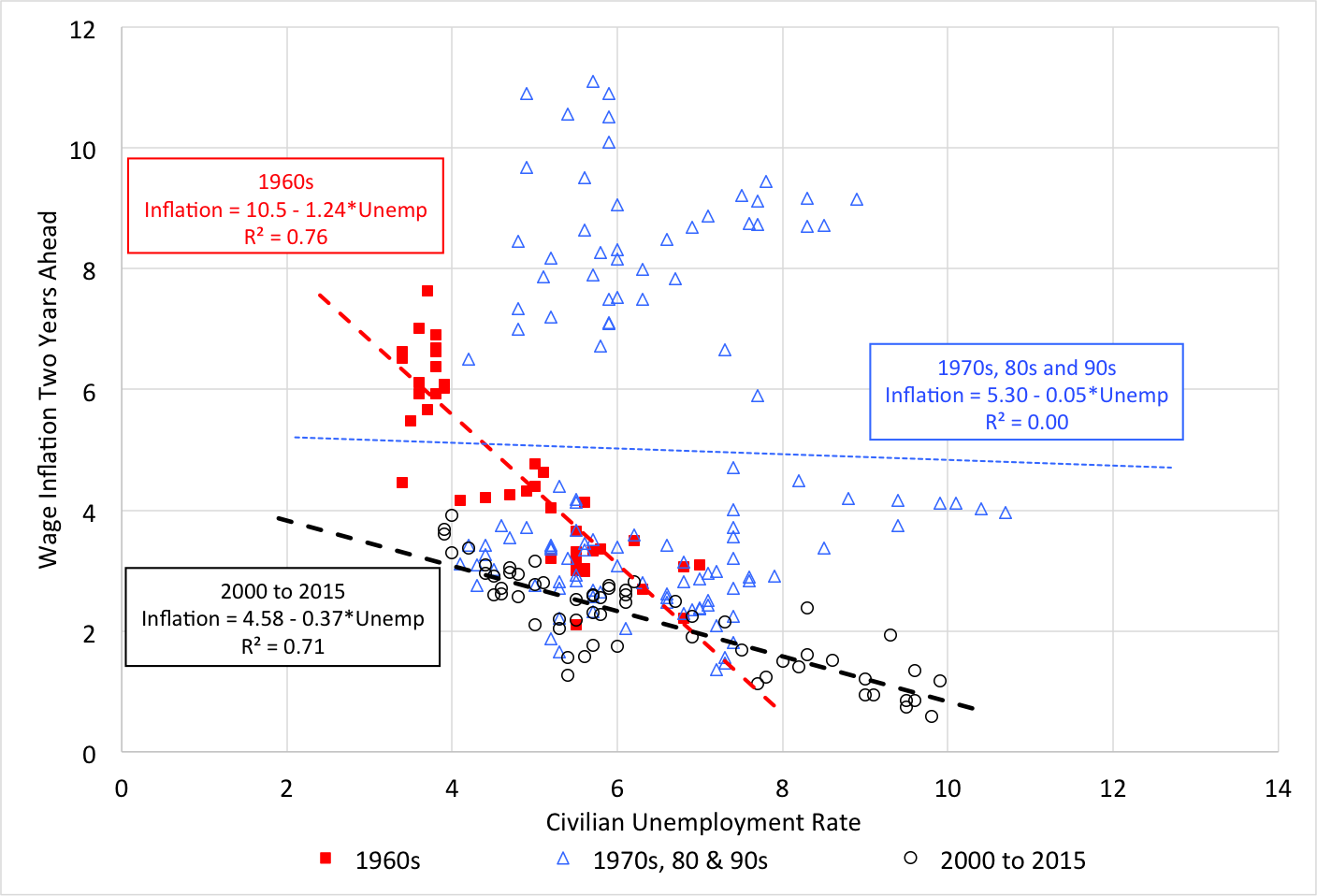
Looking through the data, this doesn't really look like an outlier. The 1950s also had low unemployment and low inflation. (Note also that official unemployment numbers don't count the long-term unemployed, so there's some uncertainty in this data). See the following unemployment vs. inflation table:
https://www.thebalancemoney.com/unemployment-rate-by-year-33...
https://images.squarespace-cdn.com/content/v1/52cdc300e4b012...
the phillips curve can shift, that is of course worthy of study. one interesting thing that happened in that period is oil prices collapsed.
you either believe in supply and demand, or you don't. if you believe in it, then greater than full employment leads to rising wages, and inflation if productivity doesn't follow. if you don't believe in supply and demand, then discussion about a lot of economic theory is pointless.
https://www.moneyandbanking.com/commentary/2017/5/29/the-phi...
Clearly, when energy prices spike, everything else follows (including food, which relies on energy for transport and production). Currently, fossil fuel interests are reaping record profits and share values have jumped over 50% since Dec 2021, an even bigger windfall than the defense contractors are pulling in. Ignoring this reality is hard to justify.