But sometimes they can do something that helps you, so it often helps to not treat them like they are personally responsible for everything, just because they work there.
One, because his writing is about much more than this theme (in which kafkesque is too frequently confused/mixed with Orwellian) but more because it pushes away his short stories and aphorisms, which I think are much, much better than his longer works – and more mystical and mysterious in nature. I'd take A Hunger Artist, In the Penal Colony, or some of the aphorisms from the Zürau book over his more famous works any day.
It's unfortunate that writers tend to be known for a single "brand" which causes off-brand works to be pushed to the side.
This is all a long way of saying that if you associate Kafka entirely with insurance administrators and oppressive bureaucracies and don't find this compelling, check out his shorter works.
I also have read both the original German der Process and the English translation, and I feel that, even though German is my second language, the original has so much more terror and humor than the English version, which largely reads like a bureaucratic text itself. Understanding that Kafka would laugh out loud while reading his texts to his friend, I like to imagine his works to be a kind of interwar Curb Your Enthusiasm, and I love to imagine Josef K as Larry David.
I read Der Process in German, but I have also looked at one of the English translations, probably the one by Idris Parry, and I didn't like it much: it seemed rough, old-fashioned and generally hard to read compared with the original, though it's partly a matter of personal taste. Wikipedia mentions six English translation of The Trial but presumably some of them are cheaper and more easily available than others so the probability that we both looked at the same English translation are greater than one in six!
In the book it is also pointed out more than once that Josef K's trial is not held in the "regular" court. Which to me indicates that the convoluted nature of the trial doesn't necessarily reflect on all bureaucracies, even if it's tempting to interpret it like that.
So yeah, I think there's a degree of absurdity and irony in the works as well. Less, "look at this hellish version of reality" and more, "look at this dumbfuck going along with this".
Perhaps all great writers don't fully understand what they write: a muse dictates to them or they're channelling their subconscious. But I find it particularly easy to imagine Kafka as an extreme case of that phenomenon.
He had plenty of time to finish and publish "The Trial" but he couldn't do it. I wrote above "the following chapter" but the manuscript (which Kafka wanted to be destroyed rather than published) consists of separate unnumbered parts so we don't know for sure what order they should go in.
A man from the country seeks the law and wishes to gain entry to it through an open doorway, but the doorkeeper tells the man that he cannot go through at the present time. The man asks if he can ever go through, and the doorkeeper says it is possible "but not now". The man waits by the door for years, bribing the doorkeeper with everything he has. The doorkeeper accepts the bribes, but tells the man he only accepts them "so that you do not think you have left anything undone". The man does not attempt to murder or hurt the doorkeeper to gain entry to the law, but waits at the doorway until he is about to die. Right before his death, he asks the doorkeeper why, even though everyone seeks the law, no one else has come in all the years he has been there. The doorkeeper answers, "No one else could ever be admitted here, since this gate was made only for you. I am now going to shut it"Of course, this is also wrong. Just as "X lives matter"* is wrong.
I doubt there's any pithy slogan that quite captures the reality of "what matters"**. Best I can do, personally, is point you towards the type of person who might be able to ... coalesce the vapor ... in such a way as to possibly produce a momentarily renewed sense of enlightenment***:
* For any given value of X
** That may seem kind of absurd and stupid, but, I'm serious - there is complexity to the topic in part simply because a given human (and likely beyond) can generate / experience / believe that some "X matters", and we ARE a (miniscule, in multiple ways) part of the universe
*** Left "timestamp" off so setting / framework of scene is more comprehensible, skip to ~33s for "the meat"
It reminds me of a cousin of mine who was struggling through some drugs and mental issues, hearing immediate family make a bunch of shitty remarks about him
Kafka is one of those authors that I try not to read because I'd prefer to have a rosier picture of human nature
This was before doctors became incurably greedy - so a bit early for first party health insurance.
Whoah now, don't talk about my dad like that! In all seriousness though, my dad said that all the places he worked at over the years generally accepted over 99% of the claims they received.
My dad did develop a visceral hatred for chiropractors over the course of his career though.
For some people this is their only experience with a lawyer and chiropractor might be when someone walks in, "slips" in their store, and they get sued. The chiropractor is one method the lawyer uses to run up the total. It's always a back pain that can never be fully diagnosed or treated.
Over the years, the chiropractic field as a whole has backed off from curing everything to being split between something in the neighborhood of a massage including joint mobility (which is fine), and the fraud.
Science research fraudsters could learn a lesson from them in how to get away with it
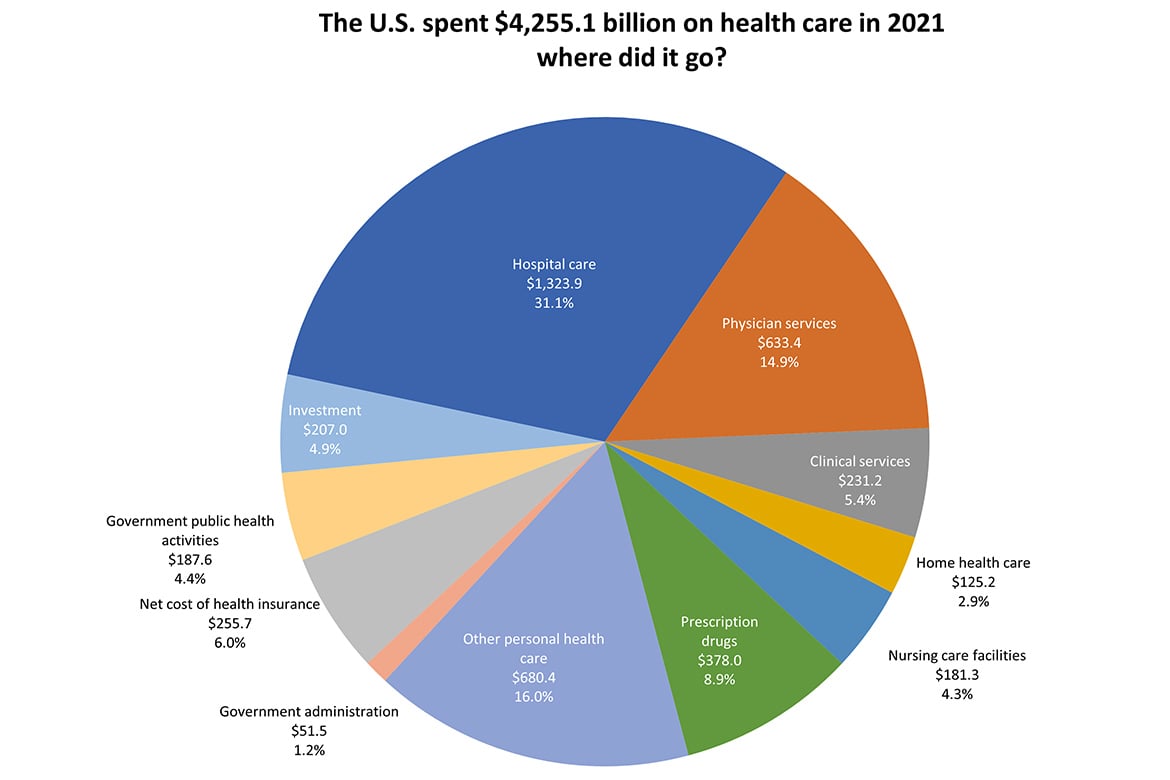
Doctors are not the reason healthcare is expensive.
https://www.beckersasc.com/benchmarking/how-physician-pay-in...
To lower medical salaries, we need to address (a) the AMA acting as a cartel, (b) residency slots being paid for by Medicare and being limited, and (c) crippling student debt problems. As an example, nurse practitioner salaries have dropped as supply has increased.