Thank you, I needed that. Time to continue procrastitating.
> “Time Indifference – We put off what must be done and do not use our time to support our own vision and further our own goals.”
Personally i can't really identify with that view. I find work hardest to focus on when it is opposed to my own vision/goals (other then the goal to pay my rent). I suppose its still the same thing as a second order effect, spending time procrastinating is usually more time then just straight up doing it, which is less time on your own goals.
When it comes to employment, I've never found it actually benefits me all that much to work hard and deliver results early.
And it doesn't free me up that extra time to pursue my own goals either.
I don't think I'm alone in this.
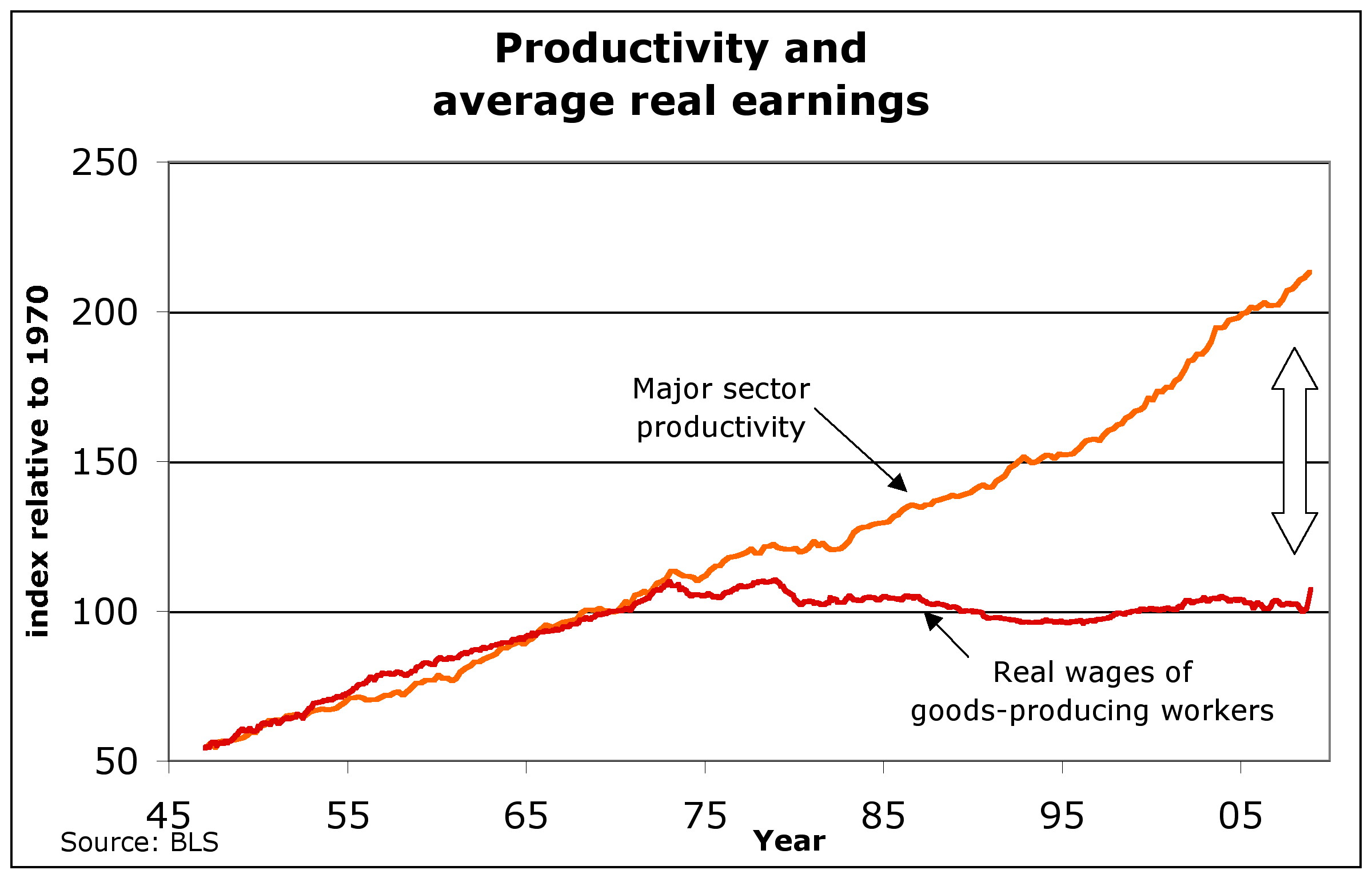
We have systems that increase worker productivity and even software by itself for the most part should be decreasing the amount of work to be done since it’s supposedly a large force multiplier for productivity.
Economists predicted we would be working less (but they are bad at predicting most things) so while there might be a few more jobs why should work hours have stayed constant? I’m not even saying we have bs jobs either.
We don’t. A hundred years the average man was putting in 7 to 7 shifts on the factory or the farm. Physically exhausting, dangerous and painful labor that required your physical presence and likely left you too exhausted for anything else.
Today you and I are click clacking our keyboards in a safe and air conditioned environment, likely can fuck off for hours with out anyone noticing etc.
The idea that we work “the same” as even two generations ago is preposterous.
It's easy to tell yourself that sort of thing would never happen in a country like this when you weren't a direct witness to people (including children) literally being worked to death in a factory.
Average working hours were dropping for decades before Labor Unions became popular in the 1930s driven by the productivity gains referenced elsewhere in the thread. The trend continued unabated other than an increase during WWII even after Union membership peaked in 1980 and dropped for 30 years. It doesn’t seem that Labor Unions were the cause of this improvement trend.
The unions brought us the congés payés in France in 1936. Think about the guilt. While the Germans where manufacturing bombs day and night in Germany, we were on the frigging beach.
Thank you, unions, we got invaded because of your irresponsibility. Also half of France had congés payés in 1935. Unions only brought the to sectors who couldn’t afford it.
Ford could introduce 8 hours long day only because 8 hours a day was far from norm at that time.
Historically, that is an anomaly that only started with the industrial age [1].
[1] https://groups.csail.mit.edu/mac/users/rauch/worktime/hours_...
It's preposterous because relative wages have stagnated relative to productivity boons, but oh man has standard of living increased as you say. A person would have to work lifetimes to get an iPhone-equivalent luxury (if it existed) back then. Now basically anyone working (and a bunch not) have them.
This as been debunked countless of time, besides the dark ages of the industrial revolution people actually worked less than our 40-50 hours per weeks, every week of the year, from 20 to 65+
I can't help but notice that you're basically broadcasting signs of depression all over this thread. It's like "the answer is: everything is horrible and worse than even, what was the question?" I don't mean to pick on that but do you know this about yourself?
So long as 2 people are chasing 1 house, or worse, one oncology appointment for their child, you will have people working themselves to the bone to outcompete their peers. We could, of course, allow building more homes and improve the supply of healthcare, but that might mean people wouldn't work as hard, which would mean less surplus wealth for capital owners and state actors to enjoy.
At some point we should, for the most part of what we consume, instead of ever expanding into BS things we don't need (like "smart fridges") and burning down things we do need (time, which we aren't getting back, and is spend working and paying for such bullshit).
So then I think it's just plainly not true? I think most people even want particular things, not to have the same or more things as others. To the extent that it's clichéd parenting, or associated with derogatory remarks like 'social climber', 'keeping up with the Jones', etc.
Certainly Instagram and 'influencer' culture in general acts against that, but it's not hard to find people eschewing it either.
Also, "creating possibility" sounds kind of like "self actualization" ie. the top of Maslow's hierarchy.
On the second: possibility applies at all levels of the hierarchy. Obtaining basic health increases possibility — it increases the ways you can navigate the world at a simple physical level, and “unlocks” The possibility of “higher levels” e.g. relationships, which unlock still higher levels of possibility.
The average workday is also much safer and less physically painful than it used to be.
There are two things I have in mind, and if I have time later I'll see if I can find them and update the post -- one chart of total working hours per worker, and one article, about how much added safety has or hasn't slowed down productivity growth (which inevitably has a lot of data in it about workplace injury and death over time).
Children also work much less than they used to.
I think that Keynes wasn't completely wrong in his prediction (...and maybe if AI really kicks off he will be more vindicated, just missed on the timing)
There’s also a hedonic treadmill effect, where we start to expect the amenities that modern infrastructure affords and use them as a base for greater aspirations (ground travel is solved for the average person, now let’s solve air -> space -> etc)
If someone else worked harder, they'd out-compete you, maybe conquer you. So we set a threshold and say, you can work 40-80-ish hours without going totally insane and dying. But there's no point working less than that, because someone else is ready to push the envelope. Even if the whole US agreed to just take it easy, I fear the other two superpowers (China and..... well Russia seems weak, maybe India?) would outdo us in GDP and it wouldn't be a great position politically to be in, since the US is my favorite superpower by a country mile.
It's unfortunate math.
True, but only in the sense of "the math" itself being a big McNamara fallacy. Not only does GDP have some potential pitfalls, but "more people working harder" doesn't necessarily mean working toward success or future globe domination etc.
... and well, it's USA that is the superpower, not Europe.
Even looking at software salaries - in Germany/France 50k is a high salary for software engineer. In USA you wouldn't even look at it after being fresh out the uni.
Everything we use our wages on has seen massive gains in quality. It’s just that instead of working less and being just as poor as we were in 1924, we work the same and buy the uber top level wealthy (in 1924 terms) version of everything.
why is this strange?
if a candybar maker spends $0.75 to make a candybar and sell it for $1.00 and then they suddenly find they can make 2 for the same price, they're going to continue selling them individually for $1.00.
When you increase productivity like that you now have an effective increase in available resources, why would you assume there's only 1 place those effective resources can go?
But isn't the flow state also where people forget time exists? And isn't the flow state said to be the most productive state people can be in?
Hold up, there's something off about this terminology.
When alcohol-drinks are drunk on alcohol, they may forget many things, but the existence of (more) alcohol is not typically one of them!
Hang on, how many have you had? :'D
I guess it could make sense like 'enjoying using lots of time', so forgetting it exists in the sense of not caring about ifs passage?
I have, through my life, oscillated from one extreme to the other - at school, this manifested as an utter indifference to lessons, preferring to read under the desk, yet a week of frantic learning in which I would absorb the year or term’s lessons. I was mostly time drunk at this point.
Come graduation, I had an urgent need for income, to support both myself and family members who suddenly found themselves in a hard place. I worked a day job, a night job, two side gigs, and burned the candle fiercely for four years.
One of the side gigs grew, became a business. Ten more years of utterly relentless and increasingly miserable grind. Lucre, too, but at a steep cost.
2016. Burned out. Health so bad I earnestly thought I would probably soon die. Quit.
Three years of time drunkenness. Travel. Drugs. More travel. More drugs. Lots of time staring into space and wondering who I was. Nothing was fulfilling, even doing things I knew I once dreamt of one day doing - the memory of desire was there, but the actuality, absent. I had utterly internalised the idea that my labour was my identity, and that I was without want or need. It seemed intractable, and no amount of r&r found me any improved.
Then, we moved off grid. Seemingly the last step in a spiral, instead found me suddenly very much occupied with the basics of modern life. Water. Power. Shelter. Floods. Fires. You name it.
That, and therapy, have finally found me at a virtuous mean. My cycles are no longer decadal, but hourly. I work. I play. I learn. I waste time. I use it well.
I find myself with a child now, to boot - and she is the virtuous mean embodied - work and play, all in one.
Anyway. These lessons are easily spoken, but hard earned.