https://upload.wikimedia.org/wikipedia/commons/f/f5/Light_di...
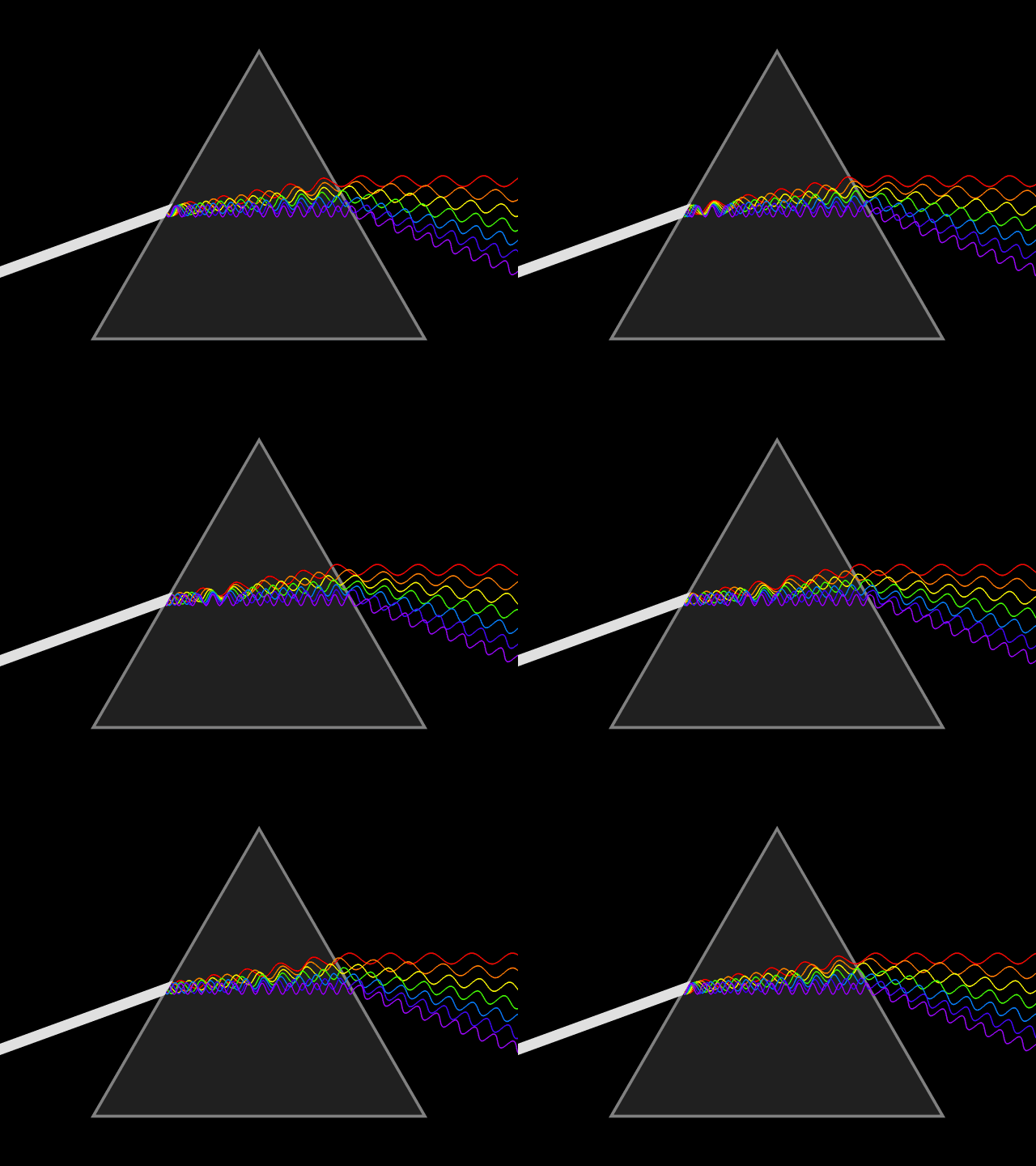
The red (long) wave lengths only get bent a little bit. The purple (short) wave lengths get bent a really large amount.
The video linked is basically simulating something like a red lightbulb (750 nm) and a purple lightbult (375 nm) shining through a glass lens simultaneously. See this article on lenses and lens phenomena:
https://en.wikipedia.org/wiki/Lens
Or, simply go try this optics simulator, which gives a much better ability to play around with the ideas. The link shared should go to an example that's almost the same.
https://phydemo.app/ray-optics/simulator/#XQAAAAIDAgAAAAAAAA...
Don't turn the rays up to much though or it will cripple your GPU unless its high end. Color simulation can be turned on/off on the upper-right settings (it's a huge resource hog compared to no color effects).
Of course, you might consider it to be even more remarkable that two distinct images are formed even when the two lights are the same color, since then there is no longer any obvious way to distinguish the light from the two sources.