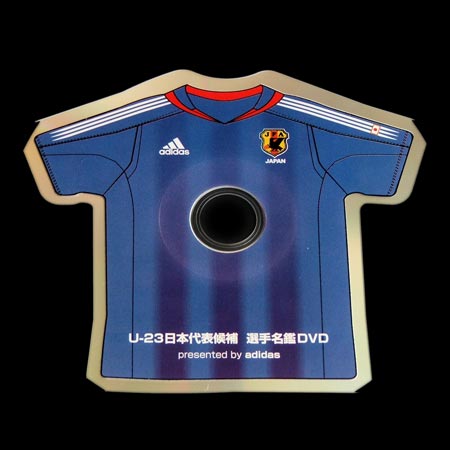
Most CD-ROM drives in PCs had a small inner ring that could hold "mini CDs" with a smaller diameter than a full CD, and a truncated version of this could be a business card CD (which we did not invent; it was commercially available from CD duplicating companies). So, if you had a machine that was broken in some way or you just wanted an ephemeral Linux system, you could take our live CD out of your wallet and boot it in the machine's CD-ROM drive. (Since optical drives are no longer common, nowadays people would use a "live USB" instead of "live CD" for this.)
It's so cool that about 20 years of technological progress has taken us from "your business card can be a tiny optical storage medium containing a usable OS image" to "your business card can be a tiny computer containing a usable OS image" (giving a totally new meaning to "bootable business card").
https://mediaduplication.wordpress.com/wp-content/uploads/20...
[0] http://www.dvdreplication.co.nz/packaging/dvd-cases/mini_sha...
If you'd given me this business card in the mid-90s, it would have been useable as my primary desktop.
Intrestingly the tiny Cortex M0+ is has about 4x the coremark per MHz of 386 (and twice 486).
See https://www.eembc.org/coremark/scores.php and https://en.wikichip.org/wiki/coremark-mhz
I think I'd maxed my 386 server out with 8MB of RAM.
That chip is the stuff of a madman's dreams in 1996.
The author's final conclusion about the chip... "Thanks for nothing, Atmel."
I wonder if there are better options available today, but I fear anything useful might involve BGA or similar surface mount techniques.
Rp2350. That’s what I’m basing my next revision of this project on
0.5MB RAM and 4MB of flash might not sound like a lot, but that's plenty for many micro computer system environments.
https://news.ycombinator.com/item?id=41214307
It seems that it didn't get much coverage at the time.
This card has such a sci-fi taste.
“creating order out of chaos (or reverse if needed)”
Lol, I kid, this is awesome.