Scary if it works out their way and Cloudflare becomes an even bigger giant.
[1] https://developer.mozilla.org/de/docs/Web/HTTP/Reference/Sta...
I agree with you that we're moving away from banner ads to some novel way of monetizing traffic, and therefore content published by authentic human beings.
I wonder if micropayments had been solved before taking the easy route, we would have been in a much more healthy global scenario today.
Of course Cloudflare is riding the stablecoin hype here a bit. At least they are large enough they might be pull this off
Just to note, that Cloudflare is a public company which means that they have both internal and external auditors.
They definitely need to worry about fraud, but the first two things they need to worry about are sanctions screening (don't do business with the four countries the US doesn't like) and AML (anti-money laundering).
Stablecoins are a potentially huge vector for this kind of badness, so it would be unwise for Cloudflare to try to yolo this (but they probably will, because almost all tech companies try to work with finance this way).
[1] https://developer.mozilla.org/en-US/docs/Web/HTTP/Reference/...
As opposed to all the other giants. Clouflare is the only one with the heft to take on Google, AWS, Azure, etc.
> Scary if it works out their way and Cloudflare becomes an even bigger giant.
Are you proposing that you do not share OPs sentiment, since there are larger companies?
Im not fully knowledgeable about banks, but i always thought the reason why regulation was so hard was because no one could agree on a common ground obvs each country wants to keep their moat with their own currency, but with crypto anyone can opt in at their own risk
Crypto is a just a tool that enables that. They have no interest whatsoever in democratization, self-custodial finance, or frictionless payments across borders for anyone but themselves.
Direct p2p payments a "hard problem" because it directly contradicts what we consider to be one of the central pillars of national sovereignty, control over your national currency.
Crypto as a whole is in denial about this because there is no path forward without expecting nations to either give up one of their most effective levers of control, or expecting them to turn a blind eye to external actors eroding that control in real time.
Layers and layers of technical bullshit that never addresses the fact that no government in the world wants to allow frictionless peer to peer payments across borders.
CF is likely building this to service an internal need to collect micropayments for some kind of pay to view "captcha", and all the rest is just highly paid PR spin.
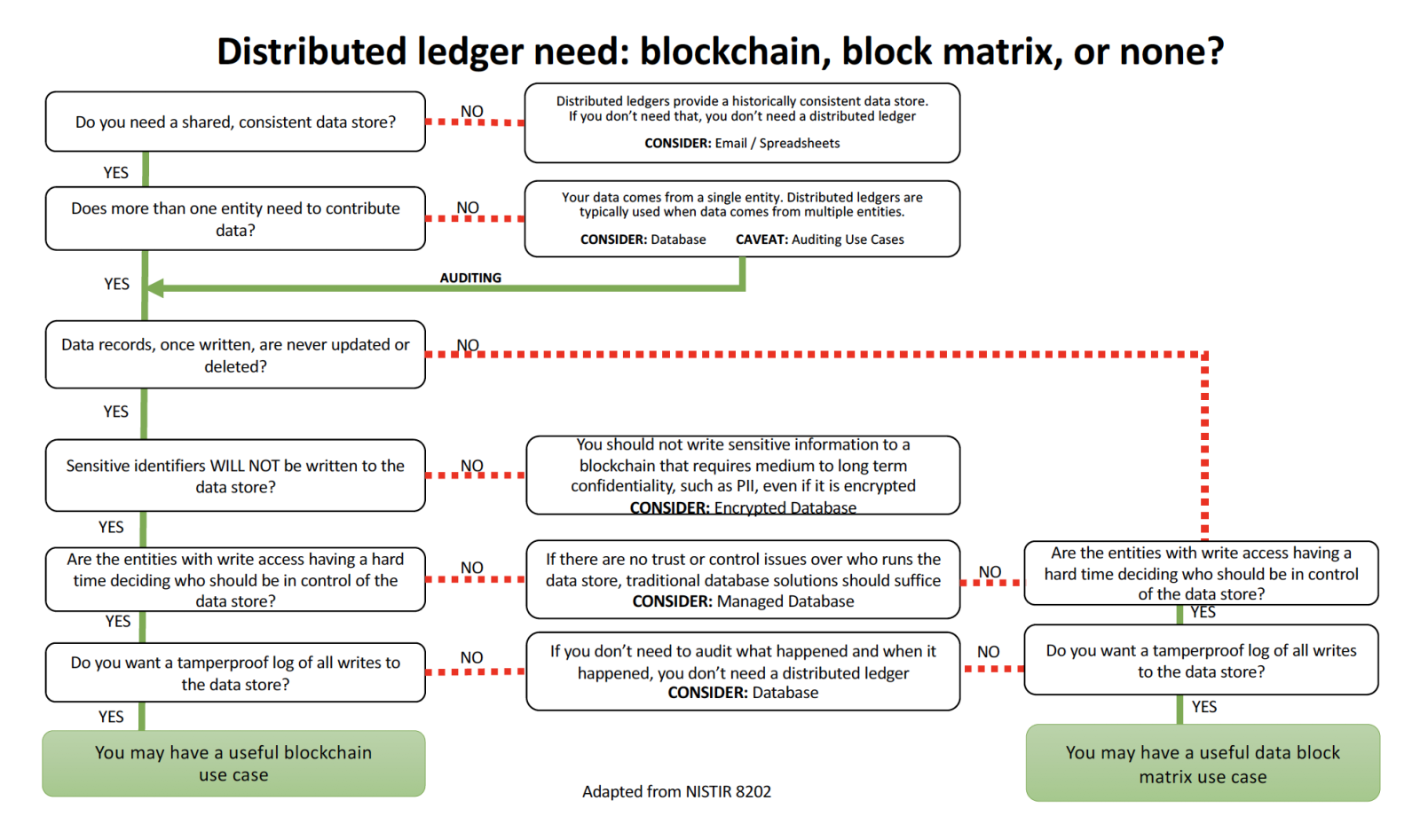
As per NIST's recommendations[1] it seems like a blockchain doesn't make sense for this use case.
From where I stand it seems like Cloudflare is side-stepping the scrutiny, regulations and perhaps most pertinently the cost that would govern a similar offering using traditional financial instruments.
[1] https://csrc.nist.gov/CSRC/media/Projects/enhanced-distribut...
In 2024 Congress signed a law that the transfer of digital assets does NOT count as an electronic funds transfer. This was a huge legislative victory for crypto, which had previously sat in regulatory limbo. The reason why you didn't see anybody using cryptocurrency as, well, currency, and its only use seemed to be as a speculative asset, was because nobody was sure if transferring crypto counted as an EFT, and the CFPB refused to make a decision one way or the other.
Why did Cloudflare choose to use cryptocurrency? They could technically use any digital asset. They could design their own custom digital asset used to facilitate transactions (hell, use Cloudflare stock as the currency), but they would just be reinventing cryptocurrency, but worse, and have to fight an uphill battle to get trust and adoption and risk regulatory scrutiny. A few months ago, Congress signed a law that provided a regulatory framework for stablecoins. These assets are "stable" because they are pegged 1:1 with USDs.
So, stablecoins have emerged in 2025 as the clear winner for microtransactions on marketplaces. No worrying about liability for reversibility. Clear regulatory framework (developing a custom solution risks a CFPB investigation). 1-1 USD backing makes customers trust you more, for good reason. AML checking and sanctions list checking happens at the currency conversion to / from USD, which dramatically simplifies your engineering, latency, and risk requirements.
https://netdollar.cloudflare.com/
> Will NET Dollar be fully backed?
> Yes, every NET Dollar will be fully collateralized by a U.S. dollar, ensuring transparency, reliability, and price stability.
Really? Backed by an asset that's depreciating at 3-4% annually? A money market fund, such as other stablecoins use, seems more likely. With billions of principal, every basis point of yield will be wanted. And the way to maximize is to hold commercial, not government, paper.
See "Reserve Primary Fund, 2008".
Almost every other project out there would be better off as a centralized project — heck, many of them are centralized, while claiming to hold on to the decentralized cyberpunk ethos — if not being outright scams.
It's not a path to riches (I can see a possible lifestyle business out of it), it's about giving people new opportunities.
I've been chewing on this for years and only now that Claude has shown up do I have a partner to help me make this work.
I do have some experience working on blockchain for a startup (non-ICO) that helped inspire me, but the experience itself bordered on being PTSD-inducing. The people I worked with were True Believers of Crypto, but the product we were building used crypto solely to tell their investors it was a blockchain company -- not that their product leveraged it at all.
given, most traffic will likely be from ai agents, does it make more sense to try to hack agents into using credit cards, having shared social security numbers, opening bank accounts, dealing with chargebacks and slow settlement?
or
does it make sense to use technology that is
- internet native - programmable - near instant - secure - permissionless
the volatility issues are resolved through the use of stablecoins.
You let Cloudflare do things like that, and in a few years you will have to register with them using your passport to have the right to browse website. "For your safety".
Cloudflare sits in the middle of a vast amount of web traffic now, offering easy global payments and skimming off the top of that is going to be very profitable potentially.
I don't trust Cloudflare, the larger they get the bigger the abuse potential becomes.
That leaves Cloudflare well positioned to implement a pay-for-access check along with all of the existing bot services they offer. AI crawling goes from a threat to a win if I can serve OpenAI a demand to pay for each request. Bot abuse goes down if traffic isn’t free. Businesses like journalism become stable again if readers pay for content rather than relying on advertisers to subsidize it.
But the better question would be, who should be the company (or entity) we should trust to do such a thing?
PLUS just imagine how many corrupt politicians will be tempted to force these payments to go through their company.
Is the premise that it makes more sense for an AI agent to pay in prepurchased stablecoin tokens instead of direct access to a credit card?
The gatekeepers (telecoms) first decided they were going to publish things themselves too, which had zero success, then to pay themselves more than anyone on the platform, then when that still didn't work they kicked everyone else off the platform with various excuses (porn, crime, getting money from outside the platform, promoting non-sanctioned shows, ... the big thing that was successful were mail and chatrooms)
The problem is that these companies were always willing (after a short while) to damage the economics of the infrastructure as a whole, just to increase their own share (for example per-email charges). Eventually they had close to 100% ... of nothing.
And the irony is that because of these companies constantly trying to move into content and apps, destroying their own system more and more by crude attempts to force people into their content the only thing that remains of these systems ... is publishers. They couldn't really improve their apps, since that cost them money. They quickly discovered to use money as a way to avoid friction on their apps ... and then no business leader ever approved removing friction anywhere.
For example: https://en.wikipedia.org/wiki/Minitel https://en.wikipedia.org/wiki/AOL
What could go wrong?
Until you don't.
There are dozens of examples of failed stable coins, to the point that they are now a meme in the crypto community.
The genius act will change how fintech and neobanks operate, so expect to see more companies offering similar services