In most cases, 100km is less than the distance between sizeable metropolitan areas. It's a day long bike ride. Air runs out less than a bus ride across town. A 15k jog/hike would put you in the stratosphere. Those jet aircraft that seem so high are closer than that. Closer than your friends house or the local stadium probably.
Look at a map or globe with that in mind and everything feels so thin!
Going up is the comparatively easy part, it's not exactly rocket science. Going fast enough sideways so you stay up there is the tricky bit.
nah, thats the simple part. getting up there efficiently is the difficulty. once we're up, its just a matter of force over time to create a nice orbit.
The faster you go, the more friction you face, and the more heat and vibration your equipment must endure.
Going slower reduce friction and stress but use more energy just negating gravity. Slow rocket is inefficient rocket.
So we wanna leave the atmosphere as soon as possible, but not so fast that the rocket melts or engines collapse. Prefferably just below the sound barrier.
once we're up, its pretty chill... until you wanna go down again. Slow rocket is alive rocket.
Some would argue is quite literally rocket science, even if suborbital rockets are much simpler, like they can just burn solid fuel.
> There is an art, it says, or rather, a knack to flying. The knack lies in learning how to throw yourself at the ground and miss.
You're not going sideways - you're actively falling continuously, but somehow missing the ground for the entire length of your orbit.
Now, I have no idea how practical it is to build one (Angela Collier has a video saying it's kinda ridiculous), but it's a cool idea.
https://www.youtube.com/watch?v=Z5aHMB4Tje4
Also since rockets have moved away from hydrolox, it would be nice to have a greener launching system.
Estimate for a standard classroom globe at 13" in diameter (I'm seeing a rnage of 12-14 inches as typical). I'm reporting in inches because that is what came up first and most of the globes are for sale in the US. Mixing units here, but, it works out.
But, in meters, the diameter of the Earth is 12,742,000 m on average. if we use the 'Karman line' as defining the edge of what the atmosphere is, that is 100,000 meters. Solving for X ... (13" / 12742000 m)=(X / 100,000 m). gives us an atmosphere thickness of approximately 0.1". -----
Paper glued to the globe would have a thickness of maybe, 0.004" (thin paper) to 0.012" (like a card stock paper).... so that analogy is off by an order of magnitude or more.
Even if you use the mesosphere as the definition for the top of the atmosphere, that is still 85,000 meters and thus similar.
People can check the numbers I used.
* Perhaps the analogy should go more like: the thickness of the cardboard sphere the globe is made out of is about the thickness of the atmosphere. Because, having completely destroyed a globe once in my youth, I remember the cardboard shell being approximately a tenth of an inch thick. But, that's maybe not a great reference for the analogy because not everyone has cut apart a classroom globe....
Another comment talks about atmosphere being a 1 mm layer on a grapefruit... so definition of atmosphere extents might be different in these two anecdotes.
(edit: I submitted this comment two minutes after another comment did the math on the globe/paper layer version...)
On the planetary scale, humans are tiny. We're more or less equivalent to bacteria.
Our entire civilisation is a skin rash.
This is essentially what Scaled Composites and Virgin Galactic were trying to do with their cargo plane system, only you don’t have to worry about the ignition timing because you’re not in free fall.
I don't know of any launch sites significantly above sea-level, the marginal performance increase wouldn't be worth the logistical nightmare. It's easier to fly up a 747 than build a launch facility on top of a mountain.
If earth were a grapefruit, our atmosphere would be ~1mm thick!
Eh. Going up is easy. A Frenchman, a sheep, duck, and rooster solved the whole ‘up’ thing over two centuries ago.
But going DOWN? That’s far more difficult. What wonders may lie beneath our feet: vast caverns, ore, underground oceans… hard to get to though.
The other French method included two dogs, a bunch of chicken, and a very large cannon, which had quite a bit more showmanship.
/s
> As particles from the sun hit the atmosphere, they excite the atoms in the air. These excited atoms start to glow, creating brilliant displays of light called auroras.
The process is a bit more nuanced than that. The modern mainstream understanding is that the growing pressure of the solar wind makes the tail of the magnetosphere "contract" (sort of pushing it inwards from the sides), which leads to reconnection of magnetic field lines. Once the reconnection occurs, the magnetic field lines that remain bound to the geomagnetic dipole accelerate the particles on them towards the Earth => they slam into the atmosphere, exciting the atoms and generating the aurora.
Is inherently incomplete. Not necessarily because they're needed to explain it, but they do need to be brought up at any time possible because they're cool.
https://en.wikipedia.org/wiki/Galactic_Center_filament
https://science.nasa.gov/asset/webb/milky-way-center-meerkat...
This site does use buymeacoffee.com, which appears to be a dedicated payment platform. Its transaction fee is apparently 5%, which is steeper, but better for these small donations because of the lack of a fixed fee.
I don't think this is true
> Apple Pay does not cause additional fees for users and merchants.[1]
Regarding actual space elevators though, while they're not sci-fi to the extent of something like FTL travel - ie. they're technically not physically impossible - they're still pretty firmly in the realm of sci-fi. We don't have anything close to a cable that could sustain its own weight, let alone that of whatever is being elevated. Plus, how do you stabilize the cable and lifter in the atmosphere?
A space elevator on the moon is much more feasible: less gravity, slow rotation, no atmosphere, less dangerous debris. But it's also much less useful.
This is especially true considering that you don't need something that barely holds - you need something that you know will hold up to many times more weight than it needs to, so that it can be safe: the potential energy such a thing would store would be enough to dig into hundreds of meters of rock all around the world, if it ever crashed. So, you have to ensure there is no realistic chance of it ever crashing. It also has to be highly non-fragile in other ways, so that a madman with a bomb or a freak collision with an airplane or a meteor (especially likely in the thin upper layers of the atmosphere) won't bring it all down.
This combination of properties may well be completely impossible to actually achieve in a material. Even if there is no obvious basic law of physics that it would break, that doesn't mean that it wouldn't break other, harder to touch, derived laws.
https://foundation.fandom.com/wiki/Bombing_of_the_Star_Bridg...
It’s about as devastating as you would expect.
The slow rotation is a minus, it means you've got to string the tether up to L1 instead of "just" up to geo/luna-stationary orbit. A lunar space elevator needs to be at least 56000 km long, more than 20000 km longer than the one to earth.
> But it's also much less useful.
Yeah, especially because all the things that make lunar space elevators a little more attainable also make lunar mass drivers a lot more attainable. Why ride in an elevator for a week if you also can just be fired from a cannon?
Rotating cables ("rotavators") on the moon seem much more practical than full space elevators.
https://en.wikipedia.org/wiki/Momentum_exchange_tether#Rotov...
1) How do you attach the climber to the cable without affecting its structural integrity? By squeezing it really hard? A material that's optimized for longitudinal tension strength is probably not very tolerant of lateral compression.
2) How do you provide power to the climber? A regular electric cable can't support its own weight, so either you have to attach it to the climbing cable, or you have to make it from the same material.
3) Is it even worth it? The climber needs to cover a distance of ~36,000 km, so even at 200 km/h it takes 7.5 days from the bottom to geosynchronous orbit. How many climbers and what payload can the cable support at the same time? Refer to issue #1 regarding limits in speed and mass per climber.
The throughput in tonnes/day is absolutely abysmal in relation to the immense upfront infrastructure cost per elevator. Compare this to SpaceX's Starship, which is getting closer and closer to fully reusable 100 tonnes to orbit in minutes. Space elevators will stay science fiction forever, not because they're infeasible, but because they're useless.
If you account for various inefficiencies like taking it slow in the lower atmosphere Ant whatnot, it still should be in the matter of hours. So totally feasible and even comfortable.
Climbing the cable is a nightmare, especially as it gets thicker as you go up. Thus do not climb the cable! Rather, when the cable is built a whole bunch of anchors are built into it. You are not climbing the cable, you are climbing a track on the side of the cable. The cable's job is to support the track plus any load on it.
On Earth.
Zylon or M5 [1] could build an elevator on Mars. Kevlar on the Moon.
To drive this home, it’s estimated we could build a lunar space elevator for less than what Bechtel fleeced NASA for a mobile SLS launcher [2][3].
[1] https://en.wikipedia.org/wiki/M5_fiber
[2] https://opsjournal.org/DocumentLibrary/Uploads/The_Lunar_Spa...
[3] https://oig.nasa.gov/wp-content/uploads/2024/02/IG-22-012.pd...
If the power building the space elevator wants to bomb you, you're going to get bombed.
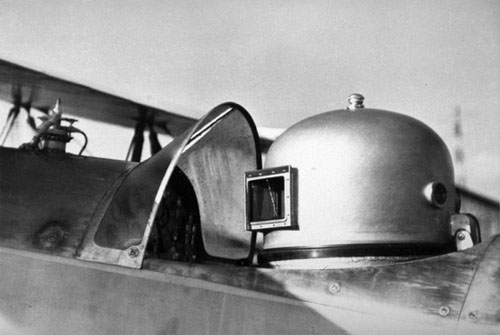
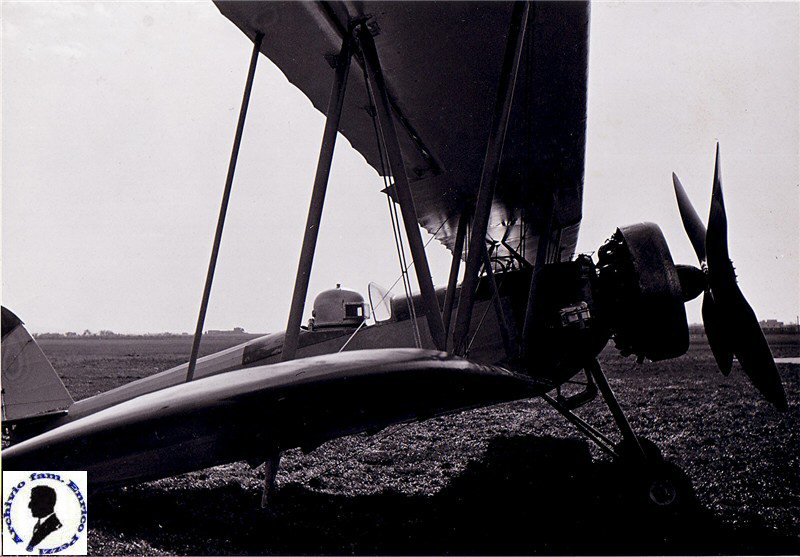
[1] https://en.wikipedia.org/wiki/Mario_Pezzi_(aviator)
[2] https://static.thisdayinaviation.com/wp-content/uploads/tdia...
[3] https://www.enricopezzi.it/fam_pezzi/mario_pezzi/images/MP_1...
[4] https://www.reddit.com/media?url=https%3A%2F%2Fi.redd.it%2F4...
Re playing this gem https://neal.fun/stimulation-clicker/
What evolutionary advantage, I wonder, is there to Ruppell's griffon vulture flying at 11400 meters?
edit: units
If anything, "evolution" filters out disadvantages (eg: can't survive because your neck's too short and that pesky giraffe is eating all the leaves you could reach).
Evolution kills what doesn't work.
[1] https://en.wikipedia.org/wiki/List_of_birds_by_flight_height...
[2] https://web.archive.org/web/20131011012320/http://blogs.bu.e...
Non-SI legacy units have been grandfathered in and 'accepted for common use', but ICAO recommends that SI units should be used[1] (eventually). China and quite the majority of the ex-USSR, for instance, use metre flight levels[2].
There have been at least two aviation accidents and incidents relating to unit mis-conversions. This is two too many. As an SI absolutist, everyone should switch to SI or units purely derived from SI (so domain-specific stuff like parsecs, electronvolts, and binary prefixes, if appropriately symbolled are OK). It is an internationally-recognised, and nearly universal standard that permeates every aspect of human lives.
[1]: https://aerosavvy.com/wp-content/uploads/2014/08/an05_cons.p...
[2]: https://en.wikipedia.org/wiki/Flight_level#People's_Republic...
Of course, that would require a page 420 times longer, and I don't know if a browser would even support it.
<https://neal.fun/size-of-space/>
There are a few sites which let you scroll through the solar system, from the Sun or Earth IIRC. Here's one:
<https://onotherplanets.com/solarwalk>
Ah, and "If the Moon Were Only One Pixel", which is what I'd had in mind, shared by @stared <https://news.ycombinator.com/item?id=45641839>:
<https://joshworth.com/dev/pixelspace/pixelspace_solarsystem....> (2014)
(HN discussions: <https://news.ycombinator.com/item?id=44266828> (4 months ago), <https://news.ycombinator.com/item?id=21735528> (6 years ago) <https://news.ycombinator.com/item?id=32936581> (3 years ago).
I suppose it could be livened up by including the orbits of things, but there would still be lots and lots of empty space.
If you like factory games and space elevators, then try Satisfactory!
Factorio, Dyson Sphere Program, Captain of Industry...loved them all. Satisfactory? Just wasn't for me.
Most engineers would bring up a lot more issues than just finding a strong cable. Also, most attempts with e.g. carbon nanotubes have been abandoned ages ago https://www.newscientist.com/article/2093356-carbon-nanotube....
- We don't have a good ascent mechanism other than rockets - and then we might just use rockets without building an elevator. - We don't have a good (and safe) descent mechanism. - Maintenance? Protection from space debris? Protection from oscillations? Ground-protection if the elevator collapses?
This is dyson-sphere level of fiction. We can do back-of-the-napkin calcualtions on how things would work, but the practicalities make it completely impossible or impractical.
Then again, when doing mega structures, a launch loop is more plausible.
Once you have the cable up, you can grab onto it and pull yourself up.
What's the best way to pull yourself directly vertical along a cable for 22,000 miles?
What's the best way to descend 22,000 miles quickly, but also with a braking mechanism that isn't going to require a heat shield?
Some sort of slow cable car going at 10mph even is going to take 2200 hours... 1000mph is going to take 22 hours still. That's a full day to orbit even going REALLY fast. And getting up to 1000mph vertically, for a sustained 22 hours... that's not an easy feat.
And if the goal is just to get up past the karman line and use the elevator as a stage 1 for a rocket launch and detaching from the elevator while suborbital is fine, then it's a one way trip, and still need to re-enter the old fashion way.
The scale of space makes all of the problems far more complicated (edit: not just the cable strength issue, but traversing the cable)
He did. The elevator music!
"That's not flying, that's just... falling with style!"
Accelerate upwards fast enough, you can so to speak fall upwards for a short while before you fall back down again...
You know what does make way more sense and is way more achievable? Orbital rings [1].
Basically, put some copper wire in space, orbit it at ~8km/s, run a current through it and then you can reset structures on top of it (magnetically) and those structures are fixed to the Earth's surface. You can technically run a cable from 100-150km up to the surface and run a gondola into LEO. This would transform both Earth transport and interplanetary travel. You accelerate something on the inside (Earthside) of the ring at ~2G, like with a maglev train, and you have enough velocity to escape the Solar System.
To get into a very low earth orbit from an equatorial launch pad at sea level you need about 9.2km/s of Delta-V
To get there from a 100km tall tower, you need about 8km/s of delta-V - about 85%.
Think about how much scrolling there was to get to 100km.
To get to the ISS you'd need to scroll 4 times further. Starlink and Hubble are another 100km beyond that.
You start having radiation problems if you spend too much time above 600km.
Aside from Apollo, the highest a human has been is about 1400km - 14 times more scrolling than this page.
To get to GEO would require scrolling over 25 times further than even that.
Of course you would be looking at a constant acceleration, not just a 1000km/hour trip. You'd probably be able to do the journey in a couple of hours with a reasonable acceleration and a rotating cabin (say 1.1g, meaning acceleration would slowly increase from about 0.1g at the surface, then after the flip point you'd decelerate at 1.1g). Even then sideways acceleration wouldn't be noticable (and your cabin could gimbal to just add it to vertical acceleration)
That's the other crazy thing. A space elevator takes forever at elevator, or car, or even plane speeds. But with constant acceleration/decelleration you can have a trip in airplane style seats with cabin crew serving you caviar // scratchcards (depending on class of cabin). Your peak vertical speed would be in the region of 8km/second - way above Earth's escape velocity, but you wouldn't even notice the acceleration/deceleration. You'd slow down in under 15 minutes.
Or you wouldn't and you'd depart Earth at 8km/s, twice the escape velocity.
(If you really wanted a fast departure you'd accelerate at say 1.2g and get upto 30km/s, twice the speed of New Horizons. 1.2g would probably mean you'd have the seatbelt on for the whole 40 minute trip)
You could launch cargo to Mars at say 5G, which would get it there in between 10 and 45 days depending where it is. Obviously you'd have a problem slowing down when you got there.
Being pedantic, this should be "there isn't enough oxygen for sustained human life". An acclimatised climber can survive tens of hours.
My favorite is probably https://neal.fun/infinite-craft/
This type of interactive learning experience reminds me of how fun it was to browse Encarta back in the day. It was full of interesting facts, presented in fun interactive ways. As much as I love that we have Wikipedia today, a static web page with text and limited multimedia is far less engaging and conducive to learning.
I think that Neal Agarwal and Bartosz Ciechanowski should be sponsored by the Wikimedia Foundation to create similar experiences on Wikipedia. That would do so much to facilitate learning for students of all ages.
I do always have to object to comments like "space elevators are possible," "scientists have studied" and "would save money".
It's a fun thought experiment, nothing more (for now). You can do some calculus to estimate the necessary strength-to-weight ratio based on centripetal and gravitational forces. Single carbon fibers seem to meet this optimistic criteria.
But there are many forces left out. Many practicalitites left unconsidered. Why? Because there is no scientific community that believes it's vaguely achievable with near-future technology. It's simply not worth investing the outrageous resources required to do a vaguely useful viability analysis.
My biggest surprise (and confusion) was just how high butterflies and bumblebees go.
https://en.wikipedia.org/wiki/List_of_birds_by_flight_height...
Amazing work, as always. I love neal.fun
Edit: also good to know that paper airplanes have officially beat the SR-71, F-104 or X-43B with altitude record.
* Jeez, Everest is tall
* They got a plane to 17km in 1938!
* There was a paper airplane flight at 35km
This is stunning and perfect.
Kármán said that it's about this height where the aerodynamic lift and inertia being dominant are reversed.
I don't have a science background. But how does this work? If you can't feel it, how would you measure it?
Space boggles my mind I love it!
Question: Why does the Douglas Skyrocket have its undercarriage down at 25km?
Unsolicited feedback: It would be nice to be able to click on an item and see some more information. Perhaps just a hyperlink to a wikipedia entry.
Awesome site!
Learned that sprites can be 50km long!!
I liked how the images/sounds were lazy loaded as you were ascending.
...that is, until a satellite will hit the cable above. Space elevator is built in the equatorial plane, all satellites cross it, so eventually every satellite is going to collide with the cable. For this reason the space elevator is incompatible with existing spaceflight, that's why even with nanotubes it's unlikely to be built.
Would powering the cable permanently, with a power station at the bottom and a constant feed of water for super-heated steam thrusters work? Just throwing scifi at it. I'm just curious why it has to be one component or why the weight can't be supported by propulsion. I'm guessing the TL;DR is the numbers just don't work out?
I just had to look that up. Absolutely incredible.
Conceptually I get, it's like being in a cold room that showers hot sparks on you from above occasionally...
...but I feel that the definition of temperature has been abused here slightly
Beautiful work though.