Exceptions for cases where the acronym is just so well known that a lot of people don't even know what it stands for even though they know the concept well. I recall one corporate training I was sitting through and they used the term "Border Gateway Protocol" and it took me a half beat to think through "oh, you mean BGP?"
Thanks!
More generally, not every piece of writing is meant for every audience. Like if someone writes a blog post about CTFs aimed at people who like CTFs, nobody in the target audience needs to have CTF explained to them. Ultimately HN is a link aggregator, but sometimes its a bit like eavesdropping on a conversation. When you are just listening in you don't get the full context sometimes.
Are you really arguing for not just typing out whatever 3 words this stands for once in the name of clarity?
They aren't your teacher. They aren't trying to send the content to you. They are just blogging on their own website for their own audience.
And its hardly unique to this article. If you are writing about the nitty gritty of linux networking, you probably aren't defining what TCP or UDP means. If you are writing a super detailed article comparing and contrasting plot structures of different animes, you probably aren't going to start by explaining what the word anime means. Etc
I'm not saying the world should be all RTFM, but if you are reading some sort of specialized content, then yes i think its a reasonable assumption that the reader has some basic background knowledge on the topic at hand, or is willing to do the research themselves.
It's like complaining about not spelling C in "bake cake in 170 C"
It doesn't help that the linked article never bothers to explain this either.
This article was written for a specific audience who follows this blog because they know the term. If you start spelling out fundamental acronyms it makes the content look more basic and general.
This always upsets the general audience who stumble upon the article (like this) but it wasn’t meant for a general audience. CTF is extremely well known and the people who would be interested in this topic would wonder what’s happening if it was spelled out. It would be so odd that it would probably attract accusations of ChatGPT writing.
But that is about you right? Its a little entitled to expect every piece of content on the internet to have a 101 explanation attached. If they were specificly aiming to have the blog post appear on HN that would be one thing, but they (presumably) weren't.
Actively rude.
It isn’t common but I feel it would be best when posting to HN to just expand the initialisms even if the source title didn’t.
Personally I have never, ever heard that concept referred to by the initialism. Granted, it's almost never come up in my circles, so... shrug
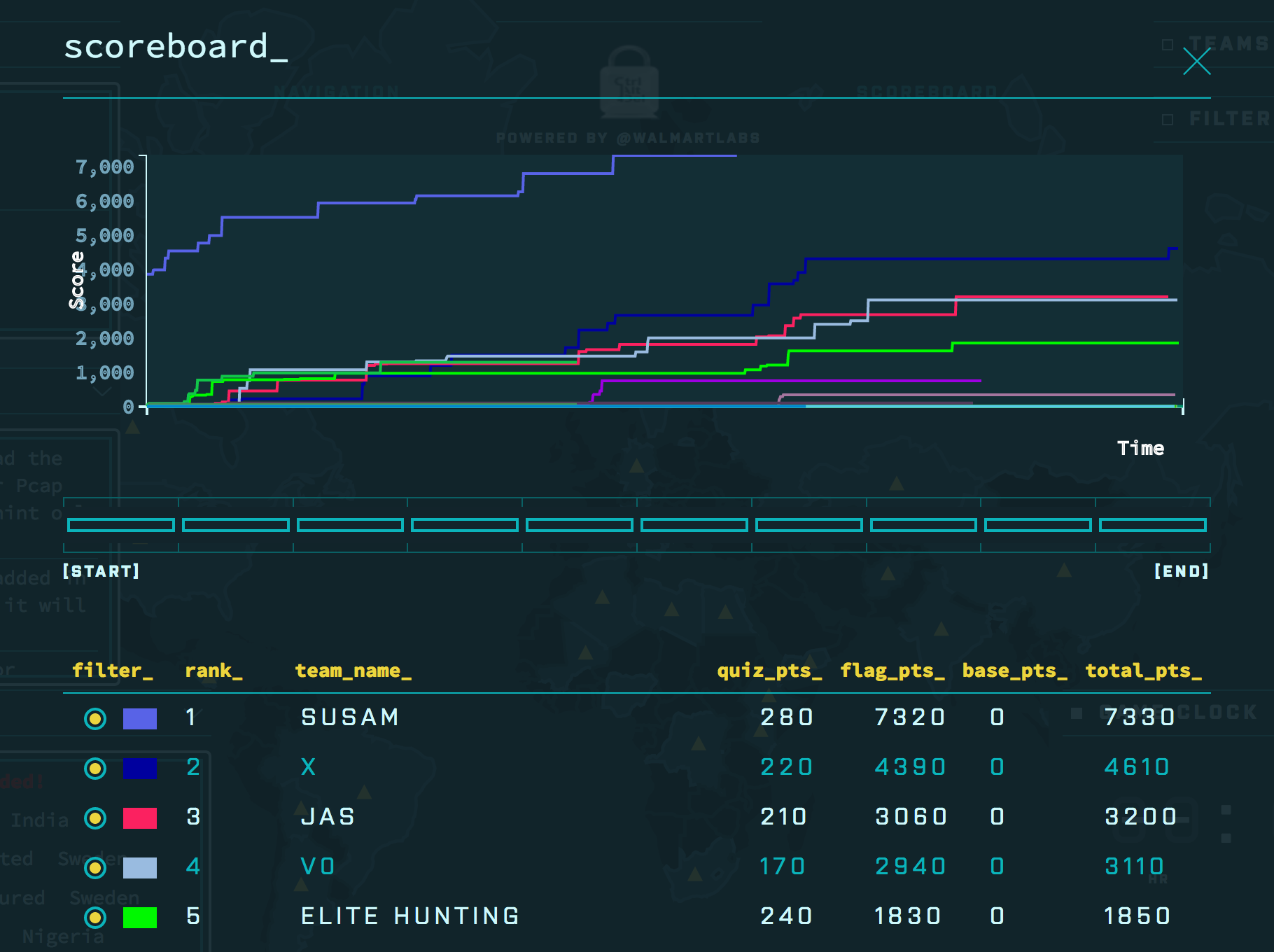
> My first CTF was HCKSYD, a 48-hour solo CTF. I full solved it and won in 2 hours. I was completely hooked. That led me to win DownUnderCTF, Australia's largest CTF, with Blitzkrieg multiple times. Blitzkrieg was one of Australia's strongest teams at the time. I later joined TheHackersCrew, an international top-tier team that was consistently ranked highly on CTFTime, the main global ranking and event calendar the scene uses as its scoreboard. With them, I competed in some of the most prestigious CTFs in the world, consistently placing well within the top 10 until the end of 2025.
Are still completely nonsensical to even those that understand the acronym
To help everyone, this Capture The Flag is specifically Cybersecurity adjacent, there is a Wikipedia article on it as the top Google search result for me when searching "CTF". This is why the acronym is used, because searching for the full will get you to the wrong "sport" vs the cybersecurity one.
I don't want to explain what a CTF is. look at the Wikipedia article. It is there for a good reason.
In this context, CTF is almost exclusively referred to by the initialism, i think to help distinguish from other uses of the term.
So, in fact, you must not beg to have authors include courtesy definitions for you. That's not reasonable. Instead, you should simply ask here, on the thread, without complaining about the article.
I think you only wanted clarification of CTF (Capture the Flag) and not AI (Artificial Intelligence) and not GPT-4 (Generative Pre-Trained Transformer version 4) and not CLI (Command Line Interface) and not MCP (Model Context Protocol) and not LLM (Large Language Model)
Quoting TFA (The Fucking Article): “just adapt bro”
lol at the BGP example
I don't know everything, there's tons of stuff I don't know about, but when I'm at my web browser, the least I can do about something is ask Google about a word or phrase or subject that isn't familiar instead of being spoonfed information like I'm a baby.
We’ve figured out the human replacement pipeline it seems, but we haven’t figured out the eduction part. LLMs can be wonderful teachers, but the temptation to just tell it ‘do it for me’ is almost impossible to resist.
I had no access to anyone who could teach me calculus as a kid except Khan Academy, so I think this is a gross exaggeration. But I agree in the end, that all my "real" learning did come from pen-and-paper practice, not watching videos.
They're wrong sometimes, but usually in verifiable ways. And they don't seem to know the difference between medicine and bioterrorism, so often they refuse. But these limitations are worth tolerating when the alternative is that our specialists in topic X are bogged down by questions about topic Y to the point where X isn't getting taught.
If they can ship code that matches a spec, why does it matter if they’re using ai or not?
Genuinely curious.
If you remove the "without AI" and the end, I've been hearing similar anecdotes about fizzbuzz for years (isn't the whole point of fizzbuzz to filter out those candidates?)
When this AI era's devs grow older they'll complain the newer generation can't even vide code too.
Saying there have always been bad developers doesn't change that there's a higher ratio of them now.
No stats to back this up. Just interviews I've done recently and historically.
It's not even that they got distracted, they sat there trying, for 2 whole days, with concerned colleagues giving them hints like "have you tried checkout -b"... They didn't manage!
How the hell do you work for a decade in this business without learning even the most basic git commands? Or at least how to look them up? Or how to use a gui?
Incompetent devs is not a new thing.
There’s almost nothing to forget? I’m just struggling to understand.
We usually hire for problem solving capabilities and not so much for technical know-how.
That’s at least how I read your comment.
This situation in particular was a React role so there is an expectation that when you list React as one of your skills on your resume then you know at least the basics of state, the common hooks, the difference between a reference to a value vs the value itself.
These days you can do a surprising amount with AI without knowing what you are doing, but if you don't have any clue how things work you'll very quickly run in to problems you can't prompt away.
Also how many people work with linux and can't tell you what 'ls -alh' is doing is staggering (lets ignore the h, even al people struggle hard).
People working with docker for YEARS and don't even understand how docker actually works (cgroups)...
Interviewing was always a bag of emotions in sense of "holy shit my job is save your years to come" and "srsly? how? How do you still have a job?"
Software is full of leaky abstractions
I don’t care what someone can do without the tools of their trade, I care deeply about their quality of work when using tools.
Everybody knows calculators and spreadsheets are adjuncts to skill. Too many people believe AI is the skill itself, and that learning the skill is unnecessary.
[0] Episode webpage: https://share.transistor.fm/s/31855e83
But he was a great teacher anyway. He was engaging and kept the kids in line and learning. I eventually learned the truth, and most of my classmates forgot about it. Teaching, like flying a plane or driving a train, might become more about keeping watch over a small group of people and ensuring that things don't go off the rails, and that's fine.
E.g. in Hungary I had a university CS professor that originally wanted to be a highschool teacher and a highschool physics teacher that originally wanted to be researcher. Their choice of degree didn't determine which outcome they got. The researcher and teacher curriculum had an 80%+ overlap.
A Physics Prof Bet Me $10,000 I'm Wrong
All things I learned in school which were wrong information.
Not to mention, the current state of education is far worse. I don't think most realize how low the bar is.
She only really had two faults: She wasn't very bright, and she wasn't fond of children. I had her in about 80% of all my classes for six years. High school was a relief.
My “earth sciences” teacher also once tried to argue with me against the universal law of gravitation. (no, she was not referring to Special/General Relativity. She didn’t agree two objects in a vacuum fall at the same speed regardless of mass.
Like almost everything else about LLMs, this unfortunate tendency has gotten a lot better recently, which you might not realize if you gave up after getting some lame answers or bogus glazing on the free ChatGPT page a couple of years ago.
We can all agree that both human "experts" and LLMs can sometimes be right, and sometimes be confidently wrong.
But that doesn't imply that they're equally fit for purpose. It just means that we can't use that simple shortcut to conclude that one is inferior to the other.
So where do we go from here?
Well, they were ostensibly forcing functions... ten years ago everyone was paying the exchange student to do their homework and assignments for them, and that guy was paying his cousin back in his home country, but the whole thing is a bit more efficient now.
No we have not.
Are they or aren't they
Can't argue with that logic
Now I’m certain that there exist those mythical human instructors who can do better, but that’s not worth much if 99.99% of people don’t have access to them. Just like a good human physician who takes their time with the patient is better than an LLM, but that’s not worth much either given that this doesn’t match most people’s experience with their own physicians.
For me the best human teachers were the ones that managed to make me interested on topics that I thought are boring/useless (many times my opinion being stupid, mostly due to lack of experience).
So far with LLM I learn about things I know something (at least that they exist) and I am interested in, which is a small subset of things that one should learn during lifetime.
Not really, not if you want to ask it deep questions. It won't have an answer that is deeper than something that you can find online, and if pressed it will just keep circling around the same response.
The reason is that this "thing" was never curious, never asked questions, and never really learned anything. It just has learned the Internet "by heart", and is as boring as a human teacher who is not really curious about the subject they are teaching, and has just got some degree by "by hearting" some text book. Of course it does it much better than a human, but it is fundamentally the same thing.
You're certain that mythical instructors exist (?) who "can" do better?
Are human instructors more competent as teachers than AI teachers, or are AI teachers more competent as teachers than human teachers? No "this or that can happen," just a definitive statement please.
AI is likely a million times better student than my dimwit cybersec meatbags...er, majors, for sure, as well! Don't have a reliable way to measure or experience why/how, tho, so I'm not out here claiming it. Even if I did, why would I argue for their replacement?
(Real mathematics problems, not American-style ""math"".)
Also, you could spin up your own educational agent with very strict instructions on guiding the user instead of just doing the work. Of course you can always go around it but if you're making an effort to learn, this is a good middle ground.
Before when playing CTFs with my mates was usually sitting there for hours tackling a challenge until some other mate joined, had some look together and solved it with you together in 30 minutes which is the most rewarding learning experience. Nowadays mate joins in throws the clanker on it and solved it in 5 minntes. Asking on how it worked you always get the "yeah idk what it did, but who cares, here is the flag" response.
Same for creating challenges. Whenever I ask for writeups or if some people solved it differently I usually get the "yeah idk, clanker solved that one" response taking the fun out of it.
So yep, this CTF format is definitely dead. Mainly because the strong competitiveness and prices. This encourages people to cheese challenges and sometimes solving them differently was fine as you still had a creative out-of-the-box thinking moment, but nowadays with AI there is no brainpower needed, no cheesing needed, no human needed. As you mentioned, it's pay to win.
My two cents is that the 24/7 CTFs will get more attraction as the scoreboard doesn't matter there and simply doesn't give you any price.
The solution is just to make CTFs harder, but when do CTFs become too hard? Maybe the problem is that 'hard' CTFs are fundementally too 'simple' where it's just a logic chain and an exhaustive bruteforce towards a solution since there really are limited ways to express a solution in plain sight.
Or maybe human creativity has been exhausted and we're not so limitless as we thought. Only time will tell.
I had another idea spring to mind: we could hide two flags, one that could only be found by ai agents and not humans or tools written by humans.
"new" does the same thing and is probably just a better descriptor then frontier
still has no mention of AI, but that will likely change as they increasingly dominate competition.
I thought code golf would take longer for AIs because there's so little training data (it's more niche), but we're seeing AIs starting to match expert humans there too. Sucks because golf has been my favorite type of programming puzzle.
It's crazy how far AIs have come in problem solving ability.
This stands out to me, and speaks perhaps broader than the article itself? I’m sure this has been in the spotlight before, but well put for many areas I think.
My fear is that they never get to the level they need to be at to create good software even with the help of AI. So, although an expert with AI can create great software, that is not where we end up. In stead we will have vibe coded messes by people who barely have any grasp of what is going on.
It's a lot harder to detect cheating when your only trace is how fast someone submitted the string CTF{DUck1e_Pwned}
You could even go so far that anything loaded on your computer is fair game, but not more than that (certain competitive programming competition for example allow unlimited amount of paper material - for CTFs you probably need much more than that, therefore electronic).
(The author of the piece understands this; I think they're broadly right, though I think these games will find other ways to incentivize participation without the now-meaningless leaderboards.)
So the obvious solution is to fully ban AI and AI generated tools? To destroy your own hobby just because AI can semantically be considered a tool, seems very stupid to me. If the point of these CTFs is to practice and measure your skill, what becomes the point of the competition once everyone uses AI?
So, I would not start banning the tools. They always been there. We just need to fine tune the challenges where bar goes beyond things and you really need to use AI as tool. Maybe the definition of insane starts to be custom kernel fork with planted bugs and you need to use AI to find the bugs, and use some exploit chains against that kernel with specific web server. That is the real world right now, I guess.
This will basically become true for everything.
I just did a CTF where I was in the top 10. It was the first CTF I completed and I used AI because the rules permitted it. That said, I couldn’t solve all challenges.
But yes, it was significantly easier now than I last attempted one. Even manually solving with AI assisted assembly interpretation was much easier.
I never got super into security but it gave me the confidence to play in the same field and lose the stupid aura I had that somehow "rich americans" would be better than me at everything because they had better universities or because of Hollywood or something.
Sad that another cool thing is lost to AI but I guess kids will learn in other ways.
https://ldjam.com/events/ludum-dare/59/setidream/about-ai-ar...
For what it's worth, the non-AI-coded entries were still quite good relative to the winners, so it's not so obvious that AI use confers an unbeatable advantage.
As I don't know much about the CTF scene, I looked for other takes on this topic.
Here's an article from 2015 about how tool-assistance already changed CTFs:
> Individual skill will undoubtedly be a factor next year. But, I'm left wondering whether next year's DEFCON CTF will tell us anything more than how well-developed each team's tools are (and how well they can interpret the results).
https://fuzyll.com/2015/ctf-is-dead-long-live-ctf/
But there are quite a few recent (2026) articles with the same core message as in the original article, e.g., https://blog.includesecurity.com/2026/04/ctfs-in-the-ai-era/ or https://k3ng.xyz/blog/ctf-is-dead
And here's someone explaining how Claude Max allowed them to win CTFs:
> I had always been interested in CTF as one of the only ways people could compete and show off their skill in coding/problem solving on a global scale. It was just too difficult and didn't make sense for me to learn the fundamentals as an electrical engineer. As time went on, I got better and better, and it was hard to tell whether it was because of experience or if it was because of improvements in AI.
> I accomplished my goals, and for that reason I'm quitting CTF, at least for now. [...] I'd like to think I highlighted the problem before it became a bigger issue. So, how do we fix this? Teams and challenge authors losing motivation is not good. CTF dying is not good. AI bad. Or is it?
https://blog.krauq.com/post/ctf-is-dying-because-of-ai
The only article that saw LLMs as a non-negative force for CTFs was this one. Fittingly, it sounds like LLM output ("Let's be honest", "This is where things get interesting.") and only contains hallucinated references.
The matrix was always the same and the challenge was clearly designed so that the point was being able to read anything at all, not knowing how to invert a matrix, so I asked the creator what was up.
He told me that there were tools that would trace input values until they reached a comparison instruction, then print what they were compared against. Therefore it was necessary for every deobfuscation challenge to scramble the input in some way too complex for these tools to undo, before comparing it. Hence the multiplication by a pseudorandom matrix.
The point is, cheating tools aren't new.
Many CTFs have switched to a dual-leaderboard format recently, one for "agentic teams," one for the rest. If all you care about is "learning" and imaginary internet points, you can just participate as a human team and adblock the AI scoreboard, and maybe lobby CTFTime into splitting their rankings as well.
https://en.wikipedia.org/wiki/Capture_the_flag_(cybersecurit...
It's pretty fun. Or at least it was, back when you had some sense that your competitors were competing on an even playing field and just beat you because they were better than you.
I wouldn't say the name is a "gaming reference", it's just a descriptive name for a game.
Its a war game reference I guess?
Well actually I get it. In cycling motor doping, putting a hidden engine into the bike, seems more offensive than regular doping. I think this is because there is a continuum from eating well to taking supplements to injecting stuff, but having a engine breaks a fundamental idea about cycling. Similar hacking is about cleverly abusing the rules.
Asking AI for learning / explaining purposes is absolutely fine in my book - but I have absolutely no motivation to set up AI to solve challenges. Without AI you can't really compete successfully. So AI is really taking motivation away for me which in turn again prevents me from learning more. I am not sure that this is solvable.
This is like someone complaining that making machine parts has been ruined: Skillful craftsmen used to make them by hand using manual tools!
Nowadays the CAD/CAM/CNC cheaters have almost completely automated the whole thing. How is the next generation of craftsmen going to learn how to craft a gear by hand when the process of gear making has been reduced to pressing start on a CNC machine?!
See what I mean? Sorry, I think this article is just Luddite. I can empathize with the pain of your beloved craft basically being rendered obsolete by new technology, but the process can neither be stopped nor is it bad in general.
The manual skills you trained with CTF puzzles are now simply no longer relevant . (Field-specific) "AI orchestration" is the new cyber securtiy skill if LLMs really have become so good at this, and what the author used to do manually then has the same value as being able to craft a gear by hand.
Indeed, in the real world, plenty of people organize to do formerly-skillful tasks together. I have not personally crafted a gear by hand, but I have built a house in a long-abandoned style with a group of people only using hand tools.
There _is_ a danger that society forgets how to do these things. During that house-building exercise, there were many tricks of the trade that, while likely documented somewhere in a book, would have been difficult to reproduce without seeing a demonstration. From the standpoint of “does it matter?” it depends on what you care about. We absolutely do not need cruck-framed houses with scribed joints. Modern construction is faster and cheaper and lasts long enough. But it would sadden me greatly if practices like this faded from memory, because it’s one of those things that makes you gasp “wow!” when you see it. And your appreciation only deepens when you try it yourself.
The reason LLMs can do CTFs so well is partially because the challenges are usually designed to avoid wasting time and to introduce a single concept without noise.
These models seems completely unbeatable only in the ads. There are 100+ times way someone puts Hindi Yoda talk In Morse Code and it goes nuts. The reason they are going to hard for PR Marketing on this is because they know it is a matter of time.
The only things that works is novelty and obscurity. LLMs still suck with things mentioned in the footnotes of datasheets and manuals, things that deviate in subtle ways, unique constructions that alter something very very common. It's hard for LLMs to avoid common pitfalls in terms of making assumptions, while staying on track.
In our own trainings we give (AI agents for security, and a graph masterclass), we ended up leaning into it. For example, we ship with a skills bundle. There are plus sides, like less code-forward participants can go further and are appreciating that, and less of a gap between high-level concepts and successful hands-on. But at the same time, manual work does build a lot of intuition & knowledge that gets missed in auto modes.
Explicit ELO measurements with some cheating detection. AI assistance wholly banned. As you climb the ELO ladder, detection gets more onerous. At top level during online events, anti cheating teams require the use of both monitoring software and multiple cameras.
Idea is that you can cheat pretty easily at the lowest levels but it gets less easy the higher you go. This allows for better feeding into the truly elite competitions.
I think chess’s very firm stance that AI is never allowed in competition (neither online nor in person), rather than CTF’s acceptance, was the right call.
If CTF is a player-vs-player event, then AI should just be banned outright, otherwise it will devolve into AI-vs-AI, which is just not an interesting competition format, as we learned in chess. Compared to FIDE top events (which bans AI), only a tiny niche audience actually watches the Top Chess Engine Championship (AI-centered). It turns out what we care about is not whether chess can be solved by any means available, but what are the limits of the human mind in learning chess.
Pretty much all chess coaches/educators also warn against relying heavily on AI during learning; engines only give you an illusion of understanding.
Not as easy logistically...
The same article talks about CTF skills as a way to learn about security best practices and separately a sport.
In reality it was all about learning an extremely important skillset (securing/attacking software and systems) that is getting automated.
The real thing the author seems to be frustrated about is AGI is coming in computationally verifiable domains first, and lot of his skillset was taken over in a big part.
>and the old game is not coming back
For many people the CTF scene was already dead in 2021 because it had turned into something unrecognisable.
In reality it’s just different.
"That makes open CTFs pay-to-win. The more tokens you can throw at a competition, the faster you can burn down the board. Specialised cybersecurity models like alias1 by Alias Robotics are becoming less relevant compared to general frontier LLMs. The competition is turning into "who can afford to run enough agents, with enough context, for long enough.""
Hits different doesn't it
I guess this goes in parallel with the whole building for one narrative
And while I have ideas to excite and promote LLM use in these style games I've still not been able to crack the human collaboration component that is at the forefront of all of this change
The intent for most CTFs is to provide a meaningful challenge that concerns a single topic without introducing noise that wastes time. Of course a training exercise is easier to complete for an LLM.
Why so pedantic?
I've seen that exact font and color scheme a dozen of times the past weeks.
On the other hand, CTFs are fundamentally a game and a competition which are supposed to be fun and compare and improve ones skill. So when I let an LLM generate the entire solution for me, what's the point anymore? I did not learn anything. I did not work for that place on the leaderboard, I just copied the solution. And worst of all, I did not have any fun. It's boring.
So how does using AI as a solver not feel like cheating?
What am I missing here?
> Rules that ask people not to use LLMs are ignored and almost impossible to enforce in open online events.
It's quite sad to see CTFs dying. I never had the time do seriously participate in CTFs, but I always respected those who did, as well as the people organizing these events.
It's an incredibly exciting time in security research in my humble old man opinion.
Think the cadence of new exploits is perhaps a good measure of that rather than subjective thoughts by anyone regardless of experience.
They may as well be the human equivalent to what LLMs currently are.
I do not mourn these people, as they’re usually the most arrogant types. I hope for their sake they adapt.
The text itself being exceedingly long for no obvious reason doesn’t help.
And if you think it was too long, what part would you have shortened? I never knew about the scene and found it interesting to read this personal take on it.
Imagine every competitive chess player being allowed to video call with a hundred other people to help them make a move. CTF have never been fair, nor has it ever been effectively structured for learning.
Another idea is deep red herrings. solves that lead to more solves, on and on, except only if the previous solves were solved quickly. The effect will be that participants who solve things quickly will keep finding things to solve. they can't know that the path they're on will lead to victory, even if they artificially slow down, unless they consistently slow down just as a human would. It will eliminate the speed advantage. For the skill advantage, other than having another LLM procedurally generate challenges, I don't know of a good solution.
There are always things like captchas. or the good 'ol honor system. A person can spend only so much for things that have no financial reward in the end, only clout.
---
Alright, all that said, i think i really do have a good solution for this, as well as academic exams. Or I think I do, because it's so simple, I've been scratching my head as to why everyone isn't doing it already.
Require screen sharing/recording. LLMs can't fake that well enough. Have another LLM audit the video for mouse, key stroke, window movement and other details to see if it looks human-generated or not.
If a student has an essay assignment, have them record their screen as they research, and actually type out the whole thing. In the extreme, require anti-cheat proctoring software installed, as is done in remote examination. In an even more high-stakes and extreme scenario, have them share their face. Their eye and face movement, correlated with the screen-share, and correlated with the activity observed on the server end, should be pretty hard to beat, even in the next ~5 years of LLM advances.
This year, multiple groups on the top of the leaderboard were clearly abusing LLMs. You can tell because they know nothing of what a CTF is nor the terminology, nor really the fields the challenges were about when they were talked to. They were obviously amateurs.
It was pretty depressing to hear how unaware they were of how obviously they did not fit in to the type that usually is on the top of the leaderboard. It seems they seriously think they were under the radar. If it was one group it could be a freak incident - some times someone just shows up and curbstomps competition. But there were many groups like this this year. They also had a certain smugness to it - one staff reported that a group was hinting to other teams about their "super weapon". Another group credited their "secret third team member they didn't want to talk about".
I use LLM frequently and experiment with it a lot, both at work and on my free time. Nowadays they are good enough to have value and I am interested in learning more about that. They let me spend more time on hard problems and avoid spending the day on simple CRUD. I say this to say that LLM doesnt have to equal bad, it is a tool, that's all. However, I generally avoid LLM communities because many LLM fans are lazy and unskilled people who are just happy they can feel they are worth something even if they have no skill. They don't really have much to provide of conversation. If anything, from reading the CTF crowd this year, the rise of LLMs has just meant more of these people can stomp on and harvest the CTF scene for self validation.
This is not me trying to gatekeep who can play CTF. Anyone is welcome, but there is one condition: You are here to learn and have fun.
The conclusion many I talk to has come to is that nowadays, it is harder to learn to put in hard work and become good at something because there are just too many ways to cheat and take shortcuts. I suspect in the future there will be a shortage of useful people - the kind that have critical thought and know the value of doing something properly. This doesn't mean "Not using LLM", but as said by many on HN before you need a certain seniority before LLMs are useful augmentations to your skills and not just stopping you from learning yourself.
I agree with the article. Anything but physical competitions with strong security - think professional e-sports with organizer-provided PCs, is over. But I think one of the most interesting things to take away from my CTF experience is that the bottom of the leaderboard was still full of amateurs slowly working their way up - it is a few rotten apples that ruin the fun for most, and there are still plenty of people who want to learn and deep-dive.
The whole point of competitions is to provide a safe environment thanks to a set of rules all participants AGREE on in order to progress together.
If new tools "break" the competition, we change the rules and that's A-OK.
CTF isn't a natural phenomenon, if tools change, rules change, simple.
- no computer assistance, which does also mean no mobile on competition, human only
- advanced chess with assistance
- computer only, no human assistance
and arguably chess itself is not doing worst since.
>The issue was never that AI could help. proceeds to write the next 3 sentences about how the problem IS in fact ai help
>Teams that refused to use AI were not just missing a convenience; they were playing a slower version of the competition.
>CTFs were not just a set of puzzles. They were a ladder.
>The claim is not that every challenge is solved. The claim is that...
>The loss is not just a scoreboard. It is the ladder from
Guys I'm so sorry I just can't stop noticing stuff like this. Anyone else?