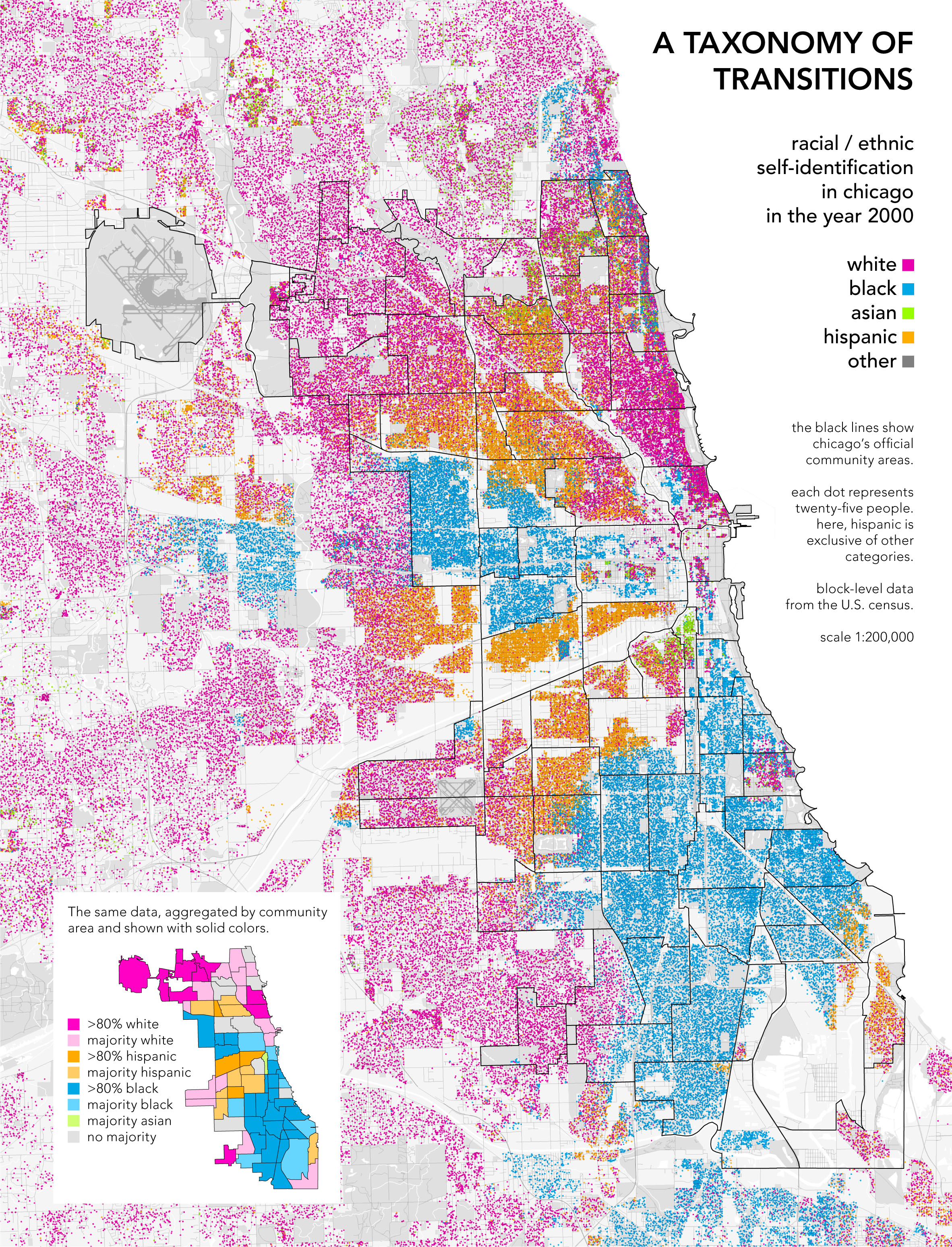
Americans are fascinated with race because our cities look like this: http://www.radicalcartography.net/chicagodots_race_big.jpg.
Moreover, it's hardly unique to Americans. Racial and ethnic conflicts are common across the whole world. The U.S. is still dealing with a legacy of slavery and desegregation that ended only recently. When the Governor of Alabama promised "segregation now, segregation tomorrow, segregation forever" Bill Gates would've been about eight years old. He would've seen on TV when Governor George Wallace physically blocked two black students from enrolling in the University of Alabama, and had to be moved aside by a National Guard general under the orders of the President. This isn't ancient history, it's a sociological blink of an eye.
Other western countries have to deal with the legacy of their repression of particular ethnic groups, but the U.S. is unusual in that its repression of blacks was particularly brutal and long-lived, ended very recently, and left a very large number of disaffected people among the population of the country (12-13%). The treatment of the Irish by the British might come close, but is mitigated by physical separation. What would the politics of England look like if London was 40% Irish, confined largely to ghettos in the city?
> To me, economic situation is much more important here.
In the U.S., race and economic situation is inseparable. That's the legacy of segregation. When Bill Gates was a child and going to school in the 1960's, most of America's black children lived in the South where they went to segregated schools, ate at segregated restaurants, etc. Economic segregation is a natural consequence of this very recently ended racial segregation.
> As for the suburbs, I fail to see the reasoning - are you proposing that we limit the free choice of people of where they want to live?
No, my comment is descriptive rather than prescriptive. Suburbs are segregated, by race and socioeconomic status. Voters living in the suburbs never see the impact their support of particular criminal law policies have on poor people and minorities, who disproportionately live in cities.
This is a race map of Detroit and its inner suburbs: http://cdn.all-that-is-interesting.com/wordpress/wp-content/.... The Detroit metro area is 70% white, but the city itself is 80% black. How much exposure and insight do you think those red dots have into the lives of those blue dots? When those red dots vote to support criminal policies that disproportionately affect the blue dots, do you think they even get any feedback about the ramifications of their decisions? This is the impact of segregation and suburbanization. People naturally have trouble empathizing with people who are different from themselves. Suburbanization exacerbates that natural phenomenon. People have particular trouble empathizing with people who live somewhere else that they never see or meet or interact with on a daily basis.