230e9 (each machine does 230 Ghash/s) * 2500 (# of machines) * 3600 (second/hour) * 730 (hour/month) / (2^32 (average number of hashes to solve a block at diff=1) * 19.8e9 (current Bitcoin difficulty)) * 25 (BTC/block) * 590 (USD/BTC) = $262000/month
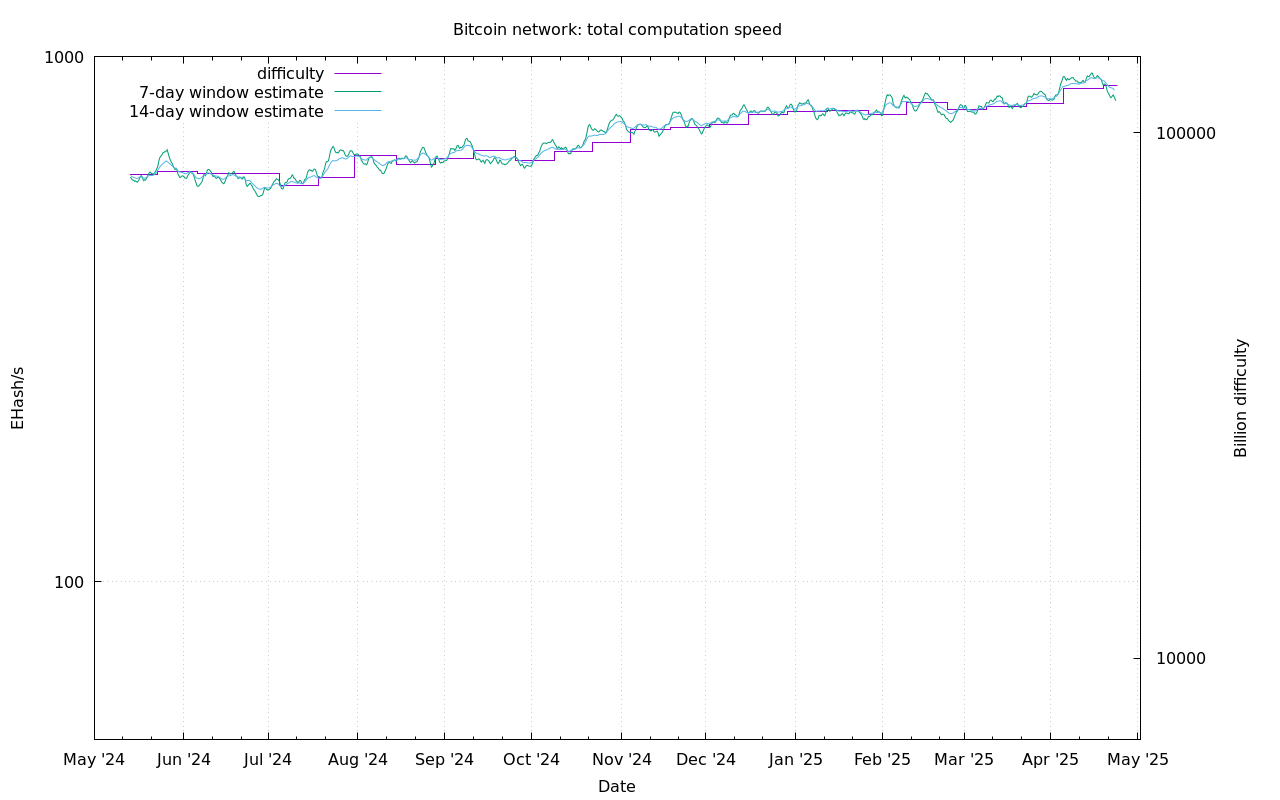
The article says their electricity bill is $60k per month. Subtract the 3 employees salaries, say $5k per month (this is China). So you are looking at a pure profit of $197k per month. Of course these profits are declining quickly over time; look how fast the difficulty has been rising: http://bitcoin.sipa.be/speed.png (logarithmic scale!)
And this mine only represents 0.3% of the total network speed (about 170,000,000 Ghash/s).
Edit: bellerocky: most exchange fees are < 1% to turn BTC to fiat.
Edit: FigBug: roughly yes, but because the network is growing, there are more than 3600 coins mined per day (blocks are solved a bit more often than every 10min).
Three other significant expenses worth considering: rent/physical plant, hardware, and taxes.
Not including liquidity issues and fees for turning that stuff into actual money, at least until you can start paying all your bills with bitcoin.
If you pay $5k for such kind of 24/7 job in China you'll make a middle man very happy.
3600 coins per day * 30 days * 588.41 BTC/UDS * 0.003 = $189831.60 USD gross per month?
You're assuming the people disrupting the network for short term gain are the same as those who made the up front investment into the operation.
This is not true. GHash's past double-spend attack was carried out by a rogue employee. The BGP-hijacking attack which was in the news a few days ago shows another route to a 51% attack. An attacker who can trick a bunch of big miners to mine for him instead of themselves could just as easily have tricked them into performing a doublespend attack.
But let's just go with your assumption that some entity with big pockets decide to run a majority attack against Bitcoin miners. How much effort and money would it require?
1 year and 20 billion dollars; here is why:
The best 20-28nm mining ASICs require about 1 watt per Ghash/sec. The network is currently at 170,000,000 Ghash/sec so it would require at least 170 megawatt of ASICs, or a ~200 megawatt datacenter (with PUE = 1.15). The fastest TOP500 supercomputer facilities barely reach 20 megawatt. The biggest datacenters in the world are just about 100 megawatt. So the attacker would require two of the world's most powerful datacenters (in terms of electricity and cooling) to attack Bitcoin. But it would take at least 1 year to plan, design, build, and deploy the hardware in two such facilities. And the Bitcoin network will continue to grow during this time. It has grown by 400x in the last year (400,000 to 170,000,000 Ghash/sec). By the lowest estimate, the network will grow at least by 10x in the next year (170,000,000 Ghash/sec to 1,700,000,000 Ghash/sec). So you need to plan to build not 2, but 20 world-class 100 megawatt datacenters by August 2015 to be ready to have a chance to majority-attack Bitcoin. Knowing that a 100 megawatt datacenter costs $1 billion [1], you need pockets with $20 billion in them. And if you under-estimate the growth of the Bitcoin network in the next 12 months, you will have failed and wasted $20 billion for nothing.
[1] http://www.greendatacenternews.org/articles/share/416983/
It would certainly still be feasible for the US government to overpower the network, but it would not be cheap. The Minerscube 15 is due to ship next month, and will get you about 1.666 GH/s/$ [0]. The current speed of the bitcoin network is about 160,000 TH/s [1]. Duplicating this would cost about $96M, assuming you could get that many Minerscube 15 chips at that price, and assuming the infrastructure costs are trivial. So I would say it's still doable, but far from trivial.
  [0] https://en.bitcoin.it/wiki/Mining_hardware_comparison#ASIC
[1] http://bitcoin.sipa.be/All they're missing is some chrome and neon, and we're living the cyberpunk dream.
Running a wallet with a full block chain would take more bandwidth.