Buy-to-let is rampant in the UK. Other European countries sensibly restrict it's growth or they enact strict tenancy laws to deter the worst type of buy-to-let landord (UK laws are weighted in favour of landlords). In the UK, we've lost any sense that housing has a social component.
I write a blog about housing in the UK and wrote about this topic five years ago. Depressingly, the situation is even worse today.
http://designofhomes.co.uk/016-damaging-effects-of-buy-to-le...
I moved to China a few years ago. I am glad that I was able to let my flat (to responsible tenants who have paid the rent on time for >3 years) and that I was able to rent an apartment in Beijing. Selling my flat in London and buying one on Beijing would have been impossible and, even if it had been possible, why should I invest in a property in Beijing just because I want to live here for a few years? And why should I sell my flat in London?
EDIT: s/chance/change
Boston's extensive housing development limits enable this behavior; in a functioning market we'd see supply rise to meet demand. See Yglesias's The Rent is Too Damn High (http://www.amazon.com/dp/B0078XGJXO) for more.
I've lived in the UK and opinions there vary a lot. In London, it doesn't really have a negative connotation that I can recall. In rural parts, it tends to be viewed very negatively. I seem to remember reading a story about anger against "Londoners" driving up local property prices (with weekend homes) resulting in someone burning one down.
Weekend homes are a different beast of course but the anger comes from basically the same place: the perception that "outsiders" are making housing unaffordable for "locals".
This seems to be a very Luddite view. If it weren't for people letting out property rental homes wouldn't exist outside of, say, council-run rental buildings. I don't see that as a good thing.
Some places have tackled this problem with regulation eg making it difficult for foreigners to buy real estate or punitive capital gains taxes on short-term property sales like in Switzerland.
In NYC we have a different problem: rich people parking money in real estate leading to what are known as "ghost buildings". This is mainly a Manhattan issue.
Historically NYC had rent control that ended in the early 70s (meaning no new rent control leases were issued, existing ones remained while the tenants remained). Reforms were enacted to allow tenants to buy their apartments leading to the "coop", which accounts for the vast majority of Manhattan apartments.
A coop is an interesting beast. Technically you own shares in the coop. The coop owns the building. Your shares entitle you to reside in a given apartment. You must comply with the coop's rules. Coops are typically for primary residences and, to a lesser extent, pied-a-terres.
You can sublet coops you own in some cases but it tends to be pretty restrictive (eg only for 2 years out of every 5 and you have to own it for at least 2 years).
The effect of this is that coops tend to have very high occupancy rates (in real terms) and relatively low turnover.
Most new builds are condos, where you own your property outright and are a member of an HOA (Home Owners Association). Buying a coop will involve getting approval by the board, which can place wildly varying limits on mortgage amounts, income to debt ratios, requiring personal and professional references and so on. Condos however require only finance approval (the building has a right of first refusal).
So a lot of condos are owned by wealthy people who might visit for a few days a year if at all. I don't think this ghost building phenomenon is healthy for a community and is certainly a problem if all construction falls into that category.
Buy-to-let isn't the problem here. Unchecked buy-to-let might well be. Banning it is throwing the baby out with the bathwater. A more nuanced scheme might give tax abatements for owner-occupied properties in the coop model. Or put quotes on investment property in a given area. You can even create markets for such things eg NYC has a market for "air rights" above buildings to allow really tall buildings.
As far as "crappy" rental property goes, that's pretty much rental property all over.
So in parts of England, Cornwall for example, the house prices are over ten times the average local wage (due to Londoners buying them up as holiday homes). I don't see how that can be viewed as a positive thing.
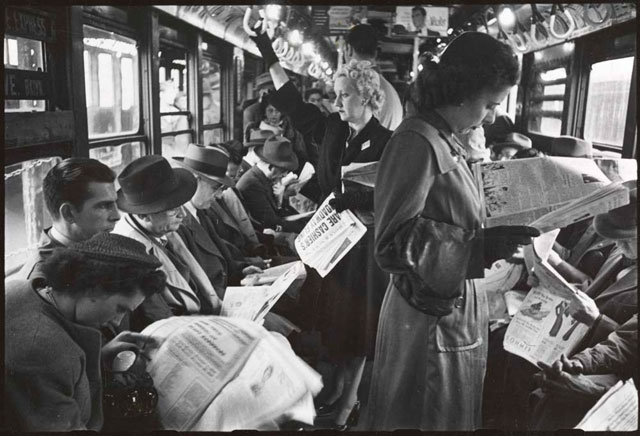
When i lived in NYC, i knew most of my neighbors. Why? because we literally bumped into each other coming in and out of the building. When you have a common destination (subway, bus, market, etc), it's nice to have someone to chat with, but when your commute is in an automobile, you never get a chance to ask. Living room, garage, automobile, parking lot, destination.
With automobiles, there is no opportunity to, say, bump into your neighbor and ask, and then follow up with quickly knocking on your neighbor's door to see if they are still interested in joining you. Without those quick opportunities, relationships cannot form. Without relationships forming, it's culturally awkward to ask directly.
The single occupancy automobile, and the decentralized suburbia that formed around it are very probably central to many of the ills detailed in the article.
- Driving into the garage and lowering the garage door even when I really wanted to park in the driveway
- Peeking through blinds to see when my neighbors go back inside
- Getting into my SUV from the passenger side so they can't see me through the smoked glass
- And more!
If not, hey, there's always one or two annoying neighbors, and if you can't find them, it's probably you.
There's a McDonalds in an area dominated by software and engineering companies. At lunch, people would go through the drive-thru, park in the McDonalds' parking lot, and eat in their cars. The parking lot was full; the large dining area inside was usually empty.
The saddest part is that I myself started doing the same thing after a while. Although Silicon Valley is the center of the universe for my profession, I found that it is also a lonely experience compared to other cities/countries.
High density is one of the principal things I like about proper cities (like NYC or London or Moscow).
Cradle Your Device: http://www.youtube.com/watch?v=J-GhETtqN_I
To know people locally, you need to live locally. If getting dinner involves a commute, then you're never going to meet people. It takes more than one or two instances to get past the earbuds. Remove the automobile and immediately you're seeing the same people dozens of times a week.
One day about 8 months ago, we got a note on the door from new neighbors. They were having a "floor party" and invited everyone on the floor to their place.
Almost everyone on the floor, reluctantly went to the party expecting it to be awkward. We all ended up drunk and hanging out until 2 am. Turns out, pretty much everyone on the floor was a 20-30 something couple.
Flash forward to last night, we all had dinner together on the roof, and celebrated someones birthday. I'm close friends with a few of them.
Point is, someone just has to take the initiative. I'm now embarrassed I didn't do it sooner, as I'd live here for 3 years.
Like this guy: http://www.youtube.com/results?search_query=dancing+hill+guy
To counter your easy dismissal I'd say modern individuals, rife as they are with selfiness, consumerism, lack of empathy and of time to connect to their neighborhood, are mostly basing their circles on career paths and personal interests, and other people being their cultural split image.
What both arbitrary socialising and consumerism have in common is that they are focused on selves whereas truly important activity primarily relates to abstract ideas. It is ideas that create the solutions to local problems.
Btw, none of this is inconsistent with a smile and a nod to people you see about you in daily life! And mingling with new people if one feels lonely.
I've never really been comfortable getting to know my neighbors. I feel like they see and hear too much about my private life as it is, it's actually awkward for me to see my neighbors.
Maybe they're completely boring. Maybe the person under discussion prefers being alone unless and until the entire neighborhood is going up in smoke. It's not as though large groups of people are what nature has in mind, regardless of environmental and biological changes -- evolution doesn't work that way.
About 1/2 of Americans are now single. Is this a disease, or a result of personal preferences, by people who tried the alternatives and then made the least objectionable choice?
Here's the Australian sociologist's article (you can find both quotes in the piece, but quite out of context): http://theconversation.com/do-you-know-your-neighbour-lendin...
The sociologist describes the community response to the floods as
   "the overwhelming message that flowed from events like the
    floods in Queensland and Victoria last year was one of neighbours,
    friends and even strangers rallying to assist flooded residents in
    their hour of need

    As the waters rose, neighbours banded together to sandbag each others’
    homes and move possessions to higher ground. Once they receded,
    information, food, homes and equipment were freely shared. Observers
    lauded the spirit of community that prevailed.

    So, why are neighbours still there when needed even if their noise,
    smells and habits are cause for complaint the rest of the time?"
   "An Australian sociologist investigating community responses in the
    wake of the 2011 floods in Queensland found relations in “a precarious
    balance”; neighbours were hesitant to intrude even in emergencies—leading
    the scholar to conclude that “we are less likely than ever to know” our
    neighbours."
This can be corrected in the case of condominiums by adding a clause to the condominium agreement mandating that owners occupy the unit and disallowing rentals. Perhaps, in the case of a neighborhood association, the same restriction could be applied (but not likely at any time other than the creation of the neighborhood).
A = alive 15 years longer than the average.
B = meets friends and gossips.
The claim, made by a psychologist (of course), fails to take into account the fact that correlation doesn't equal causation. It may be that some unexamined factor C causes people to (B) meet and gossip, and (A) live longer as well. Meaning before we change our lifestyle with the expectation of a longer life, we should first do some actual science.
The article fails horribly by not quoting any of them, but here's a good starting point: http://www.encyclopedia.com/doc/1G2-3402200381.html
Or, if you want a list from the guy who did the initial investigations into the phenomenon, start here: http://www.psc.isr.umich.edu/people/profile/478/James_S_Hous...
I'm far from an expert on the topic, but from what I read, a causal relationship is at the least very strongly implied.
Scientists don't imply cause-effect relationships, they demonstrate them, using evidence, to the exclusion of alternatives. Then they offer an explanation -- a theory about the evidence. These properties are rarely present in psychological studies, especially the explanation requirement.
Here's an example. Let's say I'm a doctor who believes he has cured the common cold. My cure is to shake a dried gourd over the patient until he's all better. My cure always works -- it's perfectly reliable, even though it sometimes takes a week. So, where's my Nobel Prize? I've met the same evidence requirement the linked article does, and the latter is being described as science.
> ... the guy who did the initial investigations into the phenomenon ...
It's not a phenomenon, it's an observation, one without any effort to explain it or demonstrate a cause-effect relationship.
> And before we roll out Internet tropes about correlation and causation, maybe we should first read the underlying studies.
After reading the original work, one is left with the same impression the linked article provides -- a description without an explanation, and no effort to meet the evidence required to move from a correlation to a cause-effect relationship.
"The first principle is that you must not fool yourself and you are the easiest person to fool." -- Richard P. Feynman
Specifically: "We have evolved for it, to the extent that those surrounded by a tight-knit group of friends who regularly gather to eat—and, crucially, gossip—live an average of 15 years longer than loners."
Perhaps the reason that people with a large group of friends live much longer is that people who are in better health tend to have more active social lives. If you have some sort of disorder or are extremely obese could it be that you're less likely to be able to spend time with lots of other people?
Now, I'm not naive. I know that it would be damned near impossible to structure a longitudinal test that a) identifies all the significant variables, b) isolates the most appropriate ones, and c) controls for the least appropriate ones. But absent that sort of test, I'd like to read the tests that we have.
There may indeed be a connection between socialization and multi-factor health outcomes. Maybe even a causal link. I'm certainly willing to consider that. But let's avoid blanket arguments such as 'We've evolved to be social creatures, therefore, we need friends as much as food and water.' There are a lot of interesting ideas in this article, and the article weakens those ideas when it relies on folksy generalizations.
Another example: "But, however powerful the economic and social forces behind the disappearing neighbour—and however positive many of its results—according to reams of new research, the transformation is also poisoning our politics and, quite literally, killing us."
These are the kinds of articles that cause people to have an anti-science attitude. "One week coffee is good for me and the next week it causes cancer". It also makes it very difficult to address these kinds of problems because you have one side where people are running around like chicken little and another side that may actually agree that the issues is a problem but they have much more moderate solutions than the majority.
[1] https://www.google.com/webhp?sourceid=chrome-instant&ion=1&e...
What the author might not have taken into account is cultural changes in living habits. With that I mean how we are increasingly moving away from our parents home, and into our own little cell/room/apartment, instead of living with the parents in the house or in an attached building. And when people did move out, it would more than often be either because you moved into a dormitory (which previously were more communal) or together with a SO. That means more time spent in the neighbourhood, and more time with the middle ring as it's called in the article.
It could be interesting to compare the situation in america with for example the situation in Italy, where it's more common to stay at the parents for longer.
The federal system in America is supposed to emphasize differences in the states, and to some extent it still does. But Washington has been taking more power away from the states for the last ~100 years or so. This leads to large Washington-imposed mandates forced upon the states and upon the people, which leads to hostility.
Perhaps it's time to embrace the burbclave model from Snow Crash?
The point of the Senate was to create a check by the states on federal power. Now it's just an incentive for lower population states to expand the federal government since they have disproportionate representation in directing who the expansion benefits.
1. National businesses in many cases (though not all) want uniform regulations to ease doing business. So they lobby for federal preemption of state regulations. For example, car manufacturers don't want to have to meet 50 separate safety codes in order to sell cars nationwide, so they successfully lobbied for a federal code with express state preemption. Advocates of tort reform often have similar motivations: a key proposal of tort reform is to federalize product liability, because manufacturers dislike the current system where litigation will always end up being initiated in the most plaintiff-friendly county of the most plaintiff-friendly state.
2. The last time state vs. federal power came to the point of an outright test of strength, the federal government won. And what's worse for the states, its victory has in retrospect been very popular, which has done quite a bit to boost the popularity of federalization and stigmatize the slogan "states' rights". JFK sent troops to Alabama in 1963, removed the governor's control over the state national guard, and imposed federal law by force; and nowadays most people think he did the right thing.
3. People move around a lot, which makes it increasingly impractical to deal with things like social security or Medicare at the state level, when you might be born in one state, work in three others, and retire in a fifth. (This one is becoming a problem in Europe, too, and will probably lead to some kind of EU-standardized "portable pension" scheme in the medium-term future. An EU-wide health card has already been created, though its terms are not yet standardized.)
Wouldn't they have the same incentive then?
Yes, and there are very good reasons for that, beginning with us having to fight a Civil War because the South felt the need to keep slavery and continuing on to us having to fight the South to get it to enforce the laws preserving Civil Rights for black people and other minority groups.
Shifting power back to local governments doesn't mean the locals in general get more say. Historically, it's meant that the most violent and richest of the locals got to lord it over everyone else in the region until the Feds stepped in to clean things up.
> This leads to large Washington-imposed mandates forced upon the states and upon the people, which leads to hostility.
Fine. Hostility is better than lynchings.
So should we repeal the 9th and 10th Amendments?
Perhaps people just seek out the community when they need it.
Was I pissed at this? I thought it was a little rude. But on reflection, I don't really care too much. In fact, I prefer it this way. I like choosing my friends and have a diverse cast of hand-picked co-conspirators in my life. So I enjoy that, today, I am no longer geographically obligated to make chit-chat to this uncouth guy next door.
This is what this article misses. It directly correlates the old archetype of a buzzing neighbourhood with the issue of loneliness and it's health impacts. It's a false pretense that the article was written on, and it conforms to the Luddite pandering to 'the good old days before computer' that at one point it actually mocks.
I'm sure if the guy next doors house was on fire, I'd help him out. But I can live with the idea of him not coming around to borrow a cup of flour.
Even the first time I detected an uneasiness, partly because we were strangers of course, but also I got the sense that the man was very wary of putting on me at all. Perhaps because people like not having obligations towards their neighbours it feels wrong to accept help and thus set up an expectation of reciprocisity. Maybe this then leads to not offering help because it is assumed it will be refused?
London is a particularly atomised place of course, back home I think I would have got a very different response.
I am working on an open-source hyperlocal Craigslist-style solution to the neighborhood dilemma with JoatU : http://github.com/joatuapp
I've spent the past 5 years in the same apartment. I've had immediate neighbors on both sides switch at least 4 times. After getting to know the first two, we stopped bothering. And now it's our turn to move. It's very different from where I grew up, where somebody moving from the block was very big news, and only happened every few years.
The main difference is that this connection has moved on-line. My high school's reunions have gone downhill because everyone can communicate on Facebook. I have connections of classmates and shared hobbyists across the country facilitated by technology. Yes we are losing place-based connections in much of the country, but is that really such a bad thing if it's replaced elsewhere?
Having civil exchanges over those "transactional" issues is the first step in knowing them, establishing trust, & then digging deeper when you cross paths.
Since every neighbor is completely verified, you can be 100% sure the person you're talking to is who they say they are. That's why you need to sign up in order to use the service.
I realize there are differences between living next to a drug dealer and living next to a person who likes to put 50 plastic pink flamingos in their front yard, but I suspect most of the "HOA hell" stories involve the latter circumstance rather than the former.
I want to paint my house green -- NOPE, neighbors #3, 5, 16, and 20 think green is stupid, and since nobody else had anything to say about it at the rules meeting, I can't do it.
when I moved to into my house we were thrown right between two feuding houses. and as it turns out, the disagreement in place affected us as well (about children playing outside). we ended up leading the fight at the HOA meetings while others, who had voiced their support to us directly and said they would show up, didn't show up. long story short, old lady got sent to the hospital over the stress of the situation, and we won. but there's a happy ending -- we became good friends with old lady, she has married and moved on :)
What do you reckon?
On the one hand, living in a denser part of the city, you might walk around more and see people on your way. But many people just plug in headphones and look at their phone while walking.
On the other hand, your points stand out as to why living in multi-family homes might be taxing on community-building.
This comments page shows us the dark side of HN community.
There are comments here that completely depressed me and revealed not an introverted but an anti-social personality among some HN users. I am/was also anti-social but I make/made some effort to get out from there. I'm not judging anyone but this side of HN is not a bright one.
edit: I knew that I would be downvoted but I consider that I'm doing the right thing speaking about this.
Neighbor are free, so they have to go.
Of course theoretically it would benefit me to know my neighbors, I don't. And I won't, I'm reluctant talking to people when it's possible to avoid.
And given that none of my neighbors ever wanted to know anything about me - it seems they don't want it too.
It's not a great idea to compare today to yesteryear because back then they didn't have facebook, twitter, iPhones, Skype, Google hangouts, the internet etc.