I realized what was really happening was, I’m sometimes compelled to do something I don’t want to do.
In those situations I have to just talk simply and honestly with myself: I’m not doing x because I don’t want to and I accept the consequences of not doing it, or, I’m doing x even though I don’t want to.
Calling it procrastination was for me actually saying a variation of the former. I don’t want to do x, but I also don’t want to accept the consequences of not doing it, so I’ll bullshit myself and pretend I’m doing it by calling it procrastination.
Better to admit #1 and recognize that I may choose to change my mind and do it later. Practically it’s the same, but this way I’m being honest with myself.
Adapting to this and considering it normal is bound to lead to other issues that we end up blaming ourselves for, because it is possible to cope and do better within the framework so it feels that any lack of progress there is an individualized failure
One way to perceive the impact of community desires and needs on the individual is “control” but alternate framings include support, belonging, mutual aid, etc. — again not saying any is “better”, but I do think the singular conceptualization of the individual as being solely responsible for his/her own decisions and ultimately outcomes might cause a lot of the friction as reality doesn’t quite support that notion.
Dan pink’s “autonomy, mastery, purpose” trifecta is enlightening here, as it illustrates how “autonomy” doesn’t mean “free from control” but is ultimately about the respect an individual feels, regarding their decisions, from others.
Just some food for thought.
No, it's also wrong, as the whole luxury of choice the parent pretends to be the ideal situation, is based on a whole lot of other people supporting them (from parents throughout childhood, to social structures, technology, resources, and infrastructure, security, to healthcare, someone else whipping their ass in some nursing home when they're 80 and so on).
A common phrase is about how you don't choose your family. But you often choose your friends, and many can choose certain communities to actively be in.
I think that you can have a sense of community, of some sort of greater good, of buy in, when you have that choice. For example, someone who has the choice of moving across the country to go to a school that interests them, to help out with an organization that aligns with what they are interested in, to work in an industry that they appreciate.
When society is built in a way to provide people the ability to move around, then those inside it will understand the value of it, and will be active participants in the societal effort. and they will be way more onboard with the "demands" from the society as a whole as a result. Though of course this is a question that can come up at every scale.
At least that has been my experience. I care a hell of a lot more about society when it has given me the opportunity to be part of communities that make sense to me, and to see how others get this opportunity as well. And so I gladly pay my dues, even if I might complain a bit.
How is respect defined here? One man's definition of respect will clash with another's. Some define respect as cult-like devotion, some as a recognition of one's boundaries, some as a transaction at a specific price, some as engaging in an expected cultural performance, etc. Freedom from control or, more precisely, imposition and interference is well-defined. Desires for respect can balloon into wishful thinking, if not self-delusion.
The trash guy goes home, turns on the tv, lies in bed complaining about how there's too many choices on his streaming service but nothing to watch.
But somewhere out there's a guy like me who makes sure that the trash guy gets too many choices instead of going out at night to buy pirated DVDs. That's how we change the world. On Wednesday, we will start event storming sessions on a million dollar project to get the Japanese subs and dubs to say the same thing.
Trash guy wishes he was valued higher for his labor. I wish I could watch trashy shows on weekends instead of looking at procrastination flowcharts. Somewhere out there there's a CEO making a 8 digit salary from controlling people, but he wakes up at 4 AM and considers it a good day if he logs off work at 7 PM.
CEO and The World Changing Content Delivery Guy can always apply to be the sanitation worker, every day until they land that job, in order to rid themselves of the nagging feeling that they could be consuming more content.
Trash Guy might be able to pursue his dream, hanging off the outside of a truck at 4am, of becoming a World Changing Content Access Guy but only if he has the funds and time to do so.
I fall into this trap myself, wondering if I should have just delivered packages for a living, but I forget that lower wages never decrease stress, and very rarely buys freedom.
> That is how society works
is just resignation and ignorance (and sad to read) that it could, can and actually is different somewhere else ;p
There arent really any down sides to being at the top of the capital hierarchy aside from guilt perhaps.
All that said I guess it's not clear what society looks like if everyone is "truely" free. Perhaps like some tribes in the Amazon. And does that mean the nearby group that compels people into the military just enslaves all of you.
“Some of them want to abuse you. Some of them want to be abused.”
In other words, one might be procrastinating because the juice ain't worth the squeeze. I believe there might be something to this too -- maybe what we are struggling to do might not be worth doing in the first place? Obviously, I would not attribute this to all or a majority of instances of procrastination, in my experience. But sometimes? Absolutely.
Perhaps in times of resource scarcity, this could be beneficial to certain creatures? I have no idea, but that is my wanna-be hypothesis.
Psychologist Christopher Ryan touches on this topic through his research and books on pre / post agriculture.
Basically it boils down to loss of freedom through territorialism and resulting patriarchy of modern civilizations. I can recommend both "Sex at Dawn"[1] and "Civilized to Death"[2].
Cheer up, at least we've got donuts and dentists today.
[1] https://openlibrary.org/books/OL24521078M/Sex_at_dawn
[2] https://openlibrary.org/books/OL27911904M/Civilized_to_Death
I've been doing daily meditation and starting to notice my moods and feelings more. On top of that, I've been reading up on CBT techniques and trying to re-frame how I talk to myself. This helped me really understand what was happening.
Anyway, one day I had some chores I told myself I "should" do. I kept on putting them off as the day went on. I was starting to feel bad about my inability to accomplish these tasks. I just couldn't start them.
Eventually, I realized I was looking at it the wrong way. It wasn't that I "should" do them or that I was procrastinating. ("Shoulds" are something you can rephrase for yourself to reduce guilt and shame.) I looked deeper inside and realized I had been working too hard lately and what I really wanted was some leisure time. Those tasks didn't need to be done that day. They were something I wanted done, more specifically, I wanted the outcome. But they weren't essential to be done that day. I was just guilting myself into accomplishing them right then and there. I was too much in a "get shit done" mode but it was burning me out.
I ended up leaving my house to do some fun things, which is what my body needed. Later on, I had some more energy and was able to accomplish some of the chores anyway.
Then when I rephrase it as "I have to make this clearer first", or "what's a first step to learn how to do this" or so, I stop procrastinating.
The problem is essentially in how tickets are written.
It sucks, because when I was younger it was also often too late at that point to just rest or recover enough to do it, and knowing this was going on would cause anxiety that would make the rest and recovery harder. Trying harder, to your point, would just make me hate myself and get more anxious. But not trying at all, depending on the amount of time left, might not have been an option either.
As I’ve gotten older, regulation has gotten easier - sleeping enough, getting enough exercise, integrating all the various experiences and emotions so things don’t get as ‘stuck’ all help. Which helps me see situations like this in advance, and help avoid them by properly taking care of what is going to be blocking me before it blocks me.
In my experience there are some different forms of "don't want to do". One kind operates at the subconscious level and seems to be to do with whether my brain perceives the thing as fitting in with some logical plan, or being consistent with reality as perceived. For example, "write tests" seems like a reasonable task. However if the kind of test requested seems like it isn't really doing much of anything to assure correct operation of the system, I'd feel resistance to complete that task. otoh if these were what I believe to be solid useful tests, I'd code away with enthusiasm. Basically, if asked to do some crazy s*t, I tend to procrastinate much more than if I'm asked to do something legit.
Well, that's like 60% of life, even if we live it on "our own terms".
So procrastination is a defense mechanism, but it is a maladaptive one, because the individual ends up feeling ashamed of their procrastination.
Something is better than nothing.
Is it really important that it is perfect? Who really cares?
What do you win by doing this imperfectly (time - to achieve other / more meaningful things, or to rest, or to spend time with people you care about, or for your hobbies)
What do you lose by doing this imperfectly? Not much usually.
Who will notice? Probably nobody.
In the grand scheme of things, why bother anyway?
What are you trying to achieve? This task perfectly, or this task is just a something you need to do to get paid so you can have a meaningful life?
If people do care for a specific aspect/corner, they'll tell you anyway.
They probably prefer seeing something earlier so they can give feedback, so you can achieve an even better result, counter-intuitively.
Besides all this, I think I achieve this by not caring so much and not tying myself personally to much to the task. And by thinking about the outcome. Perfect often leads to worse outcome, and is relative to only you anyway because other people care about other stuff than you.
Of course, it is still important to achieve the task correctly, but as perfectionist we usually need to take a step back.
“Just as vicious circles were at work to entangle him more and more deeply in his neurosis, now there are circles working in the reverse direction. If for instance the patient lessens his standards of absolute perfection, his self-accusations also decrease. Hence he can afford to be more truthful about himself. He can examine himself without becoming frightened. This in turn renders him less dependent upon the analyst and gives him confidence in his own resources. At the same time his need to externalize his self-accusations decreases too. So he feels less threatened by others, or less hostile toward them, and can begin to have friendly feelings for them. Besides, the patient's courage and confidence in his ability to take charge of his own development gradually increase. In our discussions of the repercussions we focused upon the terror that results from the inner conflicts. This terror diminishes as the patient becomes clear about the direction he wants to take in his life. And his sense of direction alone gives him a greater feeling of unity and strength. Yet there is still another fear attached to his forward moves, one which we have not yet fully appreciated. This is a realistic fear of not being able to cope with life without his neurotic props. The neurotic is after all a magician living by his magic powers. Any step toward self-realization means relinquishing these powers and living by his existing resources. But as he realizes that he can in fact live without such illusions, and even live better without them, he gains faith in himself.”
Perfectioism is a complex topic. I highly recommend the book “Perfectionism: A Relational Approach to Conceptualization, Assessment, and Treatment” by Gordon Flett, Paul L. Hewitt, and Samuel F. Mikail. It won't magically solve the issue, but it will help you gain understading and awareness of the unconscious forces within you keeping perfectionism at work. I believe that awareness is the beginning of change.
Edit: six pillars of self esteem is the name of the book
Probably realizing that even if you live up to your expectations you'll always be a nobody, especially in a world that is about to be populated by 10+ billion humans.
If you think of all the 'greats' : Newton, Einstein, Galileo, Leonardo, Alexander, Aristoteles, JFK, Gandhi...the world was much smaller back then and yet their death was absorbed by the rest of humanity in a nanosecond or even less. The half mast flag and months of grieving imposed from above are just that, people will keep eating and laughing and drinking and partying behind closed doors, not out of respect but out of fear of prosecution.
An other way to talk yourself out of it is to understand that whatever you are after is a great goal indeed, and the self will be elated when you reach it, but the self will be even more elated if you reach it with the minimum effort, and so by thinking about it too much and ruminating on the paths to the goal you are going to automatically deny the 'minimum effort' bit and thus end up with a sub-optimal path due to excessive preparation
This can giving yourself a fixed amount of time for something and declaring it done when time's up (think "pencils down" at the end of a test) wherever you're at.
Though my favorite, even as a mental exercise, is described in one of Eric Maisel's many books on creative anxiety - prepare to make an omelet and right before you put the eggs on the heat, throw in the shells, cook as normal.
There's a section on perfectionism in my book "Rebuilding Blocks", here's a snippet:
"Artisans of many ancient cultures intentionally placed flaws in their works. Whether Persian rugs, Amish quilts, or Navajo pottery, these flaws are marketed as a humbling reminder that they were human and perfection was limited to the gods. Gods who don’t need to get wares to market or have bills to pay. Humans run out of raw material, time, energy, and patience. These restrictions should focus our minds on achieving our largest, most important goals and a few, small flaws are a small price to pay for a conclusion....Perfection doesn't deliver"
Thank you.
doing this way I am not working on a dozen things trying to be perfect. rather each work feels just like a coding exercise.
having said that even getting into this mode is a challenge. you get carried away. you make love with your side project. you get attached.
I have been procrastinating for over 10 years. And then it turned out - that this is a common depression.
Which ruined a lot of life. After starting treatment with a psychiatrist and taking pills, my working capacity increased significantly. There was a lot of strength and motivation.
My advice to those who feel problems with concentration, with the power to force themselves to do something, and so on. Just see a professional doctor. Come to the reception. Describe your situation. And according to the results, you will be prescribed pills that will help you, after a short period of time, significantly return what you have lost due to illness.
Admittedly, it is mostly a sketch. I created this model in self-study but published it just in case it might help someone else. As Brené Brown says, I'm trying to get it right, not to be right.
Still, I think there's a few key insights here:
1. As other replies have suggested, this model might not fit you. Procrastination is an umbrella term that describes a variety of issues, and sometimes those issues interlock! If you're struggling to match intention with action, find your model. Also, talk to a counsellor. They really help.
2. Systems sketching — in combination with self-study of our thoughts and behaviours — is a really interesting way to understand our own cognitive-behavioural problems. In my case, I sketched this model after realizing for the first time that anxiety might play a role in my procrastination behaviours. It helped me see how powerful that role really was.
After creating this model at the beginning of 2022, I engaged a counsellor and have been doing a lot more self-study. A work-in-progress on a far more involved (and idiosyncratic) model is available here: https://embed.kumu.io/fc78b8660224a57734e0bb6c52cebbd8
(Oddly enough, this was shared about 24 hours after I finished a research paper on all this work. I'll share that via my blog if and when it gets accepted by the destination.)
Thanks for a rich discussion — and thanks Kumu team for addressing the traffic spike issues.
Tim's a procrastination researcher out of the University of Ottawa, I think. The podcast does a fantastic job of making current research on procrastination accessible and engaging.
The other reason I can't compare them is because once I tried Kumu, I never looked back. Kumu is wonderful. It looks simple enough, but once you dig into the advanced features and the extensive documentation, you can really learn to do amazing things with it. I've used it for many years now for many clients.
But see again point 1. It isn't made to be a systems dynamics modeling tool, so simulation and analysis features you might expect to find might be missing.
My suggestion is to choose a problem to work, create a free model, and start messing around. My guess is that you'll find Kumu great for initial sketches and non-dynamics models, but you'll probably want to go elsewhere for simulation work.
>I have always been a bad procrastinator. I think my procrastination habits are rooted in anxiety.
>As you might guess, comprehensive exams are very anxiety-provoking. So, when I first began preparing, I had a lot of trouble. I tried to draw on best practices—breaking down the task, defining the end goal, practicing mindfulness—but I was struggling.
>One of the things I would use to procrastinate was Shortcuts.
>Then, one day, I realized: why not build an automation that guides me through these best practices to conquer procrastination?
>That’s where Mise en place came from. The name is stolen from the French culinary concept of “setting in place” everything you need before you begin cooking.
>The core concept of the Mise en place shortcut is simple: lead me through a preparatory ritual to reduce anxiety, and then add some check-ins to help catch me in the act if I go too far off-task.
[1] https://axle.design/automation-for-augmented-cognition-mise-...
In terms of content, it's not clear whether the network model is one taken from the published literature, or something the author created ad-hoc (feels a bit like the latter). And I don't get the point of assigning network centrality measures to topics like "facing fears" without explanation (seems like they came with the app, which was designed for a different purpose, and the author didn't know how to take them out, or didn't bother).
I have a therapist friend who's shown me some very useful, evidence-based cognitive models. They do come with nice visual explanations too, and putting those into a web app has been on the back of my mind since - but they looked quite different.
I hear ya on the rendering. This systems sketch was by me, for me, but I published it with minimal effort just in case it might help someone else. It probably would've been better just to publish a link to the model than to embed it, though.
As for the content, it's ad hoc, albeit not entirely without evidence. It's based on a bit of self-study (e.g., autoethnographic observations of my own thoughts and behaviours and passive reading of the psych literature on procrastination).
The centrality measures shouldn't actually be there... Long, boring story short: they're an artifact of some systemic leverage analysis [1] I was doing on a more involved model[2].
Last, I'd love to see those cognitive models. From what I've found, we understand a great many of the pieces of procrastination, but it still takes work to put them together for any one person's situation.
[1]: http://openresearch.ocadu.ca/id/eprint/2888/ [2]: https://embed.kumu.io/fc78b8660224a57734e0bb6c52cebbd8#anxie...
Still, while I thought it'd be a major driver for more responsible behaviour, it didn't give me any solutions, and I didn't magically stop.
Alas, procrastinating by playing with the kiddo sure is fun!
Sorry for the inconvenience!
It's more scalable, you see, you just need to wait until the wave has passed before the autoscaler is warmed up.
Make sure you have the right model for you.
Procrastinators eventually turn up late with their work explaining how they were toiling all night to get it done and expecting gratitude and sympathy for their incredible dedication. Of course, everyone else knows that this self-sacrifice was because the person concerned had been scrolling through TikTok videos and binge-watching Love Island UK for the previous two weeks when they were supposed to be getting it done. There is no chance to review the work, no time for a run through, and half-baked ideas full of mistakes are presented. We're supposed to be grateful for this. Yes, everyone is late on occasion, but if it happens: Every. Single. Freaking. Time. Then there's a problem.
https://www.nzherald.co.nz/business/paul-catmur-how-to-deal-...
"What if I do a bunch of work on this project, but because I've chosen the wrong approach, I have to throw it all away and start over? What approach is the right one? Everyone on the web has conflicting opinions!"
The only solution is to give yourself a time limit on background research and then, make a decision, commit and just build something.
This is different from boredom-driven procrastination, which is more of the nature of:
"I have this extremely tedious job to do, which I am not looking forward to, as it will use energy I could much better spend doing other things."
This kind of procrastination can be levered to get other things done, however. Think of all the things you want to get done, and then do all those things as an alternative to doing that one really tedious, boring task that can then be put off until tomorrow (again).
Anyone have advice for this?
I have been trying to actually take a real break when I get distressed.
Say you've been procrastinating for an hour, and you only have another hour before you need to stop for the day. In the moment, it feels like you can't "waste" fifteen minutes on a break because you just wasted an hour. Truth is, though, it's better to spend fifteen minutes doing something to calm the emotions down and then get a productive 45 minutes in.
It takes practice, but like all good habits, the benefits compound over time.
[1]: I really like Sarah Schlote's work explaining interoception of stress and emotional regulation. https://equusoma.com/the-ponyvagal-theory-updates-to-the-neu...
Procrastination is a serious issue for some people, and its causes can be quite complicated.
BTW - people are quick to preface with IANAL (109,000 google results), but I think it is equally important for people to start saying IANAP (I am not a psychiatrist, 633 google results). Offering armchair psychiatric advice seems like the risks are greater than armchair legal advice, because people's lives are on the line. See what /u/tamsaraas said in this thread, it is valuable. Time to normalize IANAP.
IANAP - but being exposed to all the discussion on HN about procrastination has helped me realize that I might suffer from executive dysfunction and have ADHD. But I'm seeking therapy to get a proper diagnosis and treatment for it. I appreciate people sharing their experiences, that is valuable, both for what they deal with and what works for them, but people should probably not try to fix themselves without professional help or tell other people what will fix them.
Re: visualization — it's a problematic trope that imagining success helps. Apparently visualizing failure, and especially the consequences of failure, can be more motivating. Andrew Huberman provides a pretty good summary of recent research on the subject.[1]
It doesn't feel like I'm lazy, because I also don't get things done that I WANT to do. I simply do not know why I don't get things done. I don't know if I'm lazy or paralyzed by fear. Trying new things is always hard for me
In addition as engineers, it can feel like you are walking in circles when examining your solution. It's not just writing code that is the issue, its dealing with these valleys and troughs of emotion that comes with undertaking work.
Even labor jobs require a certain level of internal rally cry if it makes sense. It's even more tougher that require constant mental attention and analysis. Which is why the financial buy-side for me was too much. The anxiety alone, the uncertainty aspect of it would make it very tough to execute, especially because there are few variables that is completely out of your control. Many burn out and many only end up collecting the management fee. Few that make it seem to not too sound either.
Finding out how you can break the negative feedback loop of being anxious/distracted -> not get things done -> feel guilty and get more anxiety and building positive momentum is key.
for me things that seem to work are: doing some kind of exercise, from dancing, lifting weights, bodyweight exercises going for sauna short EMDR session seem to be very effective in toning down heightened anxiety levels (https://www.youtube.com/watch?v=DALbwI7m1vM) or starting to clean my room
I also suggest to try to keep daily journal of how you feel, and keep track of things that worked/ that didn't work, etc. also helps to begin morning journals with clear 3 goals you aim to get done for the day.
I know that goes for every disease, but the internet likes to paint ADHD medications for ADHD people like it's a literal cure-all.
In regards to stimulant efficacy, I would love to see the effectiveness rate over a time span greater than a few months to a year. I would like to see 10 and 20 year long studies (I understand the difficulties).
Anecdotally, the medications help, but I would consider them to be like a low dosage of painkillers for a burn victim -- better than nothing.
How anyone thought of this and made it actually work is mind boggling.
Getting 500 error on embedded site & link.
There is anxiety, procrastination and task avoidance that everybody faces. Everybody has some things they don't like to or want to do.
However, what some people facing these issues often don't realize is that if it's happening (almost) everywhere, it could be something else. Are you struggling with a solid 50% of your tasks? Maybe even 100%? That's not normal, I'm sorry to say (I'm in this boat myself for what it's worth). Don't feel bad, it's very likely not your fault.
Ask yourself - is my life significantly impaired by such procrastination issues? Are you missing important things because of your "tardiness"? (I have missed a funeral... simply because I forgot. Of course I didn't want to miss it.) Perhaps lost a job, or strained friendships/marriages because of your forgetfulness?
Do you struggle with long-term plans and their implementation? Perhaps have 1000s of unread emails and now no longer care, even though deep down you would have loved a zero-inbox?
Do you have more unfulfilled wishes, ambitious desires and crazy fantasies but struggle to live in the confines of reality? Justifying your inability to do amazing things because "you unfortunately live in the real world" and "neither does Bob"?
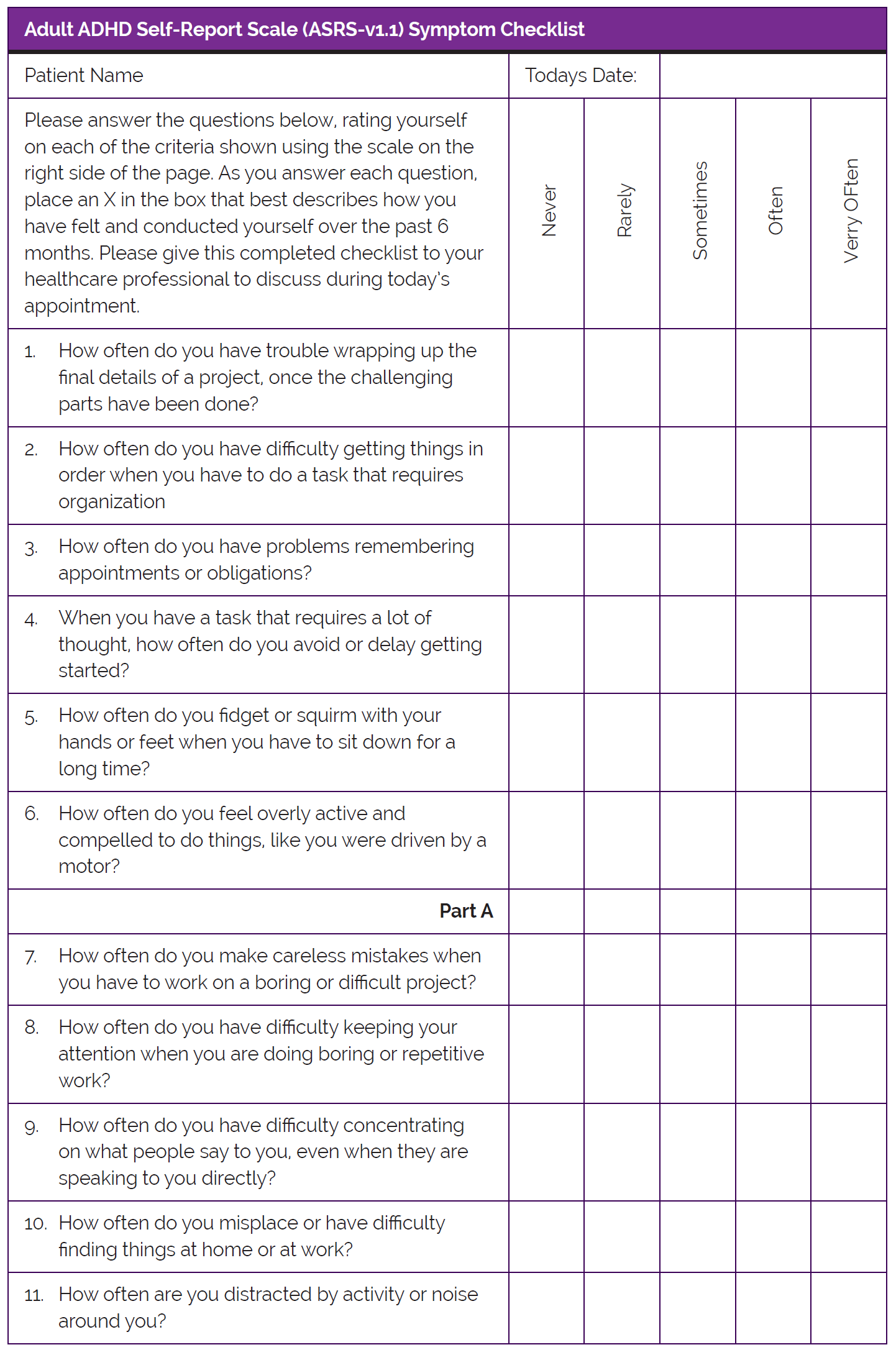
Well, it might be ADHD. Or autism. Or (C)PTSD. Or brain injury/trauma. Perhaps depression. Maybe generalized anxiety disorder, or OCD, or OCPD (note the extra letter). It could be a combination of those things, or perhaps neither. But if you felt some or many of those things to a strong extent, please read up more on executive dysfunction along with these conditions. Getting diagnosed, and treated - therapy, medications (esp for ADHD) - can be very helpful, to put it mildly.
An analogy I like to use is that everybody pees several times a day, but if you're peeing 30 times a day you should probably see a doctor.
Tldr/summary: A bunch of things can cause procrastination and anxiety/feeling bad etc like executive dysfunction ESPECIALLY if
a. You're procrastinating despite not wanting to, and probably feeling crappy about it
b. you also significantly struggle with time management/organization/long term planning and implementation(google its symptoms).
Executive dysfunction can be due to AD(H)D, autism, brain trauma/injury, PTSD etc, not just depression/"being lazy^+", so please read up online, get informed, and get an appointment with your GP/psychiatrist. And oh, go through this before you leave: https://comorbidityguidelines.org.au/img/appendices/appendix...
It's estimated that anywhere from 5 to 8 to 10% of the population has ADHD (and adult ADHD is very undiagnosed), so using the metrics of my last ADHD/health awareness post^ (which had 11 points), using the 1-9-90%^& internet rule about 110 people saw that post which statistically implies around 9 people with ADHD. You might be one of them, and understanding ADHD/whatever you're experiencing is generally life-changing for the better.
^ https://news.ycombinator.com/item?id=31878094 ^& https://en.wikipedia.org/wiki/1%25_rule ^+ I don't think anybody is truly lazy, there's a solid blog post (and book by the author) to read: https://humanparts.medium.com/laziness-does-not-exist-3af27e...
These things can interact in really subtle and complex ways but when you have effective treatment you realise just how damaging these conditions are to your life and just how not normal the level and degree of your "procrastination" is.