It would be great to live completely car-free, but absent major changes to how we plan our cities, it's just a sad reality that cars are a necessary ingredient to life in the vast majority of America. To cope with this, I'd love to be able to import a kei car or van from Japan, or micro-sized European city cars, or even some of the very small EV city cars that we see in China... but I just can't, unless I want an overpriced pile of scrap from the 1990s.
It's all so much worse when you realize that the 25-year rule is a holdover from a grey-market import scare of the mid-1980s[0]: European carmakers, namely Mercedes, BMW, and Porsche, were having trouble in the US with people importing European models of their cars. There were some valid concerns around inconsistent modifications for US safety standards, but the main issue was clearly that these grey-market imports were cheaper than buying a US model from a dealer, so profits were being missed. Instead of fixing the pricing discrepancy, they just successfully lobbied the government to enact this draconian 25-year ban, and so to this day I can't have a 2020s Japanese kei car shipped to a US port at my expense because it'd be illegal to register it.
[0] https://jalopnik.com/the-25-year-import-rules-history-is-mor...
They have a terrible reputation, primarily because they get used a lot by people who can’t afford a car.
I wish it were different, but driving a moped/Vespa on American roads is a pretty big risk.
But I guess I feel the same in SEA where instead of electric bikes you have to contend with a sea of gas mopeds.
Half of all cars sold in the US are imported. Toyota, a Japanese company, is the most popular brand of car sold in the US.
So, yes, you can import cars all you want, they just need to follow US safety and emissions standards. These cars do not meet those requirements, so you can't import them.
If you didn't block them as imports, we'd have lots of people just go to Mexico and buy highly-polluting vehicles to save money, and our problem with smog in the border states would be much worse.
I'm interested in learning where it was actually _curtailed_ in some measurable way e.g. due to the public pushing back, or other reasons. If you know of resources/studies on the pushback story, assuming there is one, would be appreciated.
I currently drive a small efficient car, but I'm seriously contemplating buying an electric SUV for my next car, even though I've no use for it. I don't drive a lot, but every time I drive, I see drivers on their phones, drivers who don't signal, drivers who race the lights, drivers who don't turn their head lights on at night, and other general poor situational awareness, etc. etc. And about once a month I see someone run the red light by a _large_ margin.
By absolute measurements SUVs are worse in most metrics including safety, but alas prisoner's dilemma prevails. No amount of defensive driving on my part is gonna trump physics, if / when my tiny hatchback gets T-boned by a lifted truck.
With that situation, we usually buy cars before 2005 or so, and we pay those 3k to 4k euros in those, and usually with over 250 000 km (155 000 miles). Depending on the model, they even can be more expensive than people would think: A late 90s Nissan Terrano would cost from 6k to 7k, and my current car, a Korean one that cost about 13k in 2012, now cost from 9k to 11k (unless it has too much mileage or isn't in a decent shape).
At one point, I pondered buying a Toyota previa with this head gasket issue for 3K and planed to repair it myself. Fortunately I got my sense back and bought a Renault Scenic with no issue at all, 2K and I managed to have also the timing belt replaced. Yes, internet thinks that because it is a French car, it will crumble. Well internet, so far it had no issue and its head gasket is intact.
Even the advocate highlighted in this article (Economist) admits his would probably be a “death trap” on a busy highway.
Maybe the US should create separate standards for city streets and roads with low speed limits, that could be a good way to bring down vehicle sizes. But just allowing these things just anywhere seems like a recipe for increased fatalities. For every HN reader who would use theirs wisely there are 10 average Americans who would risk maiming.
They already have!
https://en.m.wikipedia.org/wiki/Low-speed_vehicle
https://en.m.wikipedia.org/wiki/Neighborhood_Electric_Vehicl...
But it’s a hard sell when the US has so many high speed roads. I mostly see them used for facility maintenance, parking enforcement etc.
If they don't pass emissions, they cannot be legally imported. It doesn't matter whether you want to use them on private property; that private property is still within the US, and subject to EPA regs.
People think the same thing about not having to register their snowmobile, ATV or whatever if they're hooning around on their farm or private property. Nope. State environmental cops will happily step onto your property, chase you down, and cite you.
Toyota and Subaru are present in the United States because there is an incentive to manufacture them locally, which serves as a valuable learning experience for the US.
Thus the United States' car manufacturers are either perceived as being of low quality or lagging behind their competitors, leading to the country being utilized as a third-party for inexpensive assembly.
A) most cars manufactured by European and Japanese brands are built in Mexico and direct imported via NAFTA/USMCA. The fact that Toyota and Honda choose to continue to do manufacturing in the United States is probably seen as a boon to those local communities.
B) the "low quality" image of American brands is pretty limited to the United States, like a lot of American products (California wine, for instance, is generally bottom shelf in the US but well regarded internationally). In Russia, Ford used to be their top marquee. Ford and GM are both huge in Oceania. In LATAM, they're seen as a step up from Japanese and Chinese brands and Volkswagen. In Europe, they're not generally perceived as low-quality; instead, the perception is that they're too large and fuel inefficient for most European roads/cities.
I think the US needs to update a lot of rules regarding the sale, import, pollution and import of cars, including trucks. Require commercial licenses for the big stuff, have US manufacturers manufacture these practical small cars in the US according to modern US standards, and allow the import of vehicles that US manufacturers refuse to make.
I find it funny (yet I see this all the time) that 2 countries have polar opposite regulations for the same topic.
The question is: is it street legal and can you legally get it registered to drive afterwards? Once you ask that question, tons of regulations come into play ranging from axle weight to emissions standards to safety requirements.
[1] you gotta have an ATF destructive devices license and follow state specific laws if you want to fire the main cannon
Unofficially, it's indirectly how we got the Civil Rights Act passed as a quid pro quo:
> In retrospect, audio tapes from the Johnson White House, revealed a quid pro quo unrelated to chicken. In January 1964, President Johnson attempted to convince United Auto Workers' president Walter Reuther not to initiate a strike just before the 1964 election and to support the president's civil-rights platform. Reuther, in turn, wanted Johnson to respond to Volkswagen's increased shipments to the United States.
Whenever you buy from aboard, that's money and jobs that are lost to the USA.
So they want to export, but not to import!
And instead of banning the imports, they just set technical standards.
Like requiring specific bumpers and car height, and pollution standards, despite the fact US roads are deadlier and the US pollutes more than anywhere else.
Other countries are a bit more optimistic about international trade, and recognize they can't do everything.
Western Europe, for exemple, has focused on high added value engineering and office jobs, to outsource production to Eastern Europe and Asia. And everyone has an engineering degree in here, so good luck to live on your factory job.
IIRC the frame makes the car, so you could bolt your kei to a Geo Metro frame, and register it in one of the more lenient states (KY, AZ)
The vehicles meeting the requirements wouldn't be competitive on price because they'd be playing by a different set of rules.
https://www.dmv.ca.gov/portal/vehicle-registration/new-regis...
From the California DMV's web page on direct imported vehicles: "If your direct foreign import vehicle was not originally manufactured to meet California emissions standards and DOT FMVSS, the vehicle cannot be registered in California, unless the vehicle is modified and tested under CARB’s direct import program."
Based on research that I done years ago, my understanding is that the modifications required to get many foreign vehicles to conform to California's emission standards, combined with the testing fees (which is far more expensive than the cost of a traditional biennial smog check), make it prohibitively expensive for casual buyers to legally register imported vehicles in California.
Some people get around this by registering their vehicles in other states where only the EPA 25 year rule applies; occasionally in California I do see cars with their steering wheels on the right side with Nevada or Oregon license plates. However, California generally requires its residents to have their vehicles registered in California.
One thing I'm curious about is whether California allows direct imported vehicles to be converted to run on battery-backed electric motors as a legal modification. If this is the case, then the vehicle would certainly pass the emissions test.
I see plenty of Smarts and Fiat 500s in San Francisco
People make this excuse all the time in australia too. I have never had a problem living all over, including small country towns, without a car. Excuses are bullshit for most people.
  The 25-year import rule here, which bans Americans from importing vehicles
  from other countries unless they're 25+ years old
Of course we shouldn't be allowing people to import some pollution-spewing deathtrap that doesn't have seatbelts--the FMVSS regulations do exist for a reason--but I think we should be taking a more critical look at our regulations, especially as compared to other places at the same socioeconomic level.
Also these kei class vehicles would not do well on some of the highway speed collision tests.
Moreover these Kei Trucks still have to deal with the 25% chicken tax =(.
I am leaning more towards a street legal side-by-side as there are a few dealers here and they have people to perform more advanced repairs. Downside is they cost more especially if I want a fully enclosed cab with windshield and heater, something that is a must during the winter here. Upside is I can take it into the mountains and also use it to run into town for groceries.
An upside to either of these options is that these are the remaining vehicles that do not as of yet have any of the telemetry, dashboard infotainment systems, pay-as-you-go for subscriptions for standard features, etc...
The trucks have all just gone through auction and have inspection reports. Mine I bought for $2k was grade 3.5 and what I’d consider pristine for a 25 year old truck. The Japanese are pretty trustworthy people to do business with, and they build great vehicles.
One thing the author left out was the fascination I had with the whole process. Watching auctions, assignment to a ship, tracking it through the ocean and storms and watching on video as it passed through the Panama Canal. Then the customs and importation paperwork with CBP, going to the port, the driving 200 miles home in my new “truck” that had road manners more akin to my golf cart than anything actually on the road around me. I-95 was terrifying— I barely got off the on-ramp before looking for the next off-ramp to find backroads for the rest of the journey.
These kinds of trucks might more to your liking. Sure they aren't as small and cute as the imports, but your local auto store can still get you parts for them.
They are fun to drive, fairly fuel efficient, and are capable of hauling material from the home center. I learned to drive stick, and how to pop the clutch when you have a dead battery, in a Ford Courier on the high plains of west Texas.
I wish they still made mid-sized pick-ups that were actually mid-sized.
A Tacoma is nearly the size of Tundra was twenty years ago, and a Tundra today is like the size of a damn schoolbus.
Sadly Dodge Rams and other stupid big US cars are starting to rear their ugly faces, although they look hilariously out of place on our roads. A popular term for them is "emotional support vehicle"
I’ts kinda crazy that cars like that are not even made anymore. You can barely load a couple boxes into most of the currently popular extended-cabin abominations.
the people that depend on these vehicles are particularly tuned in to how to keep them alive...
Years ago, when my wife and I lived in a 'rural adjacent' community we had a ~20 year old manual transmission european sedan sitting in our driveway for about a year, tires slowly deflating, until one couple stopped by to enquire about it. My wife told them that if you can get it running you can have it, the husband came back a few days later to sign the paperwork, and after popping the hood and turning a few knobs was able to get it started and drove it away :)
Very happy that the vehicle had an extended life with someone that could put it to use.
The biggest issue I have is that they are right-hand drive. I'd be hesitant driving a mini-truck on streets and highways, even if it's licensed. This would be a non-issue if the intent is to leave it on private property, unlicensed.
I wish mini-trucks had a bigger demand here. I'd like a pickup, but I don't need the monster trucks that are on the market these days. Just something to move furniture, appliances, and junk around town.
The Ford Maverick is even smaller. It is a bit more barebones but it might work for you.
https://www.trademe.co.nz/a/motors/cars/suzuki/carry/search — all used imports from Japan. Note prices are in NZD, reduce prices by 1/3 to get to USD. You can get GST (sales tax) refunded on exports but it might not be much money because second hand goods are zero-rated?
I really wanted a 1.3 litre 4WD Suzuki Carry a few years ago, but they really hold their value so they were not cheap enough for me. USD8000 for a 20 year old ute! They are in high demand in NZ.
I personally would avoid the Subaru mini-truck: I think mechanical issues and access to parts are problems. I also looked at the equivalent Hyundai mini-truck, but the Suzuki is probably the best bet.
Japan has regulations that make old vehicles expensive to keep, so they export them before they get really old. New Zealand buys a lot of second hand car stock from Japan. If you need something 25 years old, then New Zealand might have more stock.
We don’t salt our roads. Anything that has spent all its life in dry areas like the Canterbury Plains would be best - don’t buy if it has been long periods in wet climates. Avoid anything that has been on the coast - avoid sea-spray rust damage (don’t buy from my local area, New Brighton).
Living in a rural area, I first saw these popping up at least a decade ago. The typical farmer / rancher has to be mechanically skilled and one of the benefits of these vehicles is that they are relatively simple mechanically speaking, IE: assuming availability of parts you could do the work yourself.
So if you can source the parts for them, and be willing to have it take some time; you’ll find help.
It is. I can do some mechanical work but I have no idea what special tools and tricks are required knowledge with these trucks. At least with side-by-sides there are a myriad of dealers and mechanics near me as so many people use them around their ranches, to go into town and to go into the mountains. There is probably some little shop that would say they could work on the mini-trucks but my experience with the small businesses here as that most of them fake it until they make it, but they never make it. So I would be taking a bit of a gamble. If I found one that was cheap enough it might be worth the gamble as I could just write off the loss if it has some obscure problem. That is why I am still on the fence.
https://reddit.com/r/fuckcars/comments/sdrgv3/japanese_truck...
A kei truck has about 90% the bed length of a pickup while being a lot more nimble. The lower bed is more ergonomic to load and unload too.
I can fit a bed, 3 months of luggage and a bicycle in mine. In a pinch, it's a brilliant microcamper. It's a big box on wheels. You can do what you want with it.
It's not a nice car, but it was designed to serve real user needs. That's why they're everywhere from Morocco to Poland.
* protects your goods from weather
* more cargo volume
* better forward visibility without a long hood
* easier to load and unload due to being lower
* can park it without people being able to walk up to it and taking your tools and equipment out of the exposed truck bed
I see these monster pick-up trucks more and more in European cities nowadays too, F-150s, Dodge Rams, with some fancy paintjob and big wheels but who's bed hasn't seen any actual use carrying anything because the owner is usually some middle-aged Ray-Ban wearing divorced dad with money, using it as a toy, trying to look cool. Power to him I guess, but those monster trucks are horrible for visibility and safety of cyclists, pedestrians, small cars, etc.
Most utilitarians here, blue collar workers, people for whom their vehicles are a tool for the job, mostly drive white vans here, as they're a lot more practical and economical than big trucks.
What’s fun is when you notice that the biggest, flashiest trucks are all concentrated in the fanciest suburbs. Once you get out in the country, off the main roads like where I’m from, suddenly (1) pickup trucks make up a lower percentage of the traffic, and (2) they are generally* smaller, more utilitarian and more beat up.
* except for the occasional F350 dually pulling an actual horse trailer
If you've ever sat in traffic driving a small car surrounded by large vehicles it definitely starts to sink in that you are at a distinct disadvantage if anything goes wrong. So this trend is also at least partially about this weird arms race of wanting to feel safer in the presence of ever larger vehicles.
I bought a F250 diesel to tow my 13,000 lb rv. Smaller vehicles can't do that.
Subaru Sambar (kei truck) towing capacity: 1,300 lbs
Ford F-150 towing capacity: 5,000 to 11,300 lbs
Ford F-250 Shelby edition towing capacity: 24,200 pounds
And that's just one additional dimension where these vehicles significantly differ.
These vehicles are utilitarian workhorses great for contracting, construction, farming (eg. hauling livestock), towing (eg. other cars, trailers, mobile BBQ, etc.), boating, leisure [1], etc.
I live in an urban area close enough to the forest, lakes, and pastures to see all of these uses frequently.
The electric version will power job sites, camp sites, and help with disaster recovery. It's going to sell like hot cakes.
[1] https://www.f150forum.com/f34/how-pull-jeep-out-mud-130086/#...
The subreddit is specifically named 'fuck cars'. How exactly are they being dishonest? This is more like r/vegan showing how a vegan meal is better than a steak meal along some dimension, say, environmental impact.
> I live in an urban area close enough to the forest, lakes, and pastures to see all of these uses frequently.
In fact I would say that you are the one being somewhat dishonest by (implicitly) claiming both the benefits of being able to use it as a utilitarian workhorse, and in an urban area. If the trucks have the majority of their utility as contracting, construction, or towing, they should require being licensed as a commercial driver, and potentially be banned from being operated on city roads due to the danger they pose to smaller vehicles and pedestrians.
Think of the argument from that subreddit (and me) this way -- if you are driving a huge farm tractor, you cannot also bring said tractor into the city center. Not all heavy machinery needs to be allowed everywhere. Obviously you might not agree, but I think the argument is fundamentally honest.
The transmission overheats after 3-4 hours going uphill with no load. They made it too heavy for the powertrain!
It’s also depressingly easy to trigger the overload light on the dashboard by doing things like buying bricks at Home Depot.
Seriously, WTF? Do we need a 2500 class to replace our old pre-fuel-injection GMC 1500? It had better fuel economy and was also lower to the ground. It could even handle mountain freeways!
(The newer GMC was even worse than the Ram, FWIW.)
I’d definitely look into one of these little japanese trucks if I could get a new one and have it serviced. Bonus points if it is an EV.
I'm pretty sure most people who own these oversized pickup trucks never use that towing capacity. Maybe some do, and if they were the only ones using them, nobody would have a problem with it.
In fact my friend was SO excited about his new van (for 1998) that for a while, he was bragging about every last little aspect up and down those hills, every time we rode with him. He lived in a gigantic danchi at the top of one of the steepest hills around, and still loved that thing.
(He worked as a furnace-jumper-inner / furnace-insides-scraper at an auto recycling place all day, and had molten aluminum burns on his arms and sometimes face...I respected the heck out of that guy for what he did to support his family. I think he runs an IT business in Brazil now.)
No trouble going up long or steep hills in windy mountain roads with the whole family of 4+luggage in the car.
No trouble going up long hills at highway speed (120 km/h) with two adult friends in the back.
Aircon on and everything. Works great.
Importing adds friction both up front and for ongoing sourcing of parts and maintenance. Just give us some options for local pickup trucks utilizing existing repair facilities! Instead everyone bitches about truck drivers having such large vehicles, when that’s all that’s on offer here!
The closest us equivalent in the US may be a Hyundai Santa Cruz, which sells ok-ish, the Honda rigid line, which sells okish too, and the Ford Maverick which sells like hot cakes.
RAM, like Ford, had the reputation. A rebadged Fiat toro may do the trick.
https://www.cnbc.com/amp/2021/03/04/ford-quietly-begins-prod...
Therefore, it's far easier to build a larger vehicle to meet the requirements.
Because they know they can sell bigger trucks for more money.
There is one farmer we used to call the used kei truck salesman because at any given time he has 10-20 of these in his yard for sale fresh off the import boat.
I'm sad that the city van is a dying breed now. Had a Nissan NV200 I used for a daily driver and weekend camper van. Unfortunately the NV200, Metris, Promaster City, and Transit Connect are all killed off and out of production. By 2024 If I want another brand new cargo van I'm stuck buying a $40k+ fullsize.
What about the Ford Maverick? The only issue is that the bed is fairly small, but it looks like these minis have small beds and low towing capacities as well? And Ford makes a hybrid version.
(Don't misunderstand: I'm not arguing against relaxing the rules in Oregon.)
[1] https://www.caranddriver.com/news/a36651899/sizing-up-the-20... [2] https://www.oregonlive.com/business/2022/03/pedestrians-incr...
My memory is a bit hazy, but at one point in time an importer company paid the large sums (hundreds of thousands I’m sure) to have a certain GT-R model go through the safety/emission procedures so they could be imported before they were 25 years old. That’s the only case I can think of.
I live on a working ranch and while our truck is very boring ("work truck" - basically a fleet vehicle with no options) it is still quite large as it has an 8' bed, etc.
I think we could make good use of a battery powered vehicle with a small cargo area and we definitely make good use of the aforementioned full-sized truck ... but I don't find these mini-pickups appealing or interesting.
If anything, the urban folks are buying bigger cars/trucks and rural folks are buying bigger sxs/ATVs
And at least out here, you're allowed to run around on the roads at least some with them to get between fields.
For those who aren't aware, Mahindra secured a licensing agreement with Willys in 1947 to make them. They're actually as close as you can get to a modern Willys Jeep, so much so that they were sued by Chrysler for infringing on Jeep's trade dress by looking too much like a Jeep brand Jeep
It's the same somewhat bizarre logic that makes it fine to register say, a 1969 VW Beetle in the US, but not a 2004 Mexican Beetle that's no less clean or safe. The older stuff gets grandfathered in because at that age there's hardly anyone willing to bother. But if new minitrucks were road legal, they'd be everywhere, and there might be an epidemic of minitruck highway deaths, etc.
If made illegal to drive on the roads it's not clear why these would be preferable to side-by-sides, other than novelty or for folks that really like to wrench.
Like the other commenters have said, you have to check your state's laws to see if they can be registered, but I've met people in states that don't allow kei trucks and are just used as ATVs, and it's not like you're going to be fined for driving on back roads between your properties anyway. In Nebraska they're banned on highways, but it's not like you're going to take your 1800lb car which doesn't have airbags or any crash structure that only drives up to 65mph with a tailwind on any highways anyway.
If you're looking to buy one, check state laws and I recommend just eating the ~$2,000 markup to get one already with tags from a car dealer that sells these. Dealerships that sell RHD cars to people who drive for the Post Office will have these in stock and will be the easiest to deal with. It's not worth the risks and effort to do all the paperwork yourself IMO. If the car previously passed inspection in Japan, it's basically guaranteed to be fine because inspection in Japan is very good, they check for rust etc. Parts can either be cross-referenced to other cars (e.g. Honda Civic) or they will be expensive but available. You'll have to do all your own work, but they're extremely simple cars.
I use mine as a van camper, pretty cheap on gas if driven slowly.
The Ford Maverick is great and around 20k but at this point I want 100% electric.
Side by sides can, with a few accessories (horn, license plate lights, turn signals, etc), be driven legally on roads. Most dealers are happy to sell and attach these high profit items for you.
Funny side note, my state even has a picture of one of the Japanese mini-trucks in the PDF. [1]
I think people should look up the DoT website for their state to get the current legal requirements for street legal UTV's and mini-trucks.
[1] - https://www.dot.state.wy.us/files/live/sites/wydot/files/sha...
Regardless, they look pretty cool. A cheaper option, but lower quality, might be some small trucks from China.
It will also be interesting to see how Fords Maverick catches on. May not quite fill this niche but seems like a good option overall.
a) They do 60mph ok if you have a four-speed one. Five-speed ones will do 70 just fine.
b) country roads are generally 45 in most states.
c) chinese minitrucks have a hell of a lot less support for about the same price.
d) Ford mavericks are DOA here. If you want a work van you buy a work van.
However, in some states you can't use off-road vehicles on any roadways, and you would only be able to register such an import as off-road vheicle. Where as you could register 25+ year old on in quite a few states as a low speed vheicle which allows pretty much anything, but highway use.
People's poor dumb monkey brains just can't handle the speeds/weights involved in driving cars IMO
Also don't get me started on how it's pretty hard to find a regular cab pickup. Like the ford maverick only comes in a 4 door configuration. Good luck carrying any standard length items like 4x8 sheet of ply wood or 8 ft lumber without the thing comically hanging out past the tail gate. What I found funny is on fords website you can see just that https://www.ford.com/trucks/maverick/. This is something you even see on larger trucks, and I am like wtf... It's a truck not a people hauler. You might be able to find some manufactures in their commercial/fleet line of vehicles that is at least sane when it comes to bed length.
Honestly, these days it's just better to get a cargo/work van unless you needing to haul dirt or other dirty things when looking for something new. It just seems like a small truck with a bed that make any sense are not made =(
Jeans started out as super useful and economical clothing worn by miners, cowboys, etc. fast forward n years and people are paying hundreds of dollars for exclusive denim and designs with pre-worn holes and other artificial wear patterns.
Trucks today look like they could be utilitarian and used for work but are really just an overpriced fashion statement.
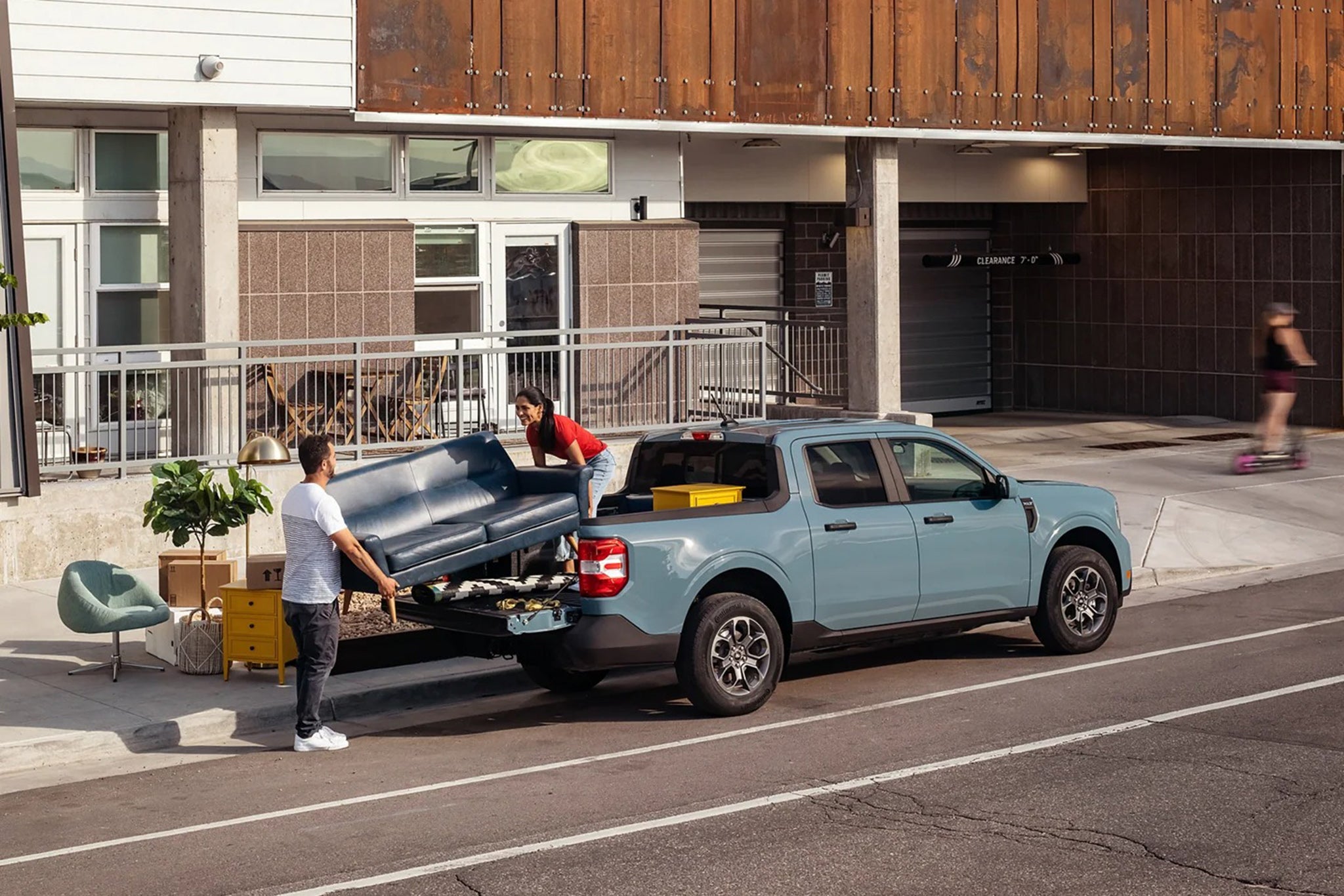
Look at the absurd marketing picture Ford put out. These people have no hope of even loading the couch they're struggling with, let alone half the other crap waiting on the sidewalk: https://www.thedrive.com/content-b/message-editor%2F16461598...
While this is a somewhat different type of truck than the subject of this article, it reflects a similar failure of manufacturers to address a major gap in the market. Not everyone is a poser who just wants to drive around in a "truck." Some people have actual truck applications to be addressed, and want an efficient little truck for them.
Really depends on the city and country, but in general, yeah, urban planning for humans is taken seriously. E.g. the Netherlands' cities are just fantastic for pedestrians and bikes and public transit, and quite decent for cars too (because the alternatives are so good if you do need/want a car, there's not a lot of traffic in your way); meanwhile in Bulgaria, the capital Sofia with an official population at 1.3 million (and lots of people from surrounding cities commuting daily) clearly prioritises cars, with massive works around road works, new ringway, etc.. Even then, there's quite decent public transit (with 3 metro, tens of tram and trolley, close to a hundred bus lines), pedestrians can walk everywhere and there are even bike lanes showing up more and more.
These are the reasons:
1) They are too wide. Real farm tracks are often narrow and overgrown. You want a narrow viechle to fit down them.
2) They are too heavy. When they get stuck you want them to be light so it's easy to pull them out. Ideally a little manual pushing should be enough
3) Off-road "capability" isn't actually that important because you could get a Toyota Camry down 99% of farm tracks. The 1% that's impassible by a Camry is also impassable by most off-road viechles because a pipe broke or a river flooded and washed away the road completely. You want off-road capability to prolong the life of the viechle, not to get down the track.
4) You need good visibility from the cab so that you don't run over your colleagues when doing complicated maneuvers.
Those little Japanese pick-ups look perfect.
The fact they can't really be driven on interstates/highways is the only thing that would make it difficult to sell them here as new vehicles.
Given how well the ford maverick is selling, and the successful introduction of the hyundai santacruz (and soon-to-be-introduced chevy montana) I think it's safe to bet there would have been a decent market for new vehicles in this segment if the manufacturers could get them highway-compatible.
The stock Bongo sort of vaguely represents an American pickup truck if it was built by somebody who had only ever heard of one described. However, they're ubiquitous, and the boxtruck versions handle a lot of what we in the U.S. would use semi trucks for.
In Korea they tend to be made by Kia, and I think in Japan there's a near identical variant by Mazda.
They can be had pretty cheap, a friend of mine has one for some farmland he has outside of Seoul and he says he bought it for ~$5k.
In Europe we just call these vans, as 99% of the time what's meant is a panel van. They have a roof, so you can even carry stuff when it's raining!
American-style pickup trucks are hardly ever seen. If you have stuff (like construction equipment, bulky materials) to move that can get wet, and wouldn't easily fit in a van, you use a dropside van as it's much easier to load and unload. It's the same cab and chassis with a different rear end.
https://www.vandemon.co.uk/blog/article/different-types-of-v...
What I _really_ want is something like the Ford F-100 Eluminator concept.
https://media.ford.com/content/fordmedia/fna/us/en/news/2021...
It was powerful enough to haul serious weight. The engine labored somewhat, and one could definitely feel the increased momentum of the vehicle.
I had some doubts about the front crumple zone - there really wasn't much that could absorb a head-on impact. But it never became an issue..
If I had similar transport needs again, I'd get one of these vans without hesitation.
I have a 2002 Hilux in the 2.7L four-cylinder. These things tend to be fairly bullet proof and great for on farm work both in what it does and being a cheaper vehicle you done stress about dings and scratches.
On thing the article didn't mention about side-by-sides is they tend to do better in mud and hills. So in areas like I am where its hilly and slippery clay soils, side-by-sides can offer a decent advantage and safety aspect getting around vs a ute/truck.
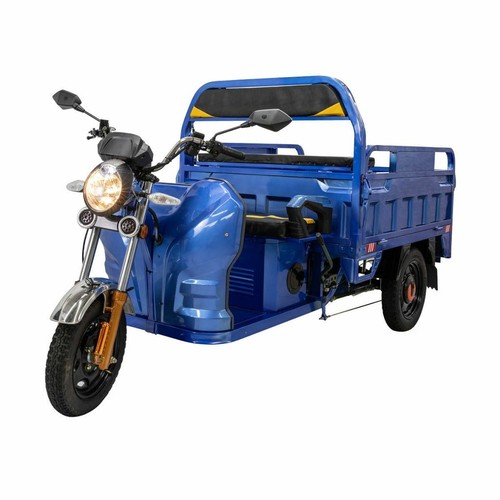
It fell relatively out of favor with the introduction of cargo trikes[0], a.k.a. "triporteur" in the local parlance. Trikes are now used for everything from transportation to cargo, still mostly within small businesses in the informal economy.
[0]: https://i.ebayimg.com/images/g/9LsAAOSwJnxgO-sr/s-l500.jpg
Also not being able to see the vehicle firsthand before purchasing.
They’re inexpensive though. That’s nice.
( https://initiald.fandom.com/wiki/Takumi_Fujiwara%27s_Toyota_... )
That’s why you can’t take an F-150 and put it on a smaller frame and sell it in the US. But many of us want one!
I’d love a half-ton truck the size of a 80s Tacoma…
I could use some help fact-checking though. I was digging around for primary sources but it’s tough reading…
https://www.sfchronicle.com/local/article/Meet-Kiri-the-tiny...
That's in large part to light trucks having less stringent fuel-economy regulations.
Well it all made sense when I saw a Kia Telluride.
Often the infotainment system (and the invariably J-pop music) remain in Japanese, which is fun.