https://droughtmonitor.unl.edu/Maps/CompareTwoWeeks.aspx
(*Technically slivers of the state in the far north/south were 'abnormally dry' in 2024, a small difference from 2026)
Arguably, there are an infinite number of things that are dishonest, and only a finite number of things that can be honest at any given moment.
Therefore one can honestly say that there are effectively zero honest things, and the entirety of human thought and speech, the noosphere as it where, is the singular dishonesty.
The dishonest-gularity.
It would be more accurate to say that dry periods in california are just "normal weather" and the occasional wet periods are the abnormal weather.
I enjoy the rare periods when it's sunny in the UK, but I wouldn't refer to a typical cloudy period as a "sun drought" because the sun is what's abnormal
This is effectively what happened to large parts of the middle east that were once fertile and lush. It's a trend all over the world really.
There are many ways humans can work the opposite direction to increase the ability of the land to stabilize the weather and increase hydrological robustness to mitigate droughts, e.g. regenerative agriculture or projects in asia and africa to green the desert, I don't know enough about them but it's a good idea and I hope it's executed well.
The idea that California is now "free of drought" is funny, it may be technically correct by the way the word drought is used, but it doesn't mean the underlying factors that contributed to the likelihood and severity of recent decades of drought have improved - it just means we got a lot of precipitation now, but another dry year and we'll be back in drought again.
If demand is far higher than supply due to overuse by industry that's definitely a water shortage - there isn't enough of it, and something is probably suffering as a result. I don't think that's a useful definition of drought though. If someone builds a massive factory consuming 100s of millions of gallons of water per day that's definitely going to cause a problem but I'm not sure it's reasonable to say that there's suddenly a drought.
I think the definition of drought is instead current rainfall compared to historical average - which then leads to the question of if the change is just that rainfall has now been low for so long the historical average has changed, or if rainfall has actually improved. I don't think the article addressed this, but I only skimmed it so maybe I missed it.
Lots of factories in Washington, seemingly no problem.
It isn't just, a lot of people moved to the desert, so now there is a drought because there isn't enough water.
I don't have reference, but I think there is some definition around change from average.
Drought it something like X months with Y% less precipitation than last 5 year average. or some such calculation.
This is effectively what happened to large parts of the middle east that were once fertile and lush. It's a trend all over the world really.
There are many ways humans can work the opposite direction to increase the ability of the land to stabilize the weather and increase hydrological robustness to mitigate droughts, e.g. regenerative agriculture or projects in asia and africa to green the desert, I don't know enough about them but it's a good idea and I hope it's executed well.
It would be nice if it rained more in california, but we can't base definitions on what we'd ideally like to happen
Would help if the water heavy industries moved to areas with actual water to spare but that ain't gonna happen when the cost of water management is mostly dumped on tax payers and not companies using it
https://en.wikipedia.org/wiki/Chinatown_(1974_film)
.. By 1926, Owens Lake was completely dry due to water diversion
https://www.washingtonpost.com/weather/2026/01/18/winter-dro...
Research published in the aftermath of the fire examines how this extremely wet to extremely dry weather sequence is especially dangerous for wildfires in Southern California because heavy rainfall leads to high growth of grass and brush, which then becomes abundant fuel during periods of extreme dryness.Many of California's ecosystems have evolved to expect fires. Humans can't stand fires and aggressively put them out. So fuel that would be regularly burned off in mild wildfires instead builds up into megafires that exceed the limits of what the ecosystem can handle (a lot of California trees are fire-tolerant, but there's a point where the flames get too high and too intense).
So yeah, the human activity that affects these cycles is caused by our cognitive dissonance and fear to phrases like "mild wildfire".
[1] https://en.wikipedia.org/wiki/Dixie_Fire
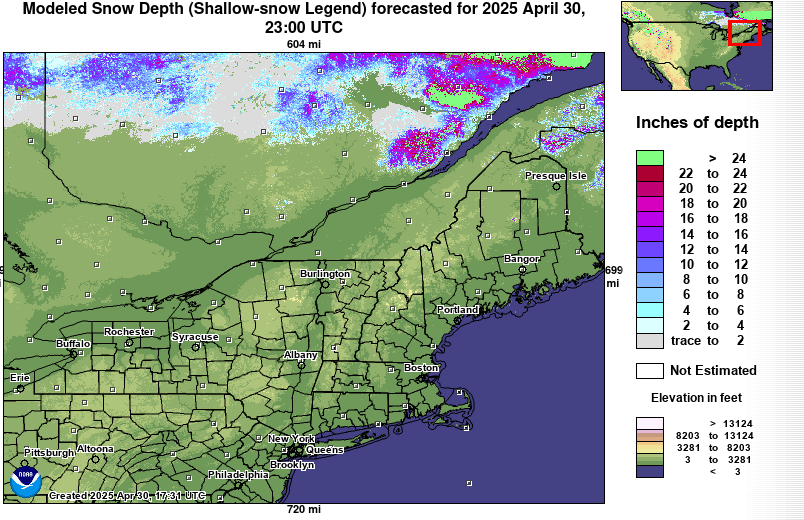
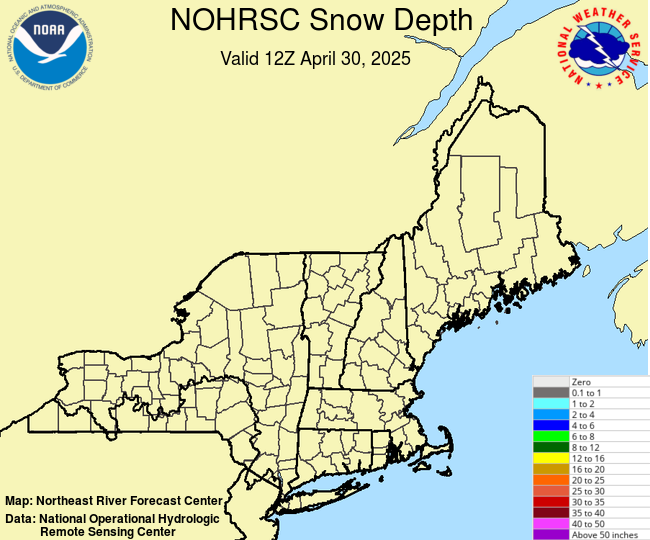
*not literally. But still, crazy amount of snow this year so far
https://www.weather.gov/images/nerfc/ops/nohrsc_full_sd.png
I usually use this one but the previous includes Quebec.
https://www.weather.gov/images/nerfc/ops/NOHRSC_SD_highcontr...
We were also down to running sprinklers once a week (lawns are silly), but have had them off entirely for a bit now.
2025 was the coolest summer I’ve ever experienced living where I do near the coast with an onshore breeze that is now frigid and very wet at times. I usually get fog now in times of the year it rarely happened - almost like san francisco’s notorious summers.
Tracking local weather patterns used to be part of my last career so this stuff I notice pretty well.
Immediately after, we had a foot of rain in two weeks. That took care of much of the snow. But it also washed away significant roads (along with several feet of earth beneath them), some of which took a year or more to get back open.
The ground was so saturated that many septic systems failed in my neighborhood, some with water running into the houses through toilets/drains because the underground water table on the high side of their property was above those drains (artesian springs aren't so charming when they are coming through your septic system and out of your toilet). Most of those folks have installed one-way valves now, but that still means you can't flush in such scenarios because the water has nowhere to go. Ours didn't flow in reverse, but our drains/toilets stopped draining for ~2 months.
I like winter weather, but I'd be happy to never relive Feb/Mar of 2023 in the Sierra. I'll still take it over the floods that happen in valleys and flat lands as a result of such events.
This year, Southern California is having a wet year while most of Northern California is having a relatively dry one.
Some of the towns in our county have developments built on floodplanes. In our neighborhood, only some streets have storm drains so many of them flood. On one of the main roads numerous trees fell over damaging walls and homes.
That last set of storms that really stands out were the El Niño events in the early oughts.
“I have spoken of the rich years when the rainfall was plentiful. But there were dry years too, and they put a terror on the valley. The water came in a thirty-year cycle. There would be five or six wet and wonderful years when there might be nineteen to twenty-five inches of rain, and the land would shout with grass. Then would come six or seven pretty good years of twelve to sixteen inches of rain. And then the dry years would come, and sometimes there would be only seven or eight inches of rain. The land dried up and the grasses headed out miserably a few inches high and great bare scabby places appeared in the valley. The live oaks got a crusty look and the sage-brush was gray. The land cracked and the springs dried up and the cattle listlessly nibbled dry twigs. Then the farmers and the ranchers would be filled with disgust for the Salinas Valley. The cows would grow thin and sometimes starve to death. People would have to haul water in barrels to their farms just for drinking. Some families would sell out for nearly nothing and move away. And it never failed that during the dry years the people forgot about the rich years, and during the wet years they lost all memory of the dry years. It was always that way.”
Just as true with economic cycles and so many other things.
maybe we just want to be somewhat okay the whole time.
It feels analogous to complaining about how Michelangelo painted the Sistine chapel on the ceiling instead of on a canvas where we wouldn’t have to crane our necks to see it.
There's more to good prose than just conveying the bare nutrients, y'know?
> The Salinas Valley cycles through wet and dry decades. Droughts cause ruin and exodus, yet people always forget the previous climate phase.
I dunno, doesn't seem to have the same impact on me. Maybe there is something to that whole prose thing.
One of the big hurdles for changing human behavior at scale is improving awareness. Even people who want to conserve their water usage benefit from frequent reminders to actually make changes stick. Being reminded the state is in a drought every time you go to a restaurant was an effective way to keep lots of people regularly conscious of the issue. Even if they complained about the method.
The premise is, the general population is too stupid to do the right thing themselves and need to be reminded of the drought by being inconvenienced by completely ineffective performative policies.
All this actually does in practice is diminish trust in authorities to make good decisions. If the drought policies are bogus, which other ones are too? Fuel economy standards? Air quality? OSHA?
Instead of this nonsense - just allow the market to set the price of water based on what’s available.
Of course, the answer there is usually “Oh but there are special interests that need to be able to consume as much water as they want without paying more for it, even in a drought!” And thus as usual the problem is not the personal conduct of individual citizens but corrupt and spineless politicians who are not actually interested in solving any problems.
So treating your citizens like cattle.
Just FTR, it's not a single glass of water, it's n glasses of water per day multiplied by some number of days and some number of restaurants
So, more likely, 2 or 3 glasses of water :-)
We got so much, we got "Lake San Fernando Valley" as the Sepulveda Dam did the job it was put up to do all those years ago and flooded. People had to move so fast (behind the dam is the a large park and recreation area, no homes were directly impacted) they abandoned their cars, and, later, divers with scuba gear were being arrested for looting them.
And where 90% of the water for its huge capital city-district (Los Angeles) is not even sourced locally (say, by desalination of seawater, as it is a coastal city), but it's instead piped from hundreds of miles away, while banning the villages at the source locations from using the local rivers/lakes as all that precious water gets piped away to feed the thirsty city-district (Los Angeles)?
Instead, factions are heavily incentivized, by the way that water rights system works, to spend millions insisting that Californians must use an even smaller fraction of the state's water budget than they already do.
The state needs to reform those water rights.
(I mentioned "richest state" because a rich state should tax the wealthy more, and subsidize basic amenities for the poor. So if poor pay less for water, it's okay, because the wealthy pay a pricier rate for water, so they don't tend to waste water.)
This is ridiculous. No wonder they are watering lawns and wasting water in other ways during droughts.
But what is even more ridiculous is when prudent citizens are fined for conserving water during drought.
California couple Fined $500 for brown lawn.. in a drought: https://m.youtube.com/watch?v=lX3UIZxzJL0
California has a "dual" water rights system. "Appropriative" rights the stupidity is called. If you claimed a shitload of water back in the 1800s as "yours", you still have total claim over that water today, and most who came after you to claim water have less right to water than you do. These rights resolve first come, first serve, and "In times of shortage the most recent (“junior”) right holder must be the first to discontinue such use".
The way these rights interact is such that, the oldest "claim" will never ever ever have to reduce their water usage, even if things are utterly drastic. This water rights system is simply divorced from reality. Californian farmers have no reason to adopt more sustainable or conservative methods of farming.
>https://www.waterboards.ca.gov/waterrights/board_info/water_...
The "riparian" water rights supposedly carry higher privilege than those old rights, but "all riparian rightsholders share the burden of conservation in times of shortage", and the water claims work differently, so they interact in awful ways.
The complex and outright stupid interaction of these rights mean you as someone with a really shitty appropriative water right benefits much more from getting the rest of the state to use less water than you benefit from yourselves using water more efficiently.
>This is ridiculous. No wonder they are watering lawns and wasting water in other ways during droughts.
I'm not saying that everyone who waters their lawn during a drought is an appropriative rightsholder. I think it's mostly agricultural users. In fact, I am directly saying that caring at all about the 10% of Californian water usage that is municipal is a distraction. Hell, California goes so far as to classify 50% of "water usage" as "environmental" when what that actually means is water that you didn't take out of the stream, to help make it look less bad that in terms of actual water used, it's 80% agricultural, 20% urban.
That monumental usage of California's extremely limited water resources accounts, btw, for only 2% of the state's GDP, despite the economics of that grown produce continuing to improve. All of this pain is just to enrich specific individuals, and not that many of them.
If you aren't yet terrified of climate change, and if you think such mismanagement of natural resources is sustainable in the long-run, you need a rethink, my friend.
The droughts are going to get worse. Case in point: Madagascar.
Of course, it is easier to blame some Big Bad Wolf, when one wants to hide the skeletons in the closet. So you do you.
California couple Fined $500 for brown lawn.. in a drought: https://m.youtube.com/watch?v=lX3UIZxzJL0
https://en.wikipedia.org/wiki/Los_Angeles_Aqueduct
Read the last line: [The impact of the Los Angeles Aqueduct Project to the Owens Valley region was immediate and detrimental to future agricultural work of local farmers. In 1923, in an effort to increase the water supply, the city of Los Angeles began purchasing vast parcels of land and commenced the drilling of new wells in the region, significantly lowering the level of groundwater in the Owens Valley, even affecting farmers who “did not sell to the city’s representatives.”[44] By 1970, constant groundwater pumping by the city of Los Angeles had virtually dried up all the major springs in the Owens Valley, impacting the surrounding wetlands, springs, meadows, and marsh habitats.[45] The consequent transfer of water out of the Owens Lake and Mono Lake decimated the natural ecology of the region, transforming what was a “lush terrain into desert.”]
But I guess the relevance of my point still stands.
Rich regions need to do better at water management. They cannot simply keep crying wolf (whining about droughtsand water scarcity), when their bad water-infrastructure planning and bad practices (e.g., watering big laws during severe droughts) are exacerbating the problems.
From what I can gather online, Florida seems to have double the desalinatiom plants than California. So definitely, California can do a lot better at civic infrastructure, especially for water management.
But yeah, snowmelt plays a huge role in supplying water into the summer, so just looking at precipitation totals isn't the full picture.
Snowfall is currently 75% of normal.
The southern end of the central valley (San Joaquin region, whole central valley is outlined in red) is particularly hard-hit by groundwater depletion. Some of that storage does not come back, because the ground compacts after the groundwater is withdrawn.
Between this and all the political nonsense that's happening right now, I feel like a passenger that's noticed the car is out of control while the driver is still opening his beer.
Well, not all of it, California leads IIRC.
I haven't heard of any new desalination projects making headway since. The cost-benefit analysis may favor it, but I'm not sure the politics do. Of course, those politics will probably change in 10-15 years in our next big drought cycle, and then we'll really wish we'd gone forward with more desalination.
Poseidon currently runs a desal plant in Carlsbad. My understanding is that the water the plant releases into the ocean requires exemptions for how concentrated it is. Additionally, the plant draws plankton filled water. Not really what we want in California.
There are better desal solutions out there like OceanWell. They have a deep water desalination solution that solves many of the problems of conventional desal. They just signed a project in Nice, France in the past few days. Also, they are working with the city of Las Virgines over the past few years.
If I remember correctly, the new desal plant in Doheny has a slightly different approach to draw water in from beneath the sand, using the sand as a prefilter. But I'm not sure how that works better than drawing water in from near the surface. I can't imagine how the plankton can possibly escape the suction forces drawing them into the sand.
Considering California always seems to have power and water issues, I’d think combining these things would make a lot of sense. Some of these exist and there seems to be a fair bit of research in the area. I have to image at some point that will be the direction California would need to go. Of course, if they are all-in on solar and wind, then maybe not.
It isn't. Mostly there are environmental concerns.
This is sometimes true even in much wetter states, though. I recall being thoroughly surprised to find that out that Virginia (!) has only two natural lakes, one of which is basically just an open area (though a large one) of the Great Dismal Swamp.
That’s almost always going to be cheaper to source from a nearby quarry than municipal sorting centres when you’re talk multiple millions of cubic meters.
Are these done in California?
> Are these done in California?
People terrace where the only arable land is in hills or mountains. The vast majority of California's farmland is flat as a board.
California's central valley also has one of the most massive systems of water control (aqueducts, levees, etc) in the world.
The problem with water and Ag in California is caused by the massive disparities in water rights that make it extremely cheap for some and expensive for others, depending on their water rights.
This will also reduce flooding from overloading the rivers with water.
Earthen dikes and berms are a common feature around farmland in California.
Or are they including all the industrial water use those people contribute to by existing? That then includes industrial agriculture, and all industrial water use that enables modern life.
I suspect they mean only the first one, which is at least misleading, and at worst a lie intended to deceive.
There’s a country in the Middle East that has insufficient natural water supply, and they manage to thrive and be a centre of learning, innovation, industry, and culture.
Water supply and sanitation in Israel are intricately linked to the historical development of Israel, because rain falls only in the winter, and largely in the northern part of the country. Irrigation and water engineering are considered vital to the country's economic survival and growth. Large-scale projects to desalinate seawater, direct water from rivers and reservoirs in the north, make optimal use of groundwater, and reclaim flood overflow and sewage have been undertaken. Among them is the National Water Carrier, carrying water from the country's biggest freshwater lake, the Sea of Galilee, to the northern part of the Negev desert through channels, pipes and tunnels.[4] Israel's water demand today outstrips available conventional water resources. Thus, in an average year, Israel relies for about half of its water supply from unconventional water resources, including reclaimed water and desalination. A particularly long drought in 1998–2002 had prompted the government to promote large-scale seawater desalination. In 2022, 86% of the country's drinkable water was produced through desalination of saltwater and brackish water.
https://en.wikipedia.org/wiki/Water_supply_and_sanitation_in...
“… free of doughnuts …”
Definitely had me clicking.
> Recent storms have brought snow to the Sierra Nevada mountains, but the state’s snowpack remains below average. According to the Department of Water Resources, the snowpack now stands at 89% of average for this time of year.
> Much of the West has seen warmer-than-average temperatures and relatively little snow so far this winter. The snow in the Rocky Mountains remains far below average, adding to the strains on the overtapped Colorado River, a major water source for Southern California.
Refilling the reservoirs is nice and all, but this is still essentially a payday loan out of the future.
One of the complexities of global warming is that it makes weather more extreme in all directions. It can be true that the same stretch of ground can be more susceptible to flooding in the same year it's more susceptible to drought.
…but we’re still fucked and don’t you dare forget it!
If we simply built like the people who first came to california did we would never have water shortages again.
Any water shortage is a 1:1 failure of the state to do the clear and obvious task needed.
The reason we don't build like the people who first came to California did isn't because we're stupid, it's because we've learned a lot of lessons the hard way. If you're interested in some of the history I'd recommend Cadillac Desert, which is about western water in general, but which focuses a lot on California (including the machinations that the movie China Town was based on).
A moment's reflection should make this clear. It's such a fundamental resource, touching everything we do. We just tend to take it for granted.
In the era of Trump/Republicans, I don't expect native issues to matter at all. "Drill baby drill" and all that.
So, actually, it is pretty simple if you're willing to finish the settler colonialist project that is our country.
Thus removing dams was actually useful amid a 25 year drought.
E.g.: https://en.wikipedia.org/wiki/Matilija_Dam#History
> Almost immediately after construction, the dam began silting up. The dam traps about 30% of the total sediment in the Ventura River system, depriving ocean beaches of replenishing sediment. Initially, engineers had estimated it would take 39 years for the reservoir to fill with silt, but within a few years it was clear that the siltation rate was much faster than anticipated.
There are similar sites all over the state. If you happen to live in the LA area, the Devil's Gate Dam above Pasadena is another such (but originally built for flood control, not for storage).
It's just not as easy as GP comment imagines.
It does rain in deserts, of course. But most of California is not a desert anyway.
https://www.grants.ca.gov/grants/gfo-23-311-advancing-precip...
Example of a recent $2.5M grant.
This information is often buried in budgets under applied research grants. I suspect they obscure this information because it could create liabilities, for example, if gov funded rain seeding creates flooding and human death are they partially responsible for this?
[1] https://s3.us-west-1.amazonaws.com/valleywater.org.us-west-1...
Cloud seeding can definitely increase rain over California even by your logic. Clouds don't respect state boundaries.
>Though cloud seeding has been in use around the world for 80 years, we recognize that people have valid questions about how the technology works.
Nothing tinfoil about it.
https://digitalcommons.pace.edu/cgi/viewcontent.cgi?article=...