SpaceX plans to beat that record soon with launches a week apart becoming routine.
http://nodis3.gsfc.nasa.gov/displayDir.cfm?Internal_ID=N_PR_...
Falcon 9 v1.1 is almost certainly safer than the Titan II Gemini Launch Vehicle. As with prior Dragon flights, humans could have flown and been just fine.
These are part of a collection of low-cost (well, lower than a full satellite) Earth observation instruments to take advantage of the external mount points on the ISS. NASA recently had a media briefing about this: http://www.nasa.gov/press/2014/september/nasa-hosts-media-br...
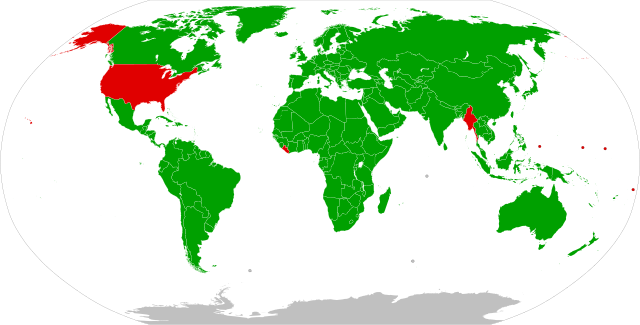
The fact that NASA managed to crash a probe into Mars because they hadn't yet learned the lesson says it all really. Just use SI units and stop worrying about it.
Furthermore, you are suggesting that the same entities--highly trained engineers and scientists and project managers--that proved inadequate to follow the policy you are suggesting last time can somehow be expected to follow the policy correctly at all times in the future.
Reducing needless complexity--in this case by enforcing a standard of common units so that when the inevitable inevitably occurs and someone forgets to label things--there is a much reduced (but still non-zero) chance of undetected mis-matches occurring.
Furthermore, it is very difficult to confuse milli-newtons with newtons even if a project was for some reason using both, because they differ by three orders of magnitude, which tends to get noticed. Whereas kilograms and pounds differ only by a factor of 2.54, which might be--and in fact has been--missed.
You measure mass in kg, not g, not tonnes.
You measure distance in metres. Not kilometers. Not nautical miles.
You measure time in seconds.
A Newton is a derived SI unit — 1 kg m / s^2
Incidentally, this is why engineering notation works the way it does. You pick your units and you get the significant figures from the mantissa and the descriptive prefix (giga, nano, micro, kilo, etc.) from the exponent.
While I love Customary volumes (powers of 2 base units), the rest could stand a change and am glad SpaceX is using Metric.
http://upload.wikimedia.org/wikipedia/commons/thumb/a/ab/Met...
At a distance of 249 m, the ATV computers use videometer and telegoniometer data for final approach and docking manoeuvres. The actual docking to Zvezda is fully automatic. If there are any last-minute problems, a pre-programmed sequence of anti-collision manoeuvres, fully independent of the main navigation system, can be activated by the flight engineers aboard the station.
http://en.wikipedia.org/wiki/Automated_Transfer_Vehicle
Or what's that apocryphal story about early astronauts fighting with NASA engineers to put in pilot controls with manual override so these guys could claim to be pilots and not mere passengers? The ugly truth is a lot of this stuff is best left to automation, robots, etc.
http://en.wikipedia.org/wiki/Buran_%28spacecraft%29#Flight_i...
Buran was an amazing piece of technology. It's sad it didn't get its chance.
  The cable would connect an avionics bay in Discovery's middeck with the
  controls one level up on its flight deck, effectively allowing flight
  controllers in Houston to perform landing activities currently done by
  shuttle  astronauts.

  Those manual activities include starting the shuttle's auxiliary power units,
  deploying an air data probe, unstowing the orbiter's landing gear and
  releasing its drag chute after landing, Herring said.
Lets say you need a prototype ability tool and die maker machinist on staff to handle "things" during development. And you need a simple piece of threaded rod. You could blow a lot of extra time and money on getting a CNC programmer and the software and a numerically controlled lathe or machining center dropped in to make that boring simple little piece of threaded rod. Or you could say, "dude, I know this is beneath your skill, but you're just sitting there burning oxygen and it'll only take ten minutes for you to machine a piece of threaded rod, so ..."
If you have a tool that's designed to do anything, and the tool and op are just sitting there, even if you could automate a one-off, the overall system cost and productivity is higher if the op just does it by hand.
If you have a VERY active schedule, and maybe 3 simultaneously operating 24x7 arms all over the station with only one dude available to run all the arms and everything at 150% of designed thruput capacity etc, then it would make economic sense to automate this task so the arm op can work on something more human oriented, but ...
Replacing the human with a computer program therefore likely doesn't literally involve verifying that it will not karate chop the station - lower level control will take care of that for you.
However, as anyone who has worked with robot manipulators before, actually getting good performance out of them in variable environments (ie, not a controlled factory assembly line) is quite a bit of work - work that probably isn't worth it.
Even though it might be possible to 'computerize' the control, realistically there's no benefit to doing so.
Plus I have to ask, if a thruster suddenly misfires or goes haywire who is going to be faster? In Apollo days I would put odds on the astronauts, today - I am betting on a computer. We will sooner trust a car to drive itself before we allow a freighter to dock with a space station.
[1]: http://www.space.com/1033-remote-access-canadarm-2-hand-grou...
[2]: http://spaceflightnow.com/falcon9/013/140923arrival/#.VCHgLy...
Do they push it back to earth? Into space, leave it in orbit?
They set Dragon free with the arm, Dragon departs, does a de-orbit burn, jettisons the trunk (with the solar arrays), re-enters the atmosphere and parachutes down into the ocean and is recovered.
[1] http://www.nasa.gov/content/expedition-41-trio-waits-for-dra...
[2] http://www.spaceflight101.com/dragon-spacecraft-information....
Please don't comment on HN like you would on Reddit. If you don't have questions or information to add to the thread, you should probably use that as a cue to refrain from posting.
Joke posts might not seem bad, but in aggregate they lower the signal to noise ratio we have come to appreciate about HN. Additionally, once these kinds of jocular posts start, it becomes infectious.
I'm not trying to be mean; I'm guilty of making posts like this too. Many of us simply do not want to see HN devolve into the equivalent of a spammy subreddit. It's important that we all remind each other of the value of this community so that we can protect it from spiraling into a bad state.